A history of the Newman Circles and their role within the Newman Association, examining their development from 1942 to the present day, their relationship with the National Council, and their place within the wider Catholic Church.
The purpose of this analysis is to examine the history of the Newman Circles, their relationship with the National Council of the Newman Association, and their role within the Catholic Church more broadly. It is hoped that the information within could be used to inform discussions and debates within the Council and/or Circles themselves on future policy.
Part 1: Greater Understanding
The Newman Association was established as a graduate society in 1942. It was influenced by John Henry Newman's concept of the lay apostolate and its active involvement in both the Catholic Church and wider society through, as the original memorandum of association suggests, "promoting greater understanding of the Christian faith and the application of its principles to the contemporary world".
An educated Catholic laity was central to this aim, with its members encouraged to use their "gifts" (skills and knowledge) to address the major issues of the day from a Catholic perspective. Although formed as a national body, the Newman Association quickly developed a presence in the provincial towns of England, Scotland and Wales through the establishment of "Circles", essentially auxiliaries whose purpose was to carry out the objectives of the parent body at the local level. The Reference Book for Local Circles (1964) provides perhaps the most definitive explanation of this aim:
"The object of a Local Circle is to embody in a particular locality the values of the Newman Apostolate. This implies a care for the members living in the area, so that each may be more prompt to respond to the apostolic opportunities facing him, and a concern for collective or group responsibility in the face of the general problems of the day, especially those of local provenance.…A Local Circle, therefore, is a means whereby the laity can give collective proof of their responsible citizenship."
In order to achieve this noble ambition Circles undertook a wide range of activities. It may have been true, as Felicity Armstrong noted in a 1956 Newman Newsletter article entitled "Running a Local Circle", that the Circles differed "markedly from each other" and that:
"any comparison of the activities undertaken by different Circles must take cognisance of that fact; the way in which members collectively seek to be present intellectually and morally in the area in which they live and work is modified always by the social and economic conditions characteristic of their Circle."
Nevertheless, such activities were carried out within the broader remit of the Circle's core functions, functions which were shared by all Circles and which have changed little over time. Perhaps the most central was its education function, i.e. to educate its members both in important aspects of Catholic and Christian theology and in the ways in which these could be applied to the wider society. This was particularly evident in the lecture programmes which were a staple feature of all Circles since the early days. These included local Circle speakers or high-profile names designed to attract more members, such as the Nottingham Circle's lecture programme for 1956 which included Evelyn Waugh, Sir Desmond Morton, the Abbot of Downside, and various editors of the Catholic weeklies.
Circles often centred their lecture programmes around themes. The 1992 programme of the Hereford Circle, for example, included eight talks on the subject of "Faith", while the Hertfordshire Circle organised a series of lectures under the banner of "English in the Liturgy". Topical issues proved to be particularly popular draws, notably a Bristol Circle lecture in October 1972 by the Rev J. Davey (Director of the Corrymeela Community) on "Peace in Ulster", or the Cardiff Circle's decision the previous year to theme its lectures around an examination of specific issues relating to the Second Vatican Council. As well as lectures, study groups also proved popular. In 1961, the Thames Valley Circle created a Philosophy of Science Group which mirrored the national body's group of the same name.
Alongside this important education function the Newman Circle also carried out a vital social function for its members. Social occasions helped members to feel a sense of belonging with others and to form a strong connection with a particular Circle. The London Circle noted in the Annual Report (1955/56) that, although it had a wide range of social activities including art visits, gramophone concerts, theatre parties, rambles, river parties, squash and tennis in the summer, its Sunday afternoon tea dances and dancing classes on Monday evenings proved particularly popular, while over 100 volunteers helped to serve refreshments during weekend social functions. Other smaller Circles hosted similar events, albeit on a reduced scale.
Peter Hambley, a longstanding member of the North Staffordshire Circle, remembers that the house parties of the early 1960s were attended by the local professionals in the Circle, with the highlight of the year being the sherry party hosted by Dr. and Mrs Sweetnam.2
The Hertfordshire programme for 1996 included a Musical Evening at the Macmillan Runcie Day Hospice in February and a Garden Party to follow the AGM in June. Such social events have continued to be a popular feature of the Herts Circle programme until the present day.
Finally, the Circle undertook a spiritual function for its members, enabling Newman members to attend events that helped to develop a deeper sense of their faith. Such events were often carried out with the co-operation of the local clergy and religious communities, and could include days of recollection, annual retreats and community Masses. Some Circles were more dynamic and proactive than others in organising these events. The York Circle, for example, was involved in the Church Unity Octave in its early years during the 1950s. The two half-days of reflection organised by the South East London Circle in 1979 were so well-attended that it was agreed at the Circle AGM to organise a similar event in October. A flyer for a Lenten Day of Recollection organised by the Aberdeen Circle and hosted by Fr Donald Grant of the Carmelite Friars, "New Life in Christ" on March 19th 1994, included a talk by Fr Donald, private reflection time, prayers and the Angelus, together with sharing and question time. The event finished with Holy Mass.
Co-operation was often a major factor in the success of these events and many Circles found that combining with other Circles nearby could assist them to reach a wider audience. This was particularly worthwhile for larger social occasions, such as the Birmingham, Stoke and Coventry Circles' decision to organise a joint "Midland social" during the summer of 1957. Spiritual events were also organised in this way, for example the joint retreat of the Chester and Wirral Circle and the North Lancashire Circle at Upholland in July 1977. Some Circles joined together to form regional conferences. As early as the 1940s, the Annual Report (1942/7) was praising these regional conferences as the "most popular and useful feature of the programme… which provides an opportunity for members in any one region to meet together, and for the officers and members of local Circles to meet those of neighbouring groups."
The structure of the local Circle was also similar across all groups and many were formed under similar circumstances. All, for example, began life as a collection of interested Catholics in towns and cities who met for a common purpose. A report sent out to Circles based on the experience of the Circles of Hayes, Sutton Coldfield, Oxford, Chester and Southend, advised starting a Circle either through expanding an initial discussion group or adopting the "Newman comes to town" approach of setting up a complete programme, advertising it heavily and hoping that a new Circle would develop organically.
The new Coventry Circle did a great deal of preparatory work in the autumn of 1955, including arranging visits to various Catholic churches in the local area, reading the local press and researching the reports of similar societies. Their initial meeting included a popular talk by Mr Denley, who spoke on the situation in Cyprus. The South Shropshire Circle formed following a discussion group by the parishioners of St. Milburga's Church in Church Stretton on "Women – Status and Role, Life and Mission" during the early 1990s.
Most Circle members included a range of predominantly middle-class Catholic professionals (later many being retired). For example, the largest Circle in the early days of the Association, the London Circle, was composed of 28 barristers and solicitors; 7 accountants; 22 teachers; and 45 doctors and nurses. The management structure of a Circle mirrored that of the National Council and was governed by a Committee that included a chairman, secretary and treasurer, with all officers elected at an AGM for a specified period of time, usually three years. They all abided by a constitution which set out the statutes and bye-laws governing Circle management. The membership rules initially required all members to be Catholics "of good educational standing", although, as will be shown, these rules were relaxed over time. The disbanding of the Circle also had to be ratified at the AGM and all records were to be returned to the National Secretary.
Such uniformity was encouraged by the National Council of the Newman Association itself. The General Secretary in the first Annual Report of the Association (1942/7) stressed that the Council and the Circle were both essential components of the Association, each engaging in activities that were mutually beneficial:
"There is no conflict between this conception of the local group and work of the National Council, for the Council exists partly as an advisory body and partly as an executive body to carry out the activities that cannot be managed on a local basis."
Indeed, the Circle's role was viewed as integral to the success of the Newman overall: "If…the Association is to make an effective contribution to Catholic life in Great Britain, and if it is to bring Christian influence to bear on the conduct of public affairs, its success will depend in large measure on the Newman Circles."
Such an attitude was apparent throughout the history of the Association. Following the establishment of Circles in Cheltenham, Staffordshire, Sussex, and Cardiff during the mid-1950s the President argued in the Annual Report (1955/56) that the state of Circles "is the best gauge of the vitality of the Association". In the early 1980s, a review of the Association recognised the integral role of the Circles in the continuation of the Association. "Council", it argued "is an administrative necessity for a national association but it has no hidden resources of its own and depends entirely upon the Circles for its strength."
Nevertheless, Council was also keen to remind Circles of their obligation to the national body, as this extract from a later Annual Report (1969/70) reveals:
"The real strength of an association is in rising membership, and most members will have a Circle allegiance, but it is the members of Circles who constitute the only workforce for local, regional, and national activity, and the purpose of a national body can only be realised if every member is fully conscious that his membership is essentially a national one. Every national officer and Council member is entitled to the full support of his Circle in the work he is undertaking for the Association as a whole. His work should therefore be felt as an enhancement of the Circle's own activities. It is for this reason that we ask for every effort to be made to increase both national membership, and knowledge of what the Association is doing, and would like to do at the national level."
In 1985, an extensive consultation between the Association's Council and Circles took place, the results being published as "The Newman Association – Future Policy". The document reiterated what the Annual Report had noted fifteen years earlier, that members had a growing tendency "to think of themselves as members of the local Circle rather than as important constituents of a national organisation meeting together in the local Circle." This, the report argued, could be resolved if there was "greater evidence of national activity and a clearer lead from the Centre on the priorities to be adopted, both nationally and by Circles." Promoting national events at the Circle level was one method of encouraging this. A letter to all Circle Secretaries dated September 24th 1993 asked for all Circle programme flyers to include mention of national events such as conferences and the national AGM.
Council-Circle relations
One of the biggest difficulties in the Council-Circle relationship throughout the Newman Association's history has centred around problems of communication. This was a particular issue for the provincial Circles located outside the Greater London area. In a letter dated October 10th 1949 the Chairman of the Leeds Circle, reporting on the North East Regional Meeting of Circles (which included Sheffield, Hull, Bradford, Newcastle and Leeds), complained that the then current National Council was not representative of all Newman members and that liaison with the Circles was generally poor.
The Chairman also criticised the recent doubling of subscriptions for those Circles outside Greater London which could not access certain facilities and services. The letter recommended a refund for provincial Circle members and the mandatory appointment of provincial Circle representatives on to the Council. But it was apparent by the mid-1960s that communication was still a major issue in the Circle-Council relationship. A resolution was proposed by the Liverpool Circle to be put to the 1966 AGM of the Association, complaining about the current failure of communication between the Circle and Council which, according to the printed statement, "results in a decided tendency among members towards either apathy or suspicion and resentment".
The statement cited as evidence the low poll in the Council elections which was due to the lack of information available on candidates for election. It also cited the failure to understand and appreciate the method of allocation of subscriptions between national and local activities. Remedies for these issues, it argued, could be effected by simple changes in the Constitution.
Subscription issues, however, remained a problem for the Association. A memo sent to members of the Worcestershire Circle in April 1983 asked for members to vote on to the Council those who would fight for reducing the costs of central administration. "At present", the appeal argued, "only a third of your subscription comes back to your branch. The rest goes on administration. The result is that we can only make ends meet here in Worcestershire by constantly appealing to you for money."
Although largely unsuccessful, such grievances did bring the inherent difficulties of communication to the attention of Council who, in turn, introduced initiatives to try to improve these lines of communication. One particularly important initiative was the establishment of the Circle Officers' Conference, involving group discussions between Council and Circle members in the exchange of ideas and best practice. This group proved to be a vitally important link from the early days of the Association.
The annual meeting held in Birmingham on October 9th and 10th 1954 included represention by fifteen out of the eighteen Circles, highlighting the importance attached to this event by the Circles. In 1966 the Circle Officers' Conference was elevated to a Committee of Council. It was decreed that one member of each Circle should be elected on to the Committee and powers should be bestowed on the Committee to make recommendations. The next Annual Report (1966/67) suggested that the Circle Officers' meeting had "proved of tremendous value in improving communication, not only between Council and individual Circles, but has also stimulated much closer relationships between Circles in a given region". Subsequently a report of the Circle Officers' Committee held in October 1971, where 21 Circles were represented, suggested that these biannual meetings "are fast becoming the high points of the year, giving the Association a first-class opportunity for the communication that is its lifeblood".
In these meetings, however, the Circles were warned that, although Council could facilitate such meetings, initiative and effort must come from the members themselves. Circle Officer meetings remained a regular fixture on the Association's programme, even in relatively recent years. The 1993 meeting for example, included addresses by guest speakers and practical sessions for Circle Officers to air and share their problems. Aside from these meetings, communication was also enhanced in the early 1970s by the establishment of the post of "Circle Correspondent" on Council and the willingness of members to act as "liaison officers" for their respective Circles.
The 1973/74 Annual Report, for example, included a list of names of the local liaison officers within the Circle reports, so that members had a single point of contact for an issue to be brought up at Council level. In more recent years the advent of the internet and the setting up of the Association's website (www.newman.org.uk) has greatly assisted communication between the Council and Circles, helping to publicise a national conference or a special event by a Circle.
Role of The Newman
Since 1955 the Newman Association's periodical, The Newman, has played, and has continued to play, an important role in greasing the wheels of communication between Circles and Council, with its mixture of learned articles, news and advertisements for upcoming events. This has been supplemented since 2002 by Association News, a report sent to Circle secretaries after each Council Meeting; this publication has also provided information on important Newman Association events.
The provision of guidance on all aspects of Circle management was another method by which Council could bridge the communication gap and assist Circles to be more effective in their endeavours. These included the publication of two national guides, the Newman Reference Book for Local Circles (1964) and Towards Better Practice: A Guide for Newman Association Circle Committees (2005). The covering note in the first publication, written by Oliver Pratt (then president of the Association) set out the aims of producing such a book:
"There is a real need for Local Circles to be kept fully in touch with the whole range of activities going on, or developing, within the Association. This reference book tries to do this and contains memoranda comprising the collective experience of Circles, new ideas that they have worked out, and study outlines covering the main fields of intellectual apostolate. These are intended to help Circles to make their work fully effective and prepare more members to play a leading role among the laity in the renewal of the Church."
It was not, Pratt insisted, "a mandate from 'on high' but essentially a means of making the best ideas of Circles and Groups available to others who may be glad to profit from their experience".
Similar sentiments were expressed in the foreword to the 2005 publication. "There is no suggestion", it argued, "of trying to impose uniformity on Newman Circles.". Nevertheless, "while the Council of the Newman Association encourages variety in what Circles do and how they do it, there is a need to ensure that all Circles maintain similar minimum standards". It did, however, suggest that "there are lots of different and acceptable ways of doing all sorts of things – hence better, rather than best, practice…"
Members of the Council were therefore very keenly aware of being perceived as too overbearing or controlling in Circle management. Indeed, Council's wish for the Association was for it to be "centripetal rather than centrifugal" with Council policy to be informed by the Circles themselves. Some elements of uniformity were unavoidable however, not least in constitutional matters (as we have already seen). Each Circle was required to have a constitution and the guidelines for these were set out as far back as June 1957, through an official document sent out to all Circles, entitled "Memorandum on the Constitutions of Circles".
Financial support
Council also provided regular financial support to the Circles. Prospective Circles, for example, were offered a starter grant to help in setting up an initial meeting, including financing the hire of a hall as well as the payment of expenses to a distinguished speaker. Circles were also issued with annual allocations based on membership size. A circular letter to all Circle Secretaries from 1993 reminded Circles that, although the Association was not wealthy, there was funding available for any Circle wishing to mount a specific project, especially one which helped to raise the profile of the Association and attract new members. There were, however, limits to how much Council was willing to spend.
A request from the North Gloucestershire Circle in January 1994 for £200 to help towards the cost of publicising a special circle meeting aimed at "the younger generation" was rejected by Council. The National Secretary, Judith Bennett, argued that Council "found it difficult to understand how a single lecture could cost so much" and did not want to set a precedent for further requests from other Circles. Similarly, Council could hold back an annual Circle allocation if a particular Circle had not submitted its Annual Return (this occurred with the Bradford, Southampton and Hull Circles in 1975 for example).
In times of economic hardship, however, Council could even call on the Circles themselves for financial aid. In the Circle Officers Committee meeting in March 1967 it was suggested that those Circles with a surplus of cash in their accounts should be encouraged to provide a loan to Council, in order for the Association to avoid paying bank charges on overdrafts. Such a discussion was particularly reassuring to Council members "because it had shown that they were not having to bear the whole burden of the financial problems of the Association but could look to the Circles for help and guidance in how to cope with them".
The relative influence of local Circles on national policy was often dictated by the strength of the individual Circle, something that was clearly recognised at the national level. The President of the Association suggested in the Annual Report for 1979/80 that links between the two were "often patchy and uneven with some Circles exerting considerable influence on the central organisation whilst other Circles are content to wait for policy to be formed centrally and to go along with little or no initiative of their own." Nevertheless, Council was keen to avoid interfering with local disputes as far as possible. When accusations of sexism were made by a female member from one Circle to those male members who had opposed her taking up the position of chairperson in 1994, the Council were reluctant to intervene in the dispute itself, seemingly more concerned with whether the Circle had followed the correct protocol for the appointment of officers.
When such a dispute involved a national officer, however, Council had no option. A letter from the Chairman of the Vale of Evesham Circle in May 1994 made complaints about the Association's Ecclesiastical Assistant Fr Giles Hibbert, who had spoken at a recent Circle event. He was accused of not being supportive of the Church: when asked for an answer to the question "What advice would you give to someone joining the Catholic Church?" Fr Hibbert's response ("don't") caused outrage. Questions were raised from the Circle over his suitability for his national position. The President of the National Council at the time, Kevin Lambert, defended Fr Hibbert on the grounds of freedom of speech and suggested that such a talk had presented challenging ideas and stimulated debate. Indeed, as Lambert argued, "without challenge and debate, Newman Conferences and the Newman Association are of little value".
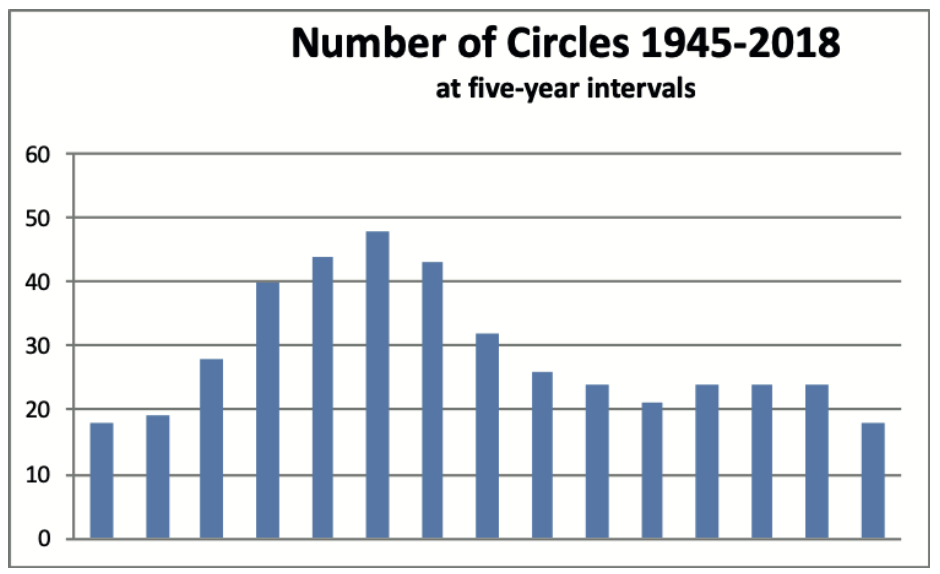
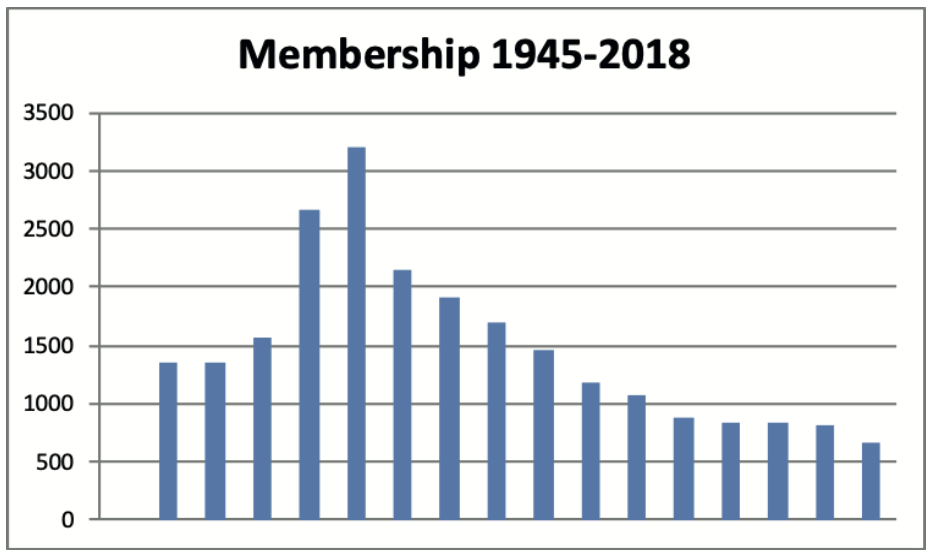
The stark reality was that Council was very much dependent on the Circles for their integral role in encouraging and maintaining the membership. Without members, there would be no Newman Association. This was not a problem in the first two decades of the Association's history when members were plentiful and Circles were being established on a regular basis. The Annual Report for 1942/7 triumphantly listed the names of eighteen Circles recently established and, in the later Annual Report for 1952/3, it was noted that the total membership had increased from 1,454 to 1,557. This figure, the President argued, illustrated the progress made "which has been due quite as much to the energy of the Circles as to activities on a national scale". The 1955/56 Annual Report described the previous year as "the most successful year so far for the Association", and 25 local Circles were listed the following year. The 1960s saw further progress, perhaps most evident in the layout of the Annual Report for 1963/4, in which the Circles were so numerous that they were listed within regions (i.e. North East Region, Midland Region etc.) rather than individually.
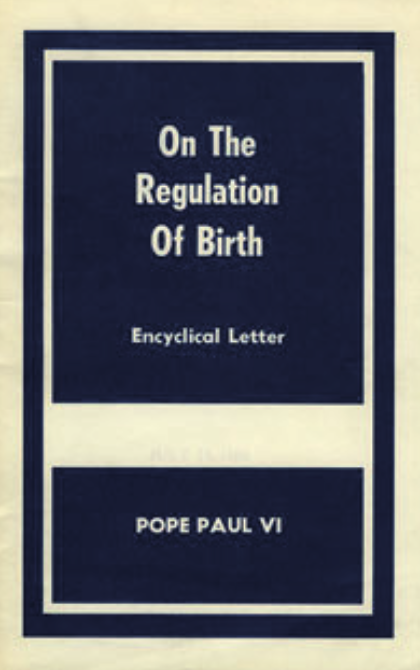
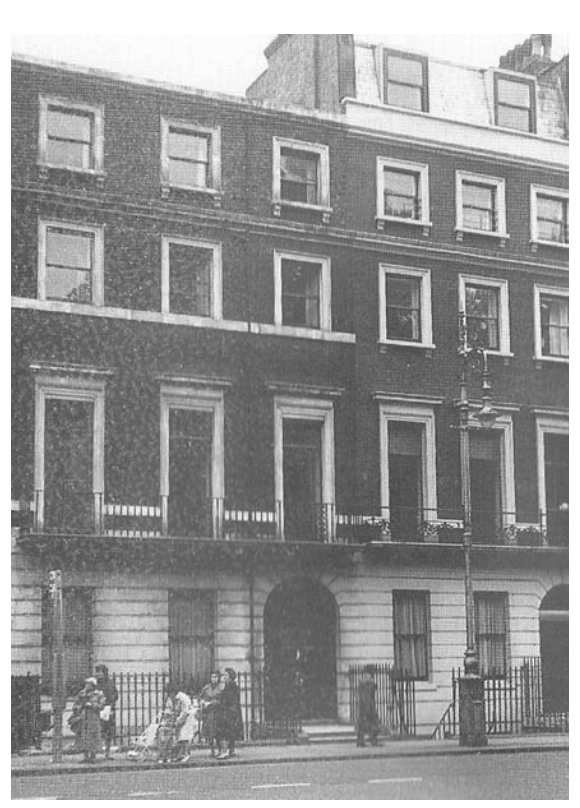
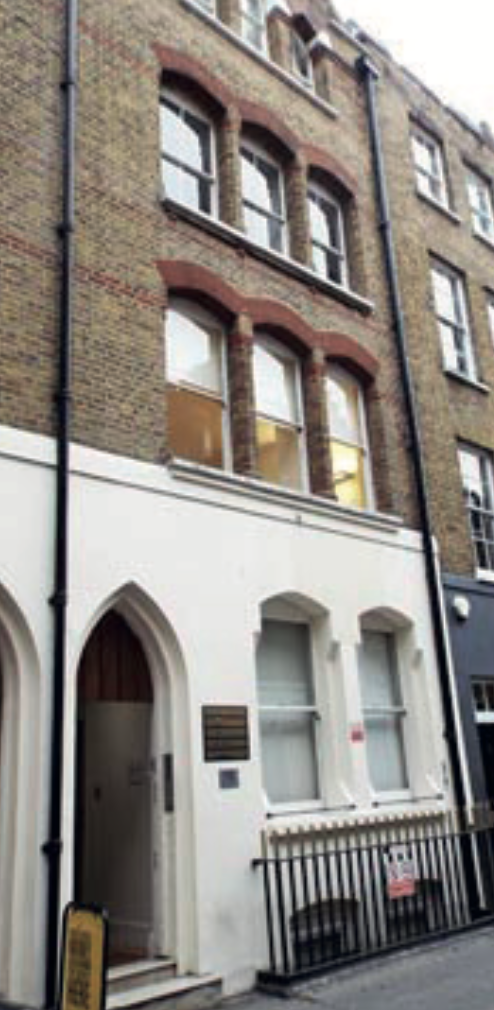
Central to the Association's success in its early years was the London Circle, with its huge membership and close proximity to the headquarters of the national body (in the 1950s in Portman Square, and later in Carlisle Street, Soho). By the late 1950s, this Circle was so large that opinion was divided on whether the Catholic population of London would be best served by the establishment of new Circles close to Central London or by providing separate meetings for Catholics in different regions of the London area. In fact from the late 1960s onwards the London Circle declined in size rapidly, being badly affected by the adverse reaction of many members to the Humanae Vitae encyclical in 1968 and later the closure of the Association's Carlisle Street headquarters in 1977. In recent years the London Circle has become dormant.
Jonathan Bush is attached to the Department of Theology and Religion, Durham University.
- Research for this article was carried out using the Newman Association's archive held at Ushaw College near Durham. The author is once again grateful for the generous stipend offered by the Newman Association Council to complete the researching and writing of this article.
- I am particularly indebted to Peter Hambley for sending me his memories of the North Staffordshire Circle.
Part 2: The Newman and the Universities
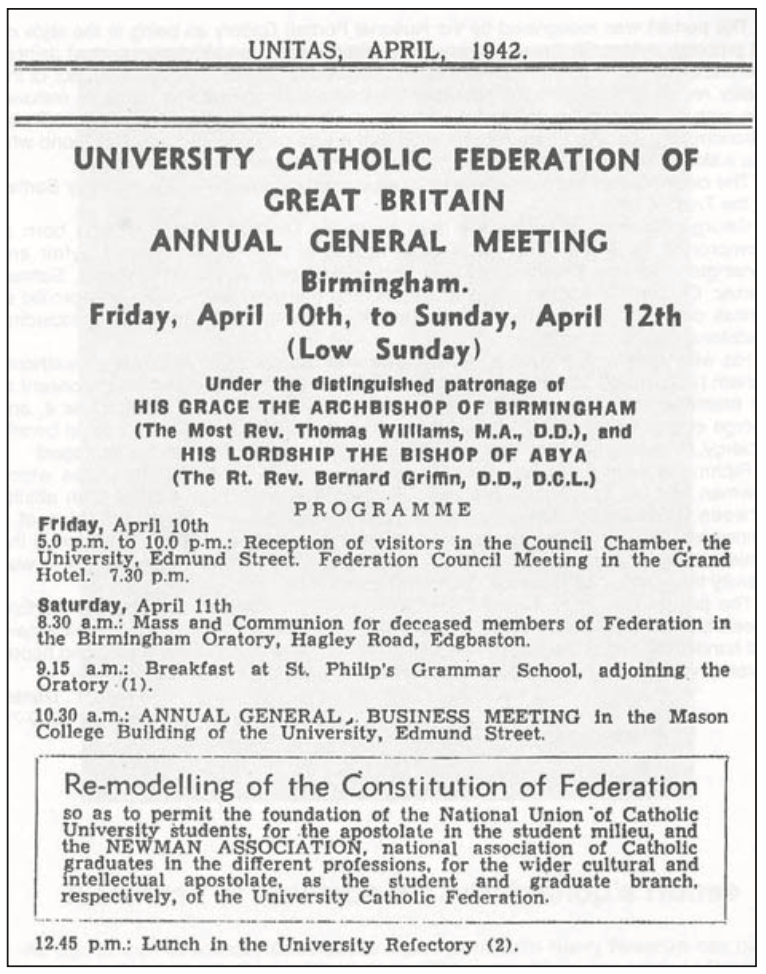
The changing nature of the Newman Association has been reflected in its connections with the universities. The Newman Association was, after all, established as a graduate society, developing out of a separate organisation, the University Catholic Societies' Federation, with a view to encouraging the intellectual apostolate through an educated laity. Links with the universities were an integral part of this, with one of the original aims of the Association being "to facilitate the higher education of the Catholic laity". (Article 1 G Memorandum April 1947). This was borne out both in terms of supplying a ready-made audience of Catholic graduates for its membership but also through collaborative extramural and adult education courses designed to encourage a deeper intellectual understanding of theological issues.
Promotion of the Association to the Catholic students of the major universities was notably evident during the 1950s, often because Circle members had connections with the universities themselves. In 1954, for example, Mr T. G. Dawson of the Edinburgh Circle, and a lecturer at Glasgow University, spoke to new graduates on the aims of the Newman Association. The Association's Annual Report (1954/55) noted that since the establishment of the University Catholic Chaplaincy in Newcastle opportunities to work with the Newcastle University Catholic Society had greatly increased and the Circle entertained final year students to a sherry party "which was a great success and very well attended".
The following year the Newcastle Circle and the University Catholic Society organised the 1956 Joint Regional Conference on "The Bible and Prayer" which 130 people attended. Most university Circles also arranged special "academic" Masses for the students, such as the Southampton Circle, which celebrated Mass on the Feast of Christ the King, the Feast of St Thomas, and on the University Commemoration Day in May 1956. The Nottingham Circle also allowed students to attend its monthly lectures free of charge. Such initiatives with the local university Catholic societies were paying dividends, clearly evident in the results of a questionnaire during the 1957/8 year which found that a strong affinity was felt between many Circles and the local Catholic student population. By the late 1950s plans were even in place for local Circles to assist the national University Catholic Society with the formation of similar societies in Colleges of Advanced Technology, Technical Colleges and Training Colleges.
This targeting of the Catholic student population was also mirrored in the role of the Association in adult education. Certainly, during the early years of the Association, adult education was at the top of the agenda, particularly for those Circles based in university towns. With the largest membership, the London Circle led the way in this field, working with the University of London to run eight regular annual courses and three shorter special ones in the early 1950s. It was far from the only Circle to offer such a service during this period, with the Glasgow Circle responsible for five courses of lectures sponsored by the extramural department of Glasgow University and the Local Education Authority, with all lecturers being active members of the Circle.
Other Circles, such as Birmingham, Bristol, Edinburgh, Nottingham and Sheffield also offered annual courses during the 1950s. Edinburgh's courses included topics such as "The art of teaching according to the theory and practice of Thomas Aquinas" and simple talks on parenthood in all its aspects with special reference to medical matters. The lack of a university in a particular town where a Circle was formed was not necessarily a barrier to the establishment of adult education. The Middlesbrough Circle, for example, developed close links with the Extramural Department of Leeds University to offer a course on Modern Art during the mid-1950s.
From the 1970s onwards the connection between the Newman Association and the universities was a little less cordial, which can perhaps be charted from the Association's decision in 1970 to relax the membership criteria from accepting only Catholic graduates to any Catholic over the age of 21. In some Circles, there seemed to be a creeping sense of embarrassment at the Association's previous close connection with the major universities. During the 1979 AGM of the Swansea Circle, a Circle with a strong connection to Swansea University, the chaplain used his speech to decry the false impression sometimes given by such a connection in the past. "Some perceive it as a (group for) lay apostolate, middle-class, Catholic intellectuals", argued the chaplain, "(but) this is outdated and a false impression. It (the Newman Association) should not be a discussion group, rather it fulfils a role in adult catechism, informing people about recent Catholic problems." Similar sentiments were shared in the Association's Annual Report for 1983/4:
"Unfortunately in its early days the Association allowed its image to become clouded with an air of exclusivity and many Catholics outside it still regard the Association as one for 'eggheads only'. It is surprising that this impression still persists, especially as the diverse forms of higher education now available have led to the blurring of the concept of a 'graduate'. The fact is that the Association is now open to all who feel called to join in its activities and share in the intellectual apostolate."
In 1994 the Inverness Circle informed the National Council that it wished to secede from the Newman Association and form its own discussion group because, as the Chairman argued, "the name Newman still has a university attachment and this possibly was offputting regarding getting new members to join."
This is not to suggest that the Association did not recognise the importance of creating links with the universities during these years. In its report "The Newman Association – Future Policy", published in 1985, recommendations were made that there should be "the closest collaboration between Circles and the local High Education Chaplaincy whether it relates to a University, Polytechnic, or some other institution" to try to encourage students to view the Association "as a natural outlet for their activities later on". "One of the Association's primary aims", the report further suggested "must be to establish or re-establish Circles in those places with institutions of Higher Education which do not already have one."
During the 1994 AGM it was also agreed that free full-time membership of the Association should be offered to Catholic students. Such initiatives only had limited success, however, particularly when contrasted with the strong and easy bond the Association and the Circles had formed with the higher education community during its early years.
Jonathan Bush