Jonathan Tulloch, the naturalist and author well known to readers of The Tablet and The Times, recently gave a challenging talk to the Cleveland Newman Circle on hope, nature, and planting trees.
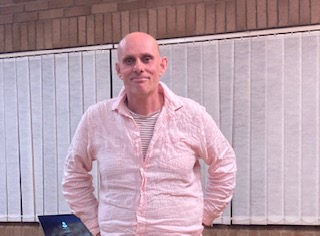
Jonathan Tulloch, the naturalist and author well known to readers of The Tablet and The Times, recently gave a challenging talk to the Cleveland Newman Circle. The title of his talk, chosen before this summer's heatwaves, was 'Our home is on fire…..time to act' but his overall theme was 'Hope'. Despite the problems of global warming Jonathan was keen to be positive, sharing ideas by which, mindful of Nature, we can build hope for the future.
In his lively talk, Jonathan began with a recent experience. In Soho, London, he heard crowds shouting with wonder at a huge screen showing pictures of a forest scene with birds and butterflies. He felt near despair at such emotions directed at artificial images: would these people ever know real Nature?
Jonathan believes that God expects us to help create the world. Living through a summer of drought and heat, we can choose to help Creation since 'It's better to light a candle than to curse the dark'. His own contribution - shared with us - focuses on trees. Over the years he has planted a kilometre-long row of trees near his house, watering them as necessary from a spring. He encouraged us to consider doing this: maybe planting a tree in a garden, near a church, in wasteland, - perhaps as a community endeavour.
With great enthusiasm Jonathan discussed the ecological importance of trees. They support our atmosphere, provide shade, and give shelter to birds and insects. Bees collect nectar from their flowers; many species - including us - eat their fruit. They are great travellers! Oak seedlings grow beneath parent trees, but an acorn carried off by a jay can germinate miles away. The seeds of a beech can be blown for two miles, and a willow's seeds can travel thirty miles in a gale. An alder's seeds can survive in water for a year, then germinate far from their parent. However human management, both urban and agricultural, tends to limit trees' spread.
The 'spirituality of evolution' should be considered, since humans evolved among trees. We are part of Nature but self-aware, so we can think about our relationship with it. Many people, focused on 'technology', just seek wealth and power. However we should foster actions to support Nature, and prioritise contacts between people; above all we should cherish a sense of hope!
We can plant trees rather than contribute to our planet's degradation. Jonathan's final advice: 'Go plant a Victoria Plum!'
For further information about the programme of the Cleveland Newman Circle, e-mail p.egerton123@gmail.com or phone 01642-645732. Talks are held in St Mary's Cathedral Hall, Coulby Newham, TS8 0TW. All are welcome!