A report on the Newman Association Assembly held at Hinsley Hall, Leeds, in October 2015, addressing the question 'Is the Newman Association worth saving?' — covering discussions on mission, communication, finance, and the way forward for the Association.
More than 40 members attended the assembly at Leeds on October 10th and 11th. The following pages include reports on the proceedings and discussion of the action taken by Council so far. There is also a selection of responses received from Circles and individuals.
A Message from Gerald Williams
When, a few weeks after the event, I reflected upon the Newman Assembly at Hinsley Hall, Leeds, the first thing that occurred to me was, what a positive experience it was. The Assembly was asked to answer the following question: Is the Newman Association worth saving? – a very challenging query, as it was intended to be. As much of the detail of the Assembly will soon be posted on the Newman website, I propose only to give an overview of the weekend.
The success of such a conference usually requires meticulous planning and this conference was no exception. Huge credit must go to Kevin and Freda Lambert and to Carole O'Toole for all the work they did in advance of, and during, the conference weekend. We were also indebted to the Diocese of Leeds for the exceptionally good facilities at Hinsley Hall; we were also fed extremely well.
The conference got off to an excellent start with an inspiring introduction by our Chaplain, Father Fabian, who addressed the subject of "Mission" with passion and with his usual thoughtfulness, after which the delegates went into their first groups' session. Clearly they were highly motivated and the ideas began to flow as evidenced by the feedback. The immediate response to the headline question was a resounding "Yes, the Newman is worth saving", but if it is to survive for another 75 years it needs to change, modernise, market itself better and – whilst remaining firmly Catholic – it must find ways of making all members equal; a tricky bit of squaring the circle in relation to Associate Membership needs to be achieved. The quality of the feedback spoke volumes for the note-taking within the groups and also for the abilities of the spokespersons to convey the groups' ideas.
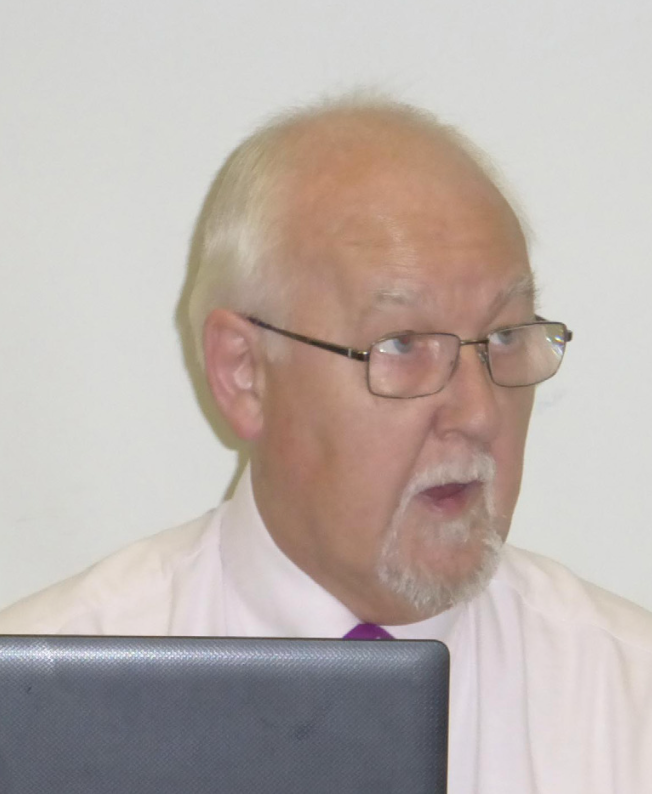
Gerald Williams, President
To an extent, Father Fabian's address had set a tone for the Conference and I noted, in particular, that although many different, sometimes conflicting views were expressed, they were all received with great respect by the audience. In fact, courtesy and intelligent communication were two of the outstanding features of the weekend. The only word with which I could possibly take issue, but which was used occasionally as a criticism of the NA, was "elitist". I would make no apology for the Association's determination to maintain high standards at all times, but I saw no evidence at the Conference (or in any talks I have ever attended) where there has been any suggestion of elitism; there is probably less now than when the Association was formed by and for Catholic graduates and university students in 1942.
Some thorny issues
The Saturday afternoon session was occupied by Finance – with a very thoughtful exposition by Anthony Baker. This subject also provided some thorny issues: to list but two, why cannot the larger Circles keep more of the income that their membership generates, and why have we given so much of our income from bequests to the Centre for Catholic Studies, Durham University. Of course finance is closely related to membership, and membership to publicity and communication, which were topics raised by all the break-out groups.
After supper some delegates watched a film on the life of Cardinal Blessed John Henry Newman, courtesy of a kind member of the Eastbourne/Bexhill Circle. Others repaired to the bar or lounge, whilst others tried to sift through the feedback from the groups to prepare a core programme for Sunday morning.
One result of the breakout sessions was the realisation that "A (Newman) Star is Born". Not sparing his blushes, but Peter Firth (North Merseyside) had made such a persuasive case for a new style of "marketing the Newman Association" that he was asked to forgo his evening's relaxation and prepare a PowerPoint presentation for the start of the Sunday session. This was very well received.
Again the attendees went into groups to discuss, inter alia, the following thoughts:
- How can the Association fulfil its Mission? Whose responsibility is it?
- How can we assist potential (and current) members for whom membership fees are prohibitive?
- How can we improve our profile on the Web? Do we use modern resources well?
The responses were overwhelmingly concentrated on three areas:
- Mission
- Communication
- Finance
Consideration of these issues is to be carried out by three small groups, normally of six persons, with Council members in the minority. These groups will hold discussions and, we hope, will make their recommendations to the membership in time for the next AGM, in Manchester next June. Where we will go from there is up to the membership.
Gerald Williams
President
Summary of the discussions and decisions at the Assembly, October 2015
Broad agreement was reached to commit to the following:
- To examine the possibility of changing the membership rules to enable all members to be full members.
- To establish working groups made up of Council and non-Council members to consider changes to
- a the mission of the Newman Association
- b methods of communication between Council and Circles and between the Association and the wider Church
- c financing the Association
- To modernise the membership form. It should be made available online and the new version should remove the requirement for sponsors and exclude the word "profession".
SUMMARY of the discussion of the main themes
Any attempt to summarise the main themes has to take into account the wide variety of views expressed on the majority of the themes discussed below. The need for the Newman Association to remain in existence was undisputed. Many people expressed the view that the Newman Association occupies a unique place in the Church by providing an independent forum where lay people meet freely to discuss topics of their choice. Also, with near-unanimous support, the view was stated that the Newman Association should remain a Catholic organisation. More than one speaker described the Association as a "safe" place for discussion and learning to take place. The Assembly did not, to any great extent, explore the role of ecumenism with regard to the future development of the Association.
• The Mission of the Newman Association
Much debate centred on the mission of the Association and on whether a new image developed from a renewed vision for the Association in the 21st century might offer a significant way forward which could help to increase the membership of the Association and broaden its age profile. One member recommended the use of business modelling techniques in rebranding the Newman Association and analysing how we might take the Association forward. Such techniques could include identifying our USP (unique selling point), selecting our target audience, considering "product" marketing and developing up-to-5-year business and financial plans on an annual basis; possibly, too, we should commission a new logo.
For some members such jargon did not seem to fit in with the existing culture of the Association; however, it was agreed that these ideas could be used as a framework for re-examining how we promote the Newman. Many agreed that the establishment of a working group to look at these ideas in more detail would represent a clear and positive step forward. The general consensus was that it might be sensible to limit our target audience to the 40/50-plus age group rather than to attempt to reach out to much younger people.
• Methods of communication between Council and Circles and between the Newman Association and the Church
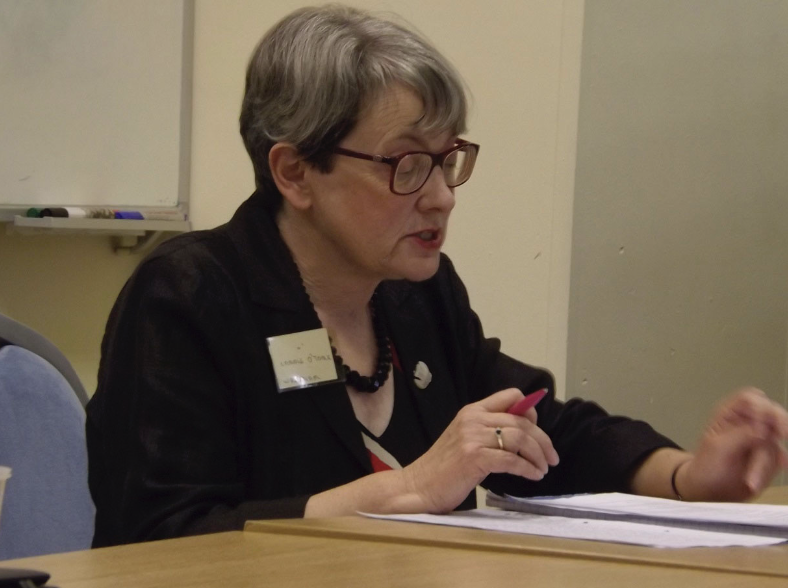
Carole O'Toole
Communication as a general theme was much discussed and varying opinions were expressed. Some members felt that much good work following the last two Circle Officers Conferences had led to considerable improvements in the communications between the Circles and Council. In particular, the website had become an invaluable source of information. Others argued for still more and better communication between Council and the Circles. Should there be a greater awareness of how Council makes decisions? Should the minutes of Council meetings be circulated to all members?
There was more of a consensus concerning the need for much better communication from the Newman Association, not only within parishes but specifically to reach the hierarchy. A definite need for more active promotion of the Newman Association across the Church was identified; ways of achieving this could possibly form the remit of a specialist working group or form part of the scope of the more general working group looking at the overall mission of the Newman Association.
There was near unanimous approval for, and appreciation of, The Newman, the Association's regular journal, as a means of communicating Newman Association activities but also as being a valuable benefit of Newman Association membership.
• Financing the Newman Association.
Here again many differing, and sometimes opposing, views were expressed. Some members were quite happy with maintenance of the status quo, but others suggested root-and-branch change largely focused on the idea of a "bottom up" organisation in preference to the current "top down" structure; in financial terms such a reorganisation might involve Circles retaining more of the membership subscriptions than is at present possible. The questions of funding university bursaries and membership of other Catholic organisations also elicited differing opinions, with equally passionate views being expressed for and against. The formation of a working group to consider how the Newman Association manages its finances was suggested and generally agreed upon.
Carole O'Toole
The Use of the Association's Finances
Anthony Baker, former President and until recently acting Treasurer, gave a briefing at Hinsley Hall on the use of the Association's financial resources to support its Mission.
To begin with he outlined the financial situation, first at the national level and then at the level of the local Circles, in aggregate.
| National Income 2014-15 | £000.0 | National Expenditure 2014-15 | £000.0 |
|---|---|---|---|
| Subscription | 14.6 | Circles expenditure | 8.8 |
| Gift Aid | 2.5 | Journal and website | 8.8 |
| Bank interest | 1.9 | Lectures, publicity | 2.6 |
| Donations, conferences | 2.0 | Liaison bodies (e.g. Pax Romana) | 1.8 |
| Legacies | 2.0 | Governance | 3.2 |
| Postage etc | 1.5 | ||
| Grants | 3.0 | ||
| TOTAL | 23.0 | 29.7 |
| Circles Income 2014-15 | £000.0 | Circles Expenditure 2014-15 | £000.0 |
|---|---|---|---|
| National grant | 6.3 | Circle meetings and lectures | 7.5 |
| Circle functions | 0.8 | Hire of rooms | 2.9 |
| Income at meetings | 4.5 | Secretarial costs | 1.1 |
| Other | 0.6 | Other | 2.0 |
| TOTALS | 12.2 | 13.5 |
Some of the speakers at the Assembly
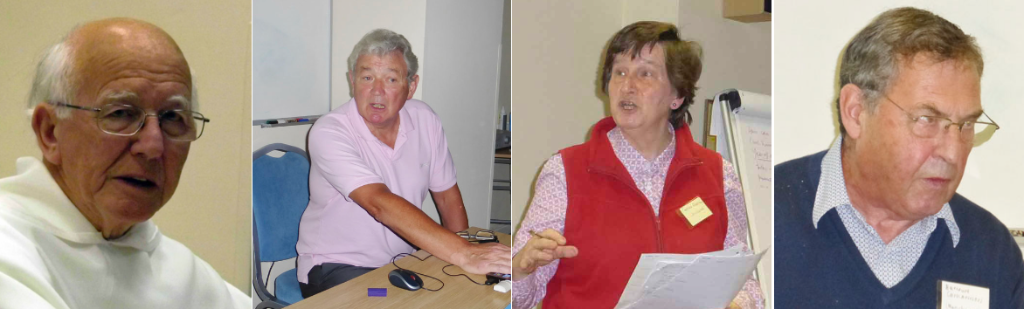
Fr Fabian Radcliffe, National Chaplain | Peter Firth, North Merseyside Circle | Patricia Egerton, Cleveland Circle | Harcourt Concannon, Manchester & N Cheshire Circle
The appropriate use of the resources depended, he said, on how the Association wished to develop. He set out three distinctive future approaches; these were not the only models, he explained, but they would serve to stimulate debate.
• External mission
The association could pursue existing partnerships and seek new ones. We could be prepared to be the funder and the partner organiser in evangelising events. We would promote our distinctive slant: intellectual enquiry, dialogue and discussion.
• Delegation to Circles
This emphasis might involve recycling money mainly back to the Circles. They would be encouraged to pursue their own approaches. The central role of the national Association would be focused on the setting-up of new Circles, together with overall governance.
• National/Circles partnership
This model could involve the encouragement of Circles to develop local evangelising roles. There would be more conferences, debates and dialogue. There should be promotion of increased numbers of Circles, especially where these could be in easy local partnerships – for instance, with dioceses.
With all these models, he added, there should be consideration of the Association's relationship to events promoted by the hierarchy through the Bishops' Conference.
Points of View
Various written submissions will be made available for inspection on the Association's website. The following representative selection of extracts is given without individual attribution.
As a Circle we have always been ecumenical and members feel quite strongly that Christians should be admitted to full membership. However, the Circle agreed it was quite important that the Newman is seen as an organisation of Catholic laity that is integral to the Catholic Church. We could think of no other lay organisation which duplicates the role of the Association.
We accepted that the Newman has in general a post-retirement age profile. This does mean that there is likely to be a natural process of losing members but at the same time means that as other people approach retirement age we will be able to recruit new members. We saw this as a continuing state of affairs and were not unduly disturbed at the lack of young members – which seems to be a factor across many different voluntary organisations.
In general we felt that The Newman needs to communicate more and better. This relates both to the way in which the Association carries out or enables communication within the organisation and the way in which it relates to bodies outside the Association. The former includes communication between the centre and the circles, between the centre/circle and individual members or between members and officers. The latter includes communication with the hierarchy or other Catholic organisations, with the media or with the public. Different approaches to communication are likely to be needed to tackle each of these cases.
The Newman Association means a great deal to us. But while we wish to agree that it is worth saving we also have serious doubts as to whether we have the resources to do so adequately. We value what we do, both in terms of the talks which we organise and the camaraderie that exists between the members and friends of the Circle. However, many of us are increasingly suffering from health problems and the limitations of old age. We sometimes wonder how much longer we can carry on.
Amongst lay organisations in the Church we are slightly different, we are independent and we need to promote this. We are all on the same side. We need to seek dialogue with the Bishops and we need a stronger voice within the Church. There is a tension between us and the hierarchy but we are a real part of the structure of the Catholic Church. The hierarchy doesn't really want a relationship with us, the Bishops are ill-at-ease with us, but we must speak up for our Faith, which is our right.
Unanimously, our group felt that the Newman Association should seek to fulfil its role through the Circles, with the majority of the funds channelled through the Circles. Obviously we need a central Council, for governance, legal issues, liaison, cross-fertilisation, helping to seed new Circles, organising national conferences, but we don't want Council to appear so top-heavy and for those on Council to appear so burdened.
As there is very little incentive for visitors attracted to Circle talks to become members of the Newman Association we propose that for a period of one or two years our resource-rich bank balance should be used to fund a subscription holiday for new members. Thus they could taste the full benefits of membership, and also perhaps be encouraged to join Circle committees, before paying any subs. In addition we propose that our central resources should be explicitly available to those who would incur hardship in paying Newman subs, and to widow(er)s who should be charged at half the "married rate".
Evangelisation? We are not sure about this. We see our role as Newman members as providing opportunities for people to grow in faith and understanding. Rather than being missionaries we provide witness to Christ by the example of our lives and actions.
We agreed that the Newman needs to have a sense of Mission. We tried to express this in practical terms. We felt that our overall approach should be: "What can we do for the Church?" and we considered the likely Newman contribution. While what the Newman does by way of enabling critical understanding of the Faith in a sense serves the Church as part of adult formation this is a different type of formation to that provided, for example, through the training of Catechists or the CRRS. A possible method of widening the Newman contribution would be to focus on ways of supporting the New Evangelisation.
Our relations with the Hierarchy should be redeveloped (we use this word rather than "change") so that we are seen to present ourselves to the Hierarchy proactively. But it is important that however helpful to the Hierarchy we remain independent. We have in mind the need for a series of positive acts on our part geared especially to ways in which we might be able to make meaningful contributions to the work of New Evangelisation.
We took the Mission of the Newman Association within the Church to be that of supporting the development of an informed, educated laity – that is, providing the opportunities and the environment where people can safely explore their Faith and learn more at their own level among like-minded folk.
The Bishops' Conference move to support New Evangelisation, as set out in "Proclaim 15", suggests a way of offering the resources of the Newman. If one also considers the "Year of Mercy" we would have an area where the resources of the Newman could be useful to bishops. While the theme of "mercy" is wide it could be interpreted very effectively in terms of critically understanding the problems, for instance, of homelessness and migration.
Hinsley Hall, Leeds