Extracts from the keynote address by Dr Clare Watkins and a panel session at the Newman/NBCW Conference in Coventry on November 14th, exploring ecumenism, the teaching-and-learning Church, and dialogue across difference.
Extracts from the Keynote Address by Dr Clare Watkins
Towards a Learning Church
But you are not to be called rabbis, for you have one teacher and you are all students. Nor are you to be called instructors, for you have one instructor, the Messiah. Matthew 23, 8-10
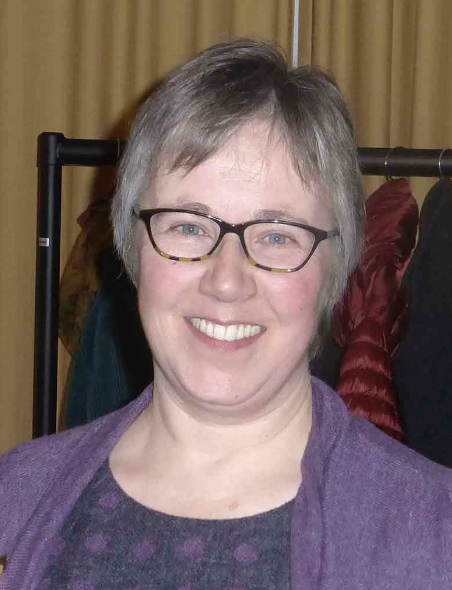
Dr Clare Watkins
A commitment to dialogue
Today I want especially to speak of a very particular set of ecumenical practices: those of academic theologians who serve on bilateral conversations. The Roman Catholic Church has been committed to these bilateral dialogues for over 50 years now and it has been actively involved in the World Council of Churches Faith and Order Commission since its beginning, although we are not members of the WCC. Sometimes, we must be forgiven if we wonder whether it is all worth it. I remember the excitement around the ARCIC final document in the early 1980s, and of course there was a huge amount of proper excitement in 1999 around the Joint Declaration on the Doctrine of Justification between Lutheranism and the Catholic Church, with an affirmation from the World Methodist Council. There have been innumerable resolutions of historical differences between Catholics and Anglicans, Methodists and Lutherans, and so forth. And despite all this work in these rooms, we still read the texts and go off on our separate ways. Many Church people think that what we do in dialogue is irrelevant. Why do I, and others like me, still commit to it?
For myself, to answer that question takes me to the central argument of this presentation: that ecumenism – and ecumenical dialogue in particular – is one of the key ways in which we can be renewed as a learning Church. In what follows I want to draw on this practice of ecumenical dialogue or conversation and explore its implicit understanding of teaching and learning – in other words, of pedagogy. Ecumenical dialogue is not simply part of a practice of Faith and Order, narrowly understood as one of the expressions of ecumenism, but rather it is a practice transformative of Church, and of persons and of ecclesial cultures. And this, because it is a particular way of participative and mutual learning.
The work of ecumenical dialogue is about conversations across our differences, in order to seek a deeper unity. It is not about persuading one another, and it is even less about simply defending one's own position; it is about understanding our differences and preserving our present and future unity, the unity for which Jesus prayed.
Learning across difference
Dialogue is not simply an exchange of ideas; in some way it is always an exchange of view, of personal perspectives and realities. I am reminded of the eight days or so every year I spend, with others, serving on the Methodist-Roman Catholic international dialogue. Last month we met in Malaysia which has to have the least hospitable climate I have ever experienced. In this strange environment we are all displaced and taken out of where we are comfortable. We do this all in the name of dialogue, but it is a very practical way of conversation and a practice of our entire person. It cannot be limited to any simple notion of the cognitive. So what do we see in this vision of ecumenical dialogue? It is true that these dialogues are characteristically intellectual and theological in the form and content. But what reflection on these aspects of teaching and the experience of those who do it strongly suggests is that, for all this, the bilateral dialogue's work is not abstract and it is far from unspiritual. Rather, it is the work of conversational learning between Christians – and hard work.
This is why it is exciting; not just for ecumenism but also fundamentally for life in, and for, the Church. It is a practice which helps us to become more fully churched, a community of disciples, a community of learners, and it is a practice that makes clear that in order to be a learning Church there are some tough spiritual disciplines that are needed long before, and after, any intellectual academic expertise. We can learn from these texts, and from our own experience of conversation, a powerful list of qualities that are required for being a community shaped for dialogue and shaped for learning: honesty, humility, attentiveness, patience, steadfastness and above all love, especially of the one who is different, who is strange, who is challenging.
In the end it is the embodiment of these virtues of learning across difference that keeps me and the others going back to these meetings. For in those meeting-rooms I invariably touch something of the heart of Christ's Church. And that something is about allowing God to teach us all together as his disciples and allowing ourselves to be taught by God, typically through the ones who are other to us, who are strange.
My argument in this presentation is that the work of ecumenical conversation and, formally, the bilateral dialogues, embodies a way of being Christian together which is a gift to the whole Church. Too often, as Catholics, we have emphasised that ours is a teaching Church, with clear doctrine. We often stress the importance of the Magisterium of the Church without stopping to consider what teaching and learning consist of. As any good teacher will tell you, they consist of a whole lot more than asserting clear statements to pupils who simply have to remember them when asked and go along with what they are being taught. If the Church is really, and effectively, to be a teaching Church then it needs to renew its structures and language as a teaching and learning community. The great insight of ecumenical conversation is that it is precisely in these exchanges of gifts across our differences that new and authentic insights and learning are received and formulated. The call to ecumenism is nothing more than the call to be authentically Church, a community of God-learners and seekers.
A teaching-and-learning Church
My own ecclesiological preference has become to refer to our Catholic Church not simply as a teaching Church but as a teaching-and-learning Church. Learning is in fact a way of personal formation which is profoundly transformative. What is here being described concerning doctrine and teaching in our tradition suggests that our commitment to the Church as a teaching Church, and to the body of doctrine as enabling deep learning envisaged in the tradition, must carry with it this appropriateness of pedagogy.
The deep-learning, participative pedagogy that I am suggesting here has far-reaching implications for the ways in which a teaching-and-learning Church shaped by such an approach understands and practises its mission. In particular, for our purposes, it emphasises the ways in which the communal discernment of God's Word in the Church requires not so much a group of expert teachers, with a suitably well-behaved cohort of learners, but rather a pedagogical community in which fundamentally all the disciples are students. And this is where ecumenical conversation and dialogue, according to my description, can be given a proper place, and be recognised as a set of practices that is transforming of the whole Church.
Of course, to work ecumenically is primarily about seeking greater unity among Christians, and it is increasingly recognised thereby as contributing to the movements of reconciliation in all spheres of our broken human living. But fundamentally ecumenism – especially, clearly, when understood as receptive ecumenism – is about the renewal of Church culture. It is one of the several practices which, I believe, the Spirit is using to chasten any overly didactic insistence of the teaching Church and draw us into that beautiful Christian pedagogy of mutual discipleship under the tutelage of Father, Son and Spirit.
We have actually opened up a deeper understanding through these dialogic practices. One of my key favourites here was the work done around baptism which, again, we take for granted as something which Christians have in common. Actually the conversations across the differences which persist in our understanding of baptism have led to an extraordinary deepening of the understanding of baptismal vocation. This would be a fascinating example to explore in more detail. For now, however, I want simply to consolidate the point which is becoming clear: that ecumenical conversational practice, far from being the marginal preoccupation of a few – and I have to say, of an ageing few – is actually at the heart of the renewal of Church for the future.
In particular, this renewal is one which seeks to draw churches from the rigidity of informative and regulative understanding to the receptive, to an outward-looking attentiveness, a looking to the other who is different. It is, I suggest, of a piece with the renewal of Pope Francis and his vision of Church as committed to listening and to exploring its peripheries as its essential centre. The recent Synod in Rome, I think, testifies both to the promise, but also to the great difficulties, of this commitment to receptivity and learning from the other – even the so-called "transgressive" other.
I have been talking about my experience with dialogue; this is at its heart a spiritual practice based in conversational learning and the conversion of each person to attend in love to the others – those who are strange, those who are different, challenging. When something of what goes on in the demanding meeting-rooms of ecumenical dialogue is increasingly a practice in ordinary Christian life everywhere – and I think it is, actually – then we will begin to see a renewed Church, a learning Church, which knows itself as a community of disciples taught only by one Father.
Panel Session at the Coventry Conference
The Newman's Anthony Baker was the moderator of a panel consisting of Dr David Cornick, Rev Callan Slipper and Dr Clare Watkins
David Cornick, a minister of the United Reformed Church, is General Secretary of Churches Together in England. Callan Slipper, an Anglican priest, is Ecumenical Facilitator of Churches Together in Hertfordshire. Clare Watkins, a Catholic, is a lecturer in Ministerial Theology at the University of Roehampton.
Question: Where now for ecumenism?
David Cornick
Cardinal Walter Kasper has shown there is an amazing degree of doctrinal unity. But some differences remain, and moving any further is going to take a huge amount of theological work. So what should we do in the interval?
For now, we need to do all kinds of work for the community, and ecumenism has to be represented at each generation. But we have to recognise that tension remains. I think we've got to be grown up and recognise the fact that there's a lot of genuine anxiety out there. It's not something that's attractive, but it's something that Jesus tells us – if I read the Gospels rightly – not to worry about.
Callan Slipper
A major factor in why there is currently an emphasis on social action is that it is the influence of the Holy Spirit. There's been a move abroad among Christians to do things. They recognise the need, and they instinctively do it together. Instead of people coming together from different places in order to become one, when we engage in mission and action together we already recognise ourselves as being one. We should sense this feeling of being one body. It changes the context of the relationship. We also need to speak to one another and deepen our understanding of one another. This is not something that can be done only in the theological dialogues, it is something that also needs to be done at the lower levels. The whole receptive ecumenism agenda fits in perfectly. It gives us a way of entering into a conversation with one another so that we get to understand each other more and more deeply. It does help to overcome the fear of each other.
We have a list as long as our arm about the reasons why we are frightened of others: they might make us change, they might hurt us, they might say something that makes us feel uncomfortable. The joy of the receptive ecumenism approach is to say: "All right, I'm not perfect, but what can I (we) learn from the other?" Firstly, we are working as one body for the transformation of society, which is basically a mission agenda; and secondly, we are learning to appreciate and love one another more deeply.
Question: What are the fruits of bilateral agreement?
David Cornick
I said to one of my students: "What about the Joint Declaration on Justification?" She said, "what?" The document stated that justification, although regarded as one of the causes of the Reformation, should no longer be considered church-dividing. This is the problem of reception. The relationships between churches are very different from the way people understand those relationships to be. How do you get the fruits of that down into the pews, the lecture rooms and the seminar rooms? I wish I knew, because reception is really at the heart of change. The Catholic Church is still receiving the documents of Vatican II, and probably will be for a century.
Callan Slipper
These things don't go out to everybody because many people aren't interested. One part of the answer is to stimulate interest in the ecumenical endeavour. In my Focolare movement we studied all the ARCIC* documents. Why? Well, we are mostly Catholics and Anglicans and we all wanted to be one. We certainly received these documents, and we were certainly motivated to do it. In Hertfordshire, recently, we had a big day called "Go for Growth" and our panel included people from four or five different backgrounds. It showed the value of learning from one another's experiences.
Clare Watkins
This can be quite a dismaying question in the dialogue commissions when we meet. As theologians we have to examine our own consciences here. The documents we produce are overlong and difficult to read. For example, I am worried that our new Methodist-Roman Catholic ecumenical document about holiness will turn out to be dull, rather than beautiful. The trouble is that the sponsoring commissions do not take it upon themselves to distribute the ecumenical documents, and I am not sure that the sponsoring churches do either. I would encourage the use of these texts academically, at an undergraduate and a master's level – they are really rich resources.
Callan Slipper
The implicit assumption is that lay people are not going to be able to engage with ecumenical dialogue, and if that is the case then we haven't done our job. Increasingly, at these dialogues, we are asking the question: "Who is it going to be for?" We should not separate the discipleship journey and the theological journey.
David Cornick
Here is just one example of good practice. The World Council of Churches has produced a conversions document called "A Church towards a Common Vision" and the Doctrine Panel of the Church of Scotland and the Scottish Catholic Bishops' Conference chose to respond to this paper together. They spent two or three days together producing a joint response. It was really good, and I see no reason why that can't be replicated, at diocesan or maybe even parish level, if the right people are involved.
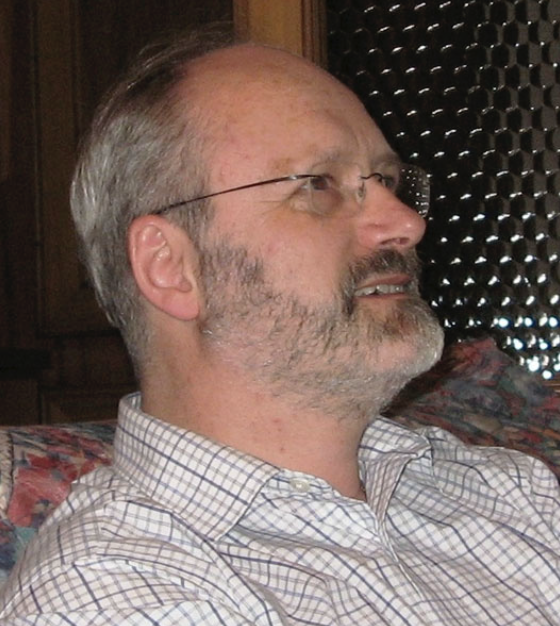
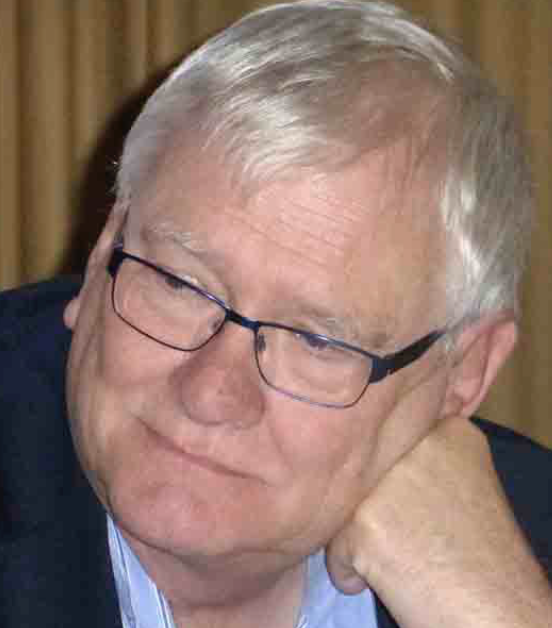
Rev Callan Slipper | Dr David Cornick
* Anglican-Roman Catholic International Commission
Question: Is full visible unity the goal? What, to you, does that structural unity look like?
Callan Slipper
I must say that different people have different ideas about what they are looking towards. I don't see that it matters: we'll recognise what it is when we get there. However, I personally am very keen on structural unity. What I do not mean is that the Church should be one big monolithic institution. I think that God has quite firmly kicked that objective into touch. All the different churches have their gifts and we have to be enriched by these gifts. Some form of pluriformity in the future Church has to be there. But there will also have to be bonds of communion, structure so that we can act together and agree. The shape has to be something that allows for both the one Christian body to speak and act in one concerted manner but then also for that one Christian body to be properly pluriform. Many of the churches are also coming to this same conclusion.
Clare Watkins
This highlights to me the spirituality of the ecumenical endeavour. For all our efforts we know that in the end it is God's gift. We do what we can and we try to move with the Spirit and for that reason I am going to refuse to answer what the structure should look like. We must let go of those questions and let it shape itself.
David Cornick
I believe in one holy and apostolic Church. I believe that Jesus prayed that all his people should be One. It is our responsibility to work towards that goal. But part of me wants not to be a theologian but to be a sociologist. According to the Pew Foundation's latest count there are something like 40,000 denominations in the world, and one thing I would like to lay on the table is the way that Christianity has diversified over the last fifty years. All of us would like to pay tribute to the pioneering work which the Catholic Church has done in entering dialogue with Pentecostals, and that is really important because Pentecostals are now the second largest group of Christians in the world. It is not any longer a simple question of Protestant-Catholic dialogue. It is very difficult to say that there is one aim of visible unity. Catholics and many Protestants may say that, but there are others around that do not share that DNA.
Pentecostal growth is very different from what we understand in mainstream Catholicism and Protestantism. Pentecostals will send a different branch off on its own, and won't be a schism but it will simply be a different network with a different bishop. They are not out of communion with each other and nor will there be doctrinal differences between each other. It is a profoundly different sort of growth, centripetal rather than centrifugal.
Callan Slipper
We have to understand that there are different ways of understanding the Church. The journey we are on is re-understanding the Church.
Question: How do we reach the younger generation?
Clare Watkins
The first thing to say is that not all young people are the same. There are, in the Catholic Church, quite a lot of conservative, reactionary young people. There are also many anti-institutional, non-denominational Catholic youngsters. These differences reflect a desire to understand what it is to be Christian in late- or post-modernity. You have to figure it out for yourself; this is an example of hyper-secularism and post-modernity. And understandably that is either going to take you to a kind of reclaiming of the tradition, or you are going to swim in the delights of post-modern eclecticism: you are not going to be tied to anything and you can go wherever you want.
David Cornick
I have difficulty with post-denominationalism because it is a Catholic concept. I don't think Protestants and Orthodox go post-denominational. But you can tell me I am wrong about that. Balanced against that, my friends in pastoral ministry tell me that if they were to scratch away at the surface of their congregations they would find that they had come from all kinds of places and all kinds of traditions. They are worshipping there because it suits them, and that is what they call post-denominationalism. That's more of a Protestant reality than a Catholic/Orthodox reality. And on the generational theme, younger adults don't understand some of the things that we think are really important, such as the doctrine on sexuality.
Callan Slipper
I have sympathy with those who are going post-denominational. However, life puts really hard questions in front of us, and we have to answer them. You have an unwanted pregnancy, what do you do? There are end-of-life issues. Do you just make the answers up or do you listen to the wisdom of the past? Because of our nature as human beings we have to respect traditions. If we accept the vision of the Church as being made up of different gifts, those gifts are only given in incarnate form. You simply can't do your Christianity in depth without some degree of traditioning. And where is it that people are going when they are doing their post-denominationalism? They are going between churches that maintain these traditions; and if we need to pay attention to what God is doing in the gifts that he gives to the different traditions we need also to respect them.