Brendan Walsh shares ten principles that guide him as editor of The Tablet, from being a custodian of tradition to telling the whole story with honesty and humility.
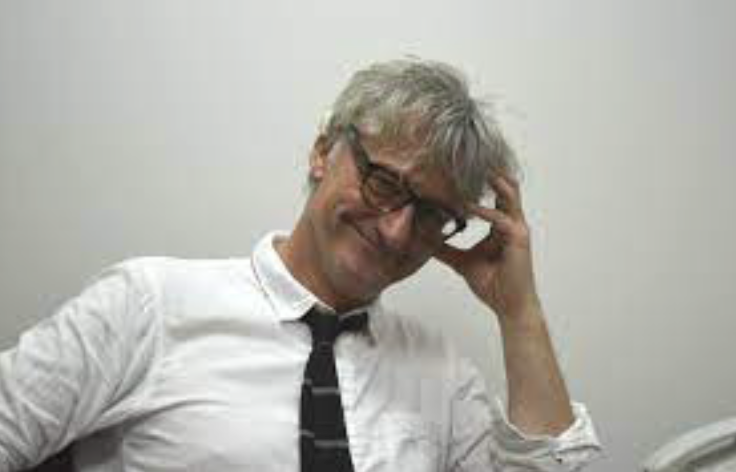 Brendan Walsh
Adapted from a talk given to the Ealing Newman Circle by Brendan Walsh, on September 23rd 2021.
 The Tablet - October 2021
Ten years ago Catherine Pepinster, then Editor of The Tablet, called me to ask whether I would like to have a go at being part-time editor of The Tablet's books pages. At the time I was living in Youghal, County Cork, having a few months earlier left my job as editorial director at Darton, Longman and Todd. A few weeks later I started work at The Tablet's offices in Hammersmith, for two days a week. I had been a reader of The Tablet for about thirty years and I had written the odd book review and article, so I knew some of the people working there. Five years ago, the Board of directors asked me to take over as editor.
I felt like the cat that had got the cream. Like a lot of Tablet readers I had a close emotional relationship with the weekly; it was intelligent, even a bit highbrow, but compassionate, engaging and interested in everything and everyone, particularly the things going on in the corner of the picture. And there was no bossy shepherding of people into heaven along tightly-prescribed routes; there was a sense of being plugged into one of the great streams of human civilisation. Of course, The Tablet has an angle of vision. People say it is "progressive" or "liberal", or whatever; no-one likes to be confined by labels, but this is part of the Tablet's sensibility. But it is a living, growing personality – faithful, honest, generous, inquisitive, irrepressibly reform-minded. Catholicism is as much a matter of the imagination as of the intellect, a way of living and loving as much as a body of teaching. And the Tablet's vision of Catholicism isn't inhospitable or narrow; it is vibrant and dynamic, and it welcomes arguments and debates. Pope Francis has described the Church as "being alive, knowing being unsettled and lively; it has a face, and is not rigid; it has a body that moves and grows. It has a soft flesh; it is called Jesus Christ."
There is a row of postcards on my bookshelf at work, a personal selection of icons: there is Dorothy Day, the anarchist who went to Mass every morning; there is Thomas Merton, the bold peacemaker, who did what he was told by his Abbot (well, most of the time); and there is Oscar Romero, whose defence of the poor cost him his life. The doctrine of the Church was their indispensable map; it was not their destination. Its moral teachings are not electric fences to prevent us straying into wickedness, but springboards to propel us towards happiness and flourishing. We need the rules and we need the referee with his whistle; but it is the game that matters.
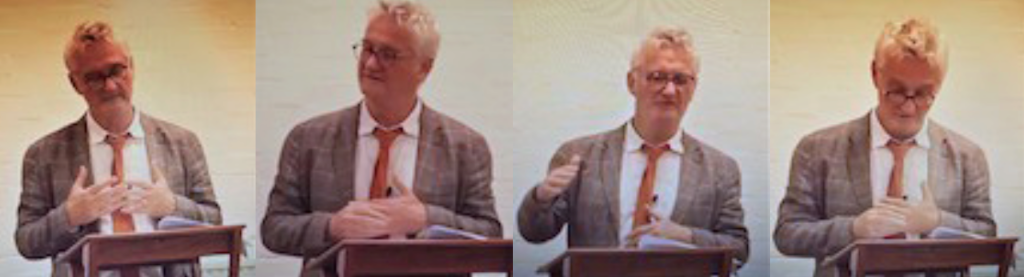 Brendan Walsh
The exuberance of God
Popes come and go; papal preoccupations alter and seesaw. The genius of Catholicism is precisely that it is not seeking to find rest in one register or settlement, but it lives in the flashes of movement between them. This is the exuberance and profligacy of God. Whatever sort of Catholic we are, or think we are, we need the other sort. As Charles Peguy pointed out, if we arrive at heaven alone, God may look at us and ask: "But where are the others?"
We combine deep attachment to the Church with fierce independence; a light in the gloom and, sometimes, a wasp at the picnic. I was asked to provide a title for this talk and I thought, why not think of ten simple rules I might put up on the wall of my office to help me from going off the rails.
One. Remember that you are a caretaker, a custodian. In Traditionis Custodes, the document on the traditional Latin Mass that Pope Francis recently issued - not greeted with universal warmth - the Pope described a bishop as a traditionis custos. It is tempting for bishops to think it all depends on me. That is a mistake that editors can make as well. An editor of The Tablet should remember is that he or she is a link in a long chain. We inherit something, we polish it up, we might rearrange the furniture, we flatter ourselves with things like strategic reviews and relaunches, but what we are doing is keeping a tradition refreshed and renewed. We should look back with attention and gratitude and grace, to receive what is handed on to us; and we should look forward expectantly, wishing to convey undiminished and even with a little added glow the treasure with which we have been entrusted.
In a press conference aboard the papal plane on the way back to Rome after one of his visits overseas the Pope once talked about Catholic fundamentalists who have a nostalgia for returning to the ashes. Catholics are inheritors, custodians of tradition. But tradition is the guarantee of the future and not the container of the ashes. It's like the roots of a tree that give us the nutrition to grow. You will not become like the roots, you will flower, give fruit and be seen to become roots for other people. The tradition of the Church is always in movement, he said; the tradition does not safeguard the ashes.
As you know, we are about to begin a synodal process. And when Pope Francis spoke in Rome last Saturday about synodality he asked people to leave their doors and windows open. "Do not limit yourselves to considering only those who attend or think like you do. Allow yourselves to go out to meet and be questioned. Let their questions be your questions. We must allow people to walk together, a spiritual legion. Do not be afraid to engage in dialogue. And let yourselves be upset by dialogue."
When I think about the role of editor as a custodian of tradition and about the synodal turn the Church is taking I am aware that at the Tablet we have to walk a tightrope; we have to reflect that spirit of synodality, of living with attention, being a place for dialogue between Catholics of very different views, and at the same time having our own clear, distinct position. Our feet are firmly planted in the ground of the Second Vatican Council: our voice is one of reform, delivered with vigour and style but with curiosity and charity and humility. But we can listen to and connect with a wide readership across the Church, while maintaining our loyal base. The Tablet, rooted in its own traditions of independence, is also a living thing, a magazine of surprises.
Second, a simpler thing: there was a wonderful feature in The Tablet earlier this year – it was in June – where a writer, Morag MacInnes, a Scottish writer, remembered her friend, the brave, gentle Orkney poet George Mackay Brown. His work is permeated by his Catholicism. And he once asked, "How do I, as a poet and a writer, present holiness to a Godless generation? Especially as I know nothing about it myself?"
How do we put before the world holiness, forgiveness, reconciliation, when it is no longer familiar with that kind of language? I think that is part of the task of the Tablet. A place of trustworthy, professional reporting, vivid, smart, compassionate comment and analysis, that is able to speak the language of the world and the language of heaven. We have to be bilingual.
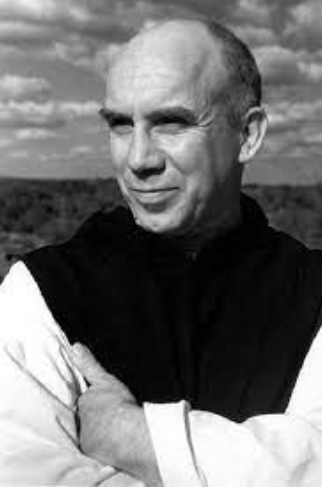 Thomas Merton
A need to be inquisitive
Three. Don't be a know-all. It is quite helpful if you are an editor that you should not know too much, not be too clever. I think you need to be inquisitive and just a little slow-witted. If you know the answer to everything, if you can immediately see the logical flaws in everything you read, your magazine might be right but it will not intrigue or unsettle. What we do is to publish thoughtful and well-written work that explores new ideas and raises interesting questions. I don't know the answer to all the big questions. And good writers help me think those things through. I think that's quite good for readers too. They have a place where good, smart people are saying different things. I think if I was smarter and was sure I had all the answers the paper would be trotting out the same ideas in article after article. No. Better to have things in the paper every week that will annoy some readers. Most readers prefer a paper with tension and movement; not just writing that only ever tells them what they want to hear.
Four. Be brave. Journalism is about trying to serve the truth, doing our best to tell our readers what is happening. What was said, what was done, when and where it happened, without imposing our interpretation on things. Trying to get as near to the truth as possible. Why do I think we have to be brave? It is because much of the media is in the hands of wealthy owners or powerful interests, people with an agenda, who want to use the media to put over their version of events. They want readers to see the news in a certain way. We don't pretend we don't bring our interests and prejudices to our story-telling. But we seek to be independent. We want our readers to trust our stories, to have a sense that they can make up their own minds about what they are reading. Whether it is good news or bad news for the Church, just tell it as straight as you can. There is plenty of room for opinion in a newspaper but in the news section you should not be able to guess, from reading the news story, whether the person who wrote it voted Tory or Labour at the last election, or whether they are right wing Catholic or left wing Catholic, or whatever.
Journalists are like a pack; there is group-think in journalism. The difficult thing is to report as freely as you can, and that means not only not following the pack - it also means not automatically assuming that the pack is wrong. That is another trap – the contrarian trap. Sometimes what most people are saying is wrong; sometimes what most people are saying, as far as you can tell, is accurate. Just try and look at what is happening with your own eyes; ask around; ask people who were there; and make your own best judgement of what happened. Be honest when it isn't clear what happened. Think for yourself, follow the evidence, plough your own furrow.
Five. Take risks. When I first got the job of Editor of The Tablet I went to see the Chair of the Trustees. She had an important job in the City and her office was at the top of a skyscraper. She had one piece of advice for me. "Take risks," she said. I always remember that, and I have been very grateful for it.
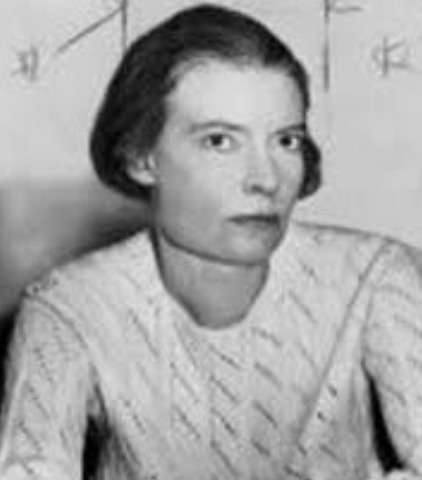 Dorothy Day
Our take on what is happening
Six. Be humble. None of us is impartial. Don't kid yourself that you don't come to a story with baggage. All storytelling comes from a perspective. You are always putting things in a certain order of importance. It is our take on what is happening, and we never see the whole story. And I don't think we should be frightened of that: we interpret things from a Catholic perspective, that's where we have our feet planted in the ground. We honestly seek the truth, we try to tell the truth as best we can, but we bring to that search for truth our own story, our own roots, our own values, our own way of seeing the world. Good readers understand that. I don't think it is something to be disguised. You are an honest storyteller but we bring our own history to our journalism. You just have to be alert to the dangers of that, and then be alert - but be comfortable within your Catholic skin.
Seven. Just tell the story. We sometimes have phone calls from "sources", from senior people in the Church: leading figures in church agencies, senior clergy, influential opinion-formers. They always begin by saying they respect The Tablet's independence. They always say, "I'm not trying to interfere with what you are saying". They are usually well-meaning. They should always be listened to. They might say, "I read the story about such-such a leading Catholic school last week …" , or "I read the leader you published last week that was critical of the church charity, or bishop or cardinal … ". And they will say "What are you trying to achieve? What is your strategy here? That story was not really … helpful."
I think part of the job of the editor is to avoid the temptation of being too strategic, of thinking too much about whether this or that story will harm the Church, or help build the Kingdom of God. We should find out as best we can what has happened, check it out carefully, check all the sources, be sure you are not being set up or used. "If your mother tells you that she loves you, check it out," as we say. But if you are sure the story stands up, if your instinct tells you it's a good story … just tell it. It could be damaging to somebody you admire; it could be that "your team" is shown in a bad light. But remember that - in the long run - the truth never hurts the Church. Just tell the story … and let the cards fall.
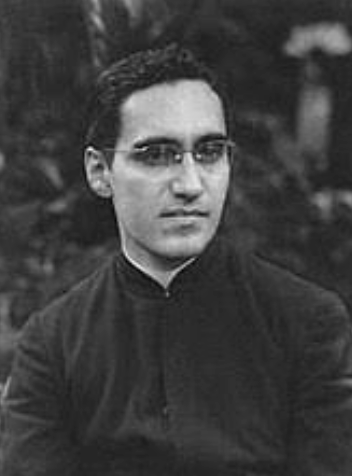 Oscar Romero
Eight (I'm throwing a few lessons in here). Shut up and listen. Pay attention. Be prepared to hear things you don't want to hear. Be quiet, watch, be still. And surround yourself with good people. The first rule of life, as we all know, is "Choose your parents well". Choose the journalists around you well. I have surrounded myself with really good professionals. And make your place of work reflect your values. I am always banging on about our values. Well, make sure you reflect that in how you work together with colleagues and contributors and readers and subscribers. Deal justly. I'm lucky. Our journalists go the extra mile. There is professionalism, and there is friendship.
Nine. Remember that every story is about people, about individuals, about families. However cynical and world-weary journalists might get we must never forget that everyone we interview, every name we quote, is a real person. When we stand before a person, we stand before someone who has his or her struggle, just as we all have, someone in whose face we can see the face of Christ.
Ten. Tell the whole story. We all know that this is a time of shame in the Church, of humiliation. Tell that story completely straightforwardly, simply tell people what we think is happening. Don't hold anything back, even though people sometimes say, not another story of the scandal of abuse. But tell the whole story of the Church. The stories of courage, heroism, of sacrifice, of lives of simplicity and goodness, of love unto death. If you look at the news pages of the Tablet every week you will see the extraordinary paradox and sign of contradiction of the Catholic world. There can be twelve stories from around the world on the Briefings page: a priest arrested for murdering his bishop, a priest risking his life to protect his people from murder; a Cardinal charged with stealing money made from a shady property deal, a religious sister kneeling in front of gun-wielding soldiers, pleading with them not to shoot at demonstrators. Our job is just to put it all out there. All human life is there. Tell the whole story. And, blimey, what a story it is. The greatest every told.
Eleven (a bonus rule!). Be joyful, be thankful, be hopeful. Remember the world we are writing about is charged with the grandeur of God. Everything is significant; everything matters. This a difficult time for the media, for all sorts of different reasons, but there will always be a yearning for a good story, for good storytellers. People will always want to know what is happening. People are getting their stories these days in so many different ways, from so many different platforms, and it is important that our content is presented in a way that it is easy to access. But my sense is that in a world in which there is so much opinion and noise and blather, in which people don't know who to trust, if you can establish a place where people do trust what you are saying, even if they know there is always an interpreter, always an angle, if they know you are trying to deal honestly, trying to tell people what is going on in the world as truthfully as you can, there will always be always be an appetite and a place for that.
What I do is incredibly satisfying and great fun, and I believe it has a great future. I am full of excitement and hope.
Brendan Walsh