An exploration of human rights from a Christian perspective – examining the profound Christian origins of the concept, the Church's historical ambivalence, and how Catholics can make a distinctively Christian contribution to this pressing issue.
Introduction
Kate was a Newman member. She had taught classics for many years at a girls' school but then retired. She was Circle Secretary for many years but then, through failing health, entered a care home. Her care was privately funded from her savings. I often visited her and saw that she was not being cared for: she was not being washed regularly and food was simply thrust at her. She could not feed herself properly and so remains of food covered her clothing. Nor were her continence needs attended to. I told her only surviving relative, Jack, her nephew, about this and Jack visited Kate and confirmed what I had seen. He complained to the management of the care home who replied with the meaningless words: "We regret that the standard of care in your aunt's case has fallen below our usual high standards". Jack then received a letter from the home saying that they are giving Kate a week's notice that they can no longer care for her. Clearly Jack does not want Kate to stay there for much longer but he may need more time to find alternative accommodation.
The names in this story are changed but the facts are true. Why is it important in the context of human rights? Simply because any discussion of a topic such as human rights legislation needs to be rooted in the effect that it has on the lives of ordinary people. Thus, in this case, we turn to Article 8 of the European Convention on Human Rights (ECHR), which is incorporated into UK law by the Human Rights Act 1998. This provides that there is a duty on the home to respect Kate's private and family rights which means that both their treatment of Kate and their peremptory notice when Jack complained are in breach of this. But does the ECHR apply? Under the Care Act 2014 this is now so as a result of a late amendment in the House of Lords. Meanwhile those who campaign for the UK's withdrawal from the Convention on the basis of misleading statements in the popular press should honestly answer this question: do they feel that people in Kate's position should be left without the protection of the law or not?
This is the Human Rights Act 1998 as it works on the ground. You would not think so from what you read in the popular press with its constant tales of how it is used as a vehicle to enable criminals to have soft treatment when in prison or to enable illegal immigrants to avoid deportation on some spurious grounds. Both of these side-effects can support valid criticisms of the Act, although I know as a lawyer how often the press misrepresent what has happened in a court case. All this leads to silly letters coming from in effect the political right which, in the words of a recent letter to a national newspaper, regards human rights as "a tool for pushing the world towards progressive liberalism".
But the secular liberal left is also guilty of using human rights as a tool for its own ends. Thus Vanessa Klug, in her book Values for a Godless Age, regards human rights "as a possible alternative common morality for the UK". Religion has gone, now for human rights! Moreover, secularists use human rights to promote their own ends. Thus in a letter to the Daily Telegraph1 Stephen Bowen, Director of the British Institute of Human Rights, and Dr. Mark Porter, Chair of Council, British Medical Association, when marking the 66th anniversary of the Universal Declaration of Human Rights (UDHR), wrote that "from ensuring equality for those receiving care services to equality for same-sex couples, our Human Rights Act is helping to deliver the promise of the UDHR in Britain …". In fact, of course, when the UDHR was issued in 1948 same-sex marriage was not thought of.
So often, then, there is no real debate on human rights but just the shouting of prejudices from right and left. Moreover the issue gets mixed up with the issue of possible withdrawal by the UK from the European Union (EU). Although there is some linkage between the two the institutions are quite separate: for instance, Russia is a signatory to the ECHR but of course is not a member of the EU.
Where do Christians stand in this?
The issue is this: in one aspect talk of rights can seem to be frankly individualistic and selfish and thus in fundamental discord with Christian thinking. Yet if Christians say that human rights do not exist for them then is this denying humans redress against forms of injustice that offend the basic Christian principle of the innate dignity of each of us?
Secularists claim that human rights are a product of Enlightenment thinking and point to, for instance, the French Declaration of 1789 des Droits de l'Homme which had the anti-clerical slogan: "ni Dieu, ni maitre". Here we see the concept of human rights denying any Christian origins and becoming what the Baptist lawyer and theologian David McIlroy calls "some kind of free-standing, self-supporting system of beliefs and values".2

David McIlroy
Yet in fact human rights have a profoundly Christian origin. We can say that the whole basis of Christian thought with its proclamation all of us (in St. Paul's words) as "heirs of God and joint-heirs with Christ"3, means that we all have an inalienable dignity; in the context of the common good this must be protected. As George Newlands points out: "The Bible talks of release of captives, and Jesus speaks of visiting prisoners"4. In a more modern context St. Wulfstan, Bishop of Worcester, visited Bristol, then part of his diocese, in the late 11th century to preach against the slave trade.
Not only this, but long before the secularists got involved the Catholic Church firmly proclaimed human rights. Let's take another true story, not this time from a care home today but from a makeshift wooden church on the island of Hispaniola in what is now the Dominican Republic5. Here, on the second Sunday of Advent in 1511, the Dominican friar Anton Montesimo preached a great sermon to the Spanish conquerors on how they should treat the native Indians: "I am the voice of Christ in the wilderness of this island…This voice says that you are all in mortal sin and that you will live and die in it for the cruelty and tyranny with which you use these innocent people. Tell me, with what right, with what justice, do you hold these Indians in such cruel and horrible slavery?….Are they not men? Do they not have rational souls? Are you not obliged to love them as yourselves? Don't you understand this? Can't you grasp this?"
This is derived from a book, Human Rights and the Image of God, by Roger Ruston. The sermon, Ruston relates, caused uproar and complaints went to the Dominican Provincial and King Ferdinand of Spain. The King ordered the friars back to Spain to be punished and, regrettably, the Provincial took his side. Nevertheless, as Ruston puts it, "there was sufficient moral unease at Court to prompt the King to call a meeting and laws were passed aiming to curb the brutalities of the colonists". Following this Pope Paul III in his encyclical Sublimis Deus of 1537 stated of Indians that: "They are to have, to hold, to enjoy both liberty and dominion, freely, lawfully. They must not be enslaved. Should anything different be done, it is void, invalid, of no force". Although the Catholic Church later placed less emphasis on a notion of universal human rights this document of a Renaissance Pope stands for ever as a ringing endorsement of the concept.
Reluctance of Christians to use the language of rights.
However, it is true to say that the Catholic Church did look with suspicion on claims founded on rights, due, I think, to the idea of human rights being linked to the Enlightenment and also their link to the Protestantism emphasis on a gospel of individualism. In fact both Catholics and Protestants have played a noble part in the modern human rights movement. Protestant Christians, with support from some Catholics such as the future Pope John XXIII, played a notable part in ensuring that human rights were included in the United Nations system after the Second World War6. This initiative eventually bore fruit in the Universal Declaration of Human Rights issued in 1948. Since then, as John Nurser observes7: "From the time of Pope John XXIII the popes have been the most coherent and assertive speakers of the language of human rights". This is certainly true and the starting point is Pope John XXIII's encyclical Pacem in Terris, issued in 1963, up to the address of Pope Benedict XVI on 15th April 2008 when he spoke to the UN General Assembly on the 60th anniversary of the Universal Declaration of Human Rights.
It is Pope Benedict who, as so often, charts a way forward for us. In his address he emphasised that human rights rested on the foundation of "the natural law inscribed on human hearts and present in different cultures and civilization". Here for Catholics is the answer: human rights are not seen as the product of a culture based on the false gods of autonomy and individualism, with their worship of mere selfishness, but on the immutable principles of natural law with its twin pillars of human dignity and the common good.
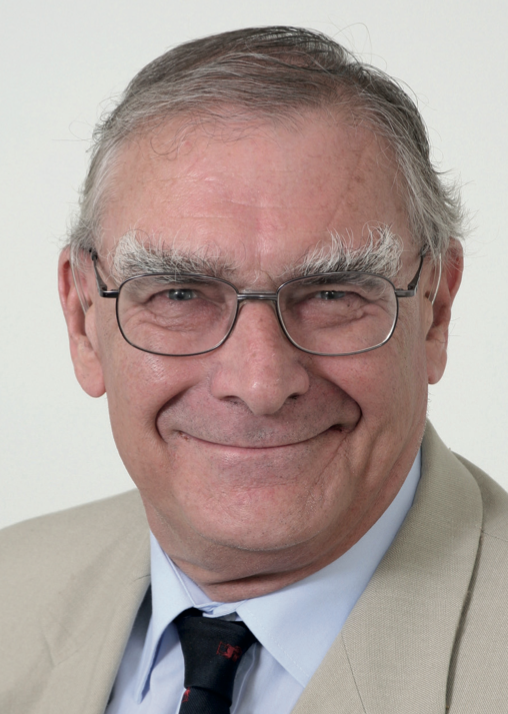
John Duddington is Editor of Law and Justice, the Christian Law Review, and is the author of Christians and the State – a Catholic Perspective for the 21st Century, to be published by Gracewing. John is a member of the Editorial Committee of The Newman.
However, the question still lingers: should Christians be concerned with rights as such? In principle Christians emphasise not individual rights but instead the common humanity of us all. Furthermore, is talk of human rights another way of selfishly saying "my rights"? Pope Benedict XVI himself reflected this concern when, in his address to the United Nations he suggested that: "Perhaps the doctrine of human rights ought today to be complemented by a doctrine of human obligations and human limits".
Accordingly we need to set the exercise of human rights in the context of the common good and make clear that these rights are not to be asserted simply to satisfy my desires or wants but in order to promote the dignity of each person in that context. David McIlroy, in considering the relationship between rights and responsibilities, says: "It is not that we have rights and the correlative of our rights is that others have responsibilities towards us. It is that we have responsibilities towards others and those responsibilities … entail rights"8. The Catholic Bishops of England and Wales have put it neatly by saying that: "To claim a right for myself means my claiming it for others too"9. Moreover there is also an obligation on us all to ensure that everyone in our society is able to claim those rights and this means that we must, for example, look very closely at how litigation is funded and at how any proposed government cuts will affect the state funding of human rights claims.
Conclusion
If we approach human rights in this way and bring a Christian perspective to bear then we shall enrich the discussion so that human rights are seen as not only protecting the vulnerable, as we saw earlier, but as promoting a concern for rights in the context of the shared humanity of us all. If we do this, we can make a distinctively Christian contribution to a pressing issue in our society and so justify the words of Pope John XXIII in Pacem in Terris: "But first We must speak of man's rights".
- December 10, 2014.
- D. McIlroy "Human Rights Theory: Fit For Purpose, Fundamentally Flawed or Reformable?" Law and Justice 173 (2014) pp. 129-144 at p. 134
- Rom. 8:17.
- In Christ and Human Rights (Aldershot: Ashgate, 2006), p.13. This whole book is full of ideas for a Christian engagement with human rights and is enormously stimulating. See also J. Mahoney The Challenge of Human Rights (Oxford: Blackwell Publishing, 2007), which looks at the struggle for human rights from a wider perspective.
- I owe this account to R. Ruston in Human Rights and the Image of God (London: SCM Press, 2004). Human Rights and the Image of God, pp. 66-68. This is, I think, the best account of the development of a Christian tradition of human rights.
- The story is well told in John S. Nurser, For All Peoples and All Nations (Geneva: WCC Publications, 2005).
- Ibid. at p. 168.
- D. McIlroy "Human Rights Theory: Fit For Purpose, Fundamentally Flawed or Reformable?" Law and Justice 173 (2014) pp. 129-144 at p. 142.
- Reflections of the Catholic Bishops of England and Wales on the Jubilee of the Universal Declaration of Human Rights para. 5 (1998).