An examination of Neo-Platonism and its influence on Christian mysticism, exploring how the transcendent spirituality of Plato shaped theological understanding and the poetry of figures like Henry Vaughan.
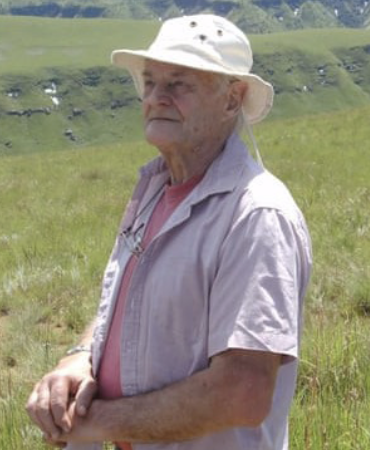
This article was found amongst the papers of Eric Harber of the Hertfordshire Circle who died at the age of 87 during the summer. After a sometimes turbulent early life in South Africa, where he was a campaigner against Apartheid, Eric came to the UK in the 1960s and became a lecturer in English. For much of the past 40 years he worked on a theory that Shakespeare was influenced by Samothracian mythology, and in 2020 he published a book called Shakespeare, Christianity and Italian Paganism.
Mystery in Christian Thought and Experience
By Eric Harber
A summary of some aspects of a few mystical writers encountered over the years
This short note offers the background that contributed to elements of Neo-Platonism that might be found in the poetry of Henry Vaughan who was born, the son of a curate, in the early seventeenth century. Platonism survived many centuries in tandem with Christianity as a way of offering the soul a path to the transcendent world of Infinite Being.
A discussion of Platonism would need to begin with a mention of Plato's representation of "forms" or "ideas" which he saw to be the ultimate basis of reality. He saw the apparent world of the senses as untrustworthy. We do not encounter the true nature of things – let alone ideas like "justice" or "beauty" in the ordinary world – but grasp at their "shadows". The analogy he used was that we are like people sitting in a cave seeing the transient materiality of things as shadows on the wall of the cave, which come from behind us, where the substance of these shadows existed in their true presence. Such as are initiates, needed to seek the light – the source of all good.
So influential were not only Plato's "ideas" but the dualism of body and mind his thought initiated and the dialectical manner of his argument that these have lived on in philosophical discourse throughout the centuries, even influencing those who disagreed with him. One might say that he both invented the art form of philosophical drama and showed the way to a transcendent spirituality. The poet Yeats who passionately believed in an integrated life for human fulfilment disparaged Plato's thought when he wrote in his poem Among School Children:
Plato thought nature but a spume that played
Upon the ghostly paradigm of things
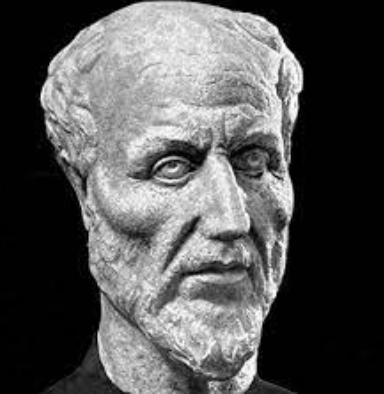
There was a long Neo-Platonic "tradition" as it is called which lasted hundreds of years and reappeared as strongly as ever a thousand years after Plato, modified by Christianity. Early Neo-Platonist theology, if that is the right word for it, did not offer a reciprocal relationship between the transcendent One and the individual as existing in the world; not until the Christian Platonist Marsilio Ficino. He wrote that the One Being should be seen as a Person that invited terrestrial, human life into an awareness of his love that inspired a response. The theology of his predecessor of many centuries earlier, Plotinus, showed the power of the Ultimate and ineffable One to trickle down, as it were, not expecting a reciprocating response (though perhaps it was implied).
Plotinus believed that the "One" is the "Good" that is completely absolutely and unconditionally good. As the power which is the cause of life, it gives subsistence to all life: as the power which is the cause of all knowledge, it produces all knowledge; as the power which is the cause of beauty, it produces all beauty.3 (The Six Books of Proclus of the Theology of Plato tr Thomas Taylor London Vol 1 Book 1)
In the Enneads there is a tell-tale reference to the attempts by what Plotinus calls "those ancient sages" to secure the presence of divine beings by the erection of shrines and statues. {They} showed insight into the presence of the All; they perceived that though the Soul is everywhere tractable, its presence will be secured all the more readily when an appropriate receptacle is elaborated, a place especially capable of receiving some portion or phase of it, something reproducing it and serving it like a mirror to catch an image of it'. 4 (IV.3.11 Mackenna). There is no suggestion that they succeeded in communicating with this ineffable Being
Plotinus allows that in the Supreme Being there is Love, and should be, but he goes only so far as to say that "Lovable, very Love, the Supreme is also self-love in that he is lovely no otherwise than from Himself and in Himself" 5 (VI.8.15). There is no suggestion that this Love is communicated to material beings. He even says that "god's Being and his seeking are identical". And: there is no coming to be as some extern (ditto). In Christianity this "extern", the objectification of Love, is the Beloved Son or, "God so loved the world that he gave his only begotten Son, that whoso believed.
It is tempting to wonder if Plotinus has Christianity in mind when he refers to the 'extern'.
The Platonist tradition had to wait for Ficino's universalis providentia Dei to create the order – for all living and inanimate things to come into being through the power of what he called a "temperantia divina" using "idola" or "animae rationales", templates, that reflect the intention of the Divine. This is done per amotorium quondam instinctum through the exertions of a loving power. So Ficino gives a purpose to what would otherwise be Plotinus's self-enclosing "Love".
"Man never rests in his present habit of living: he alone is a pilgrim in these regions and cannot rest on the journey as long as he aspires to his celestial homeland, which all ….. seek, although we proceed on sundry paths on account of the diversity of opinion and of judgment". (Allen and Hankins 2001–06, 14.7, vol. 5, p. 272–73)
English – or Welsh – mysticism in the seventeenth century which was embedded in the tradition of Christian Platonism was represented by Henry Vaughan who was in part inspired by the Anglican Cleric George Herbert. Vaughan received both Catholic and Protestant influences. His brother Thomas dabbled in alchemy. Henry and Thomas Vaughan were sent to school under Matthew Herbert, rector of Llangattock, to whom both wrote tributes. Their two brothers' intimate acquaintance with hermeticism may have dated from those years. Matthew Herbert inspired a devotion to church and monarchy that the boys would have already learned at home. Like several others among Vaughan's clerical acquaintances Mathew did not favour the interregnum. He was imprisoned, his property was seized, and he narrowly avoided banishment.
Thomas Vaughan was admitted to Jesus College, Oxford, in May 1638, and it has long been assumed that Henry went up at the same time, although it has been claimed that he made his first entry into Jesus College in Michaelmas term 1638, aged 17 years. Thomas had attended the lectures of a certain William Cartwright who, as a playwright and something of a theologian, mocked Puritanism. In Vaughan's early writing there is an affirmation of Cavalier ideals and a gesture of defiance against the society which had repudiated them.
Homage to the Silures
As the Civil War developed, Vaughan was recalled home from London, initially to serve as a secretary to Sir Marmaduke Lloyd, a chief justice on the Brecknockshire circuit and a royalist. Vaughan served briefly in the Royalist army and, upon his return, began to practise medicine. Vaughan took his inspiration from his native environment and chose the descriptive name "Silurist", derived from his homage to the Silures, a Celtic tribe of pre-Roman south Wales that strongly resisted the Romans. This name is a reflection of the deep love Vaughan felt for the Welsh mountains of his home in what is now part of the Brecon Beacons National Park and the River Usk valley, where he spent most of his early life and professional life.
By 1647 Henry Vaughan, with his wife and children, had chosen life in the country. This is the setting in which Vaughan wrote Olor Iscanus (The Swan of Usk). However, the collection was not published until 1651, more than three years after it was written.
There is a distinct difference between the atmosphere Vaughan attempts to convey in this work and in his most famous work, Silex Scintillans. Olor Iscanus is a direct representation of a specific period in Vaughan's life, which emphasises other secular writers and provides allusions to debt and happy living. A fervent topic of Vaughan throughout these poems is the Civil War and reveals Vaughan's somewhat paradoxical thinking that in the end does not indicate whether he participated or not. Vaughan states his complete satisfaction at being clean of "innocent blood", but also provides what seem to be eyewitness accounts of battles and his own "soldiery". Although Vaughan is thought to have been a royalist, these poems express contempt for all current authority and a lack of zeal for the royalist cause.
Vaughan was initially greatly indebted to George Herbert who provided a model for Vaughan's newly-founded spiritual life and literary career, in which he displayed an intimate spiritual awakening that he shared with Herbert. Some say the two are not even comparable, because Herbert is in fact the Master. While these commentators admit that Henry Vaughan's use of words can be superior to Herbert's, they believe his poetry lacks Herbert's profundity. Herbert's poetry has a unique receptiveness, not to say eagerness, for a heightened spiritual awareness. Herbert's influence is evident both in the shape and spirituality of Vaughan's poetry.
For example, the opening to Vaughan's poem Unprofitableness is reminiscent of Herbert's The Flower:
How rich, O Lord! How fresh thy visits are!
How fresh, O Lord, how sweet and clean
Are thy returns! ev'n as the flowers in spring
Herbert is calm. He gently dramatises the alienation he has felt, which God appears to play an active part in causing. But he quickly accepts his responsibility: he rejects his worldly self-confidence for its vanity, which he contrasts with the reconciliation that follows. Vaughan is different. The varied experience of the world around – his love of nature – becomes a vivid allegory, encouraging his mysticism.
Vaughan's true voice
He was loyal to the themes of the Anglican Church and religious festivals, but they are the touchstone; he found his true voice in the more mystical themes of eternity. He was "poet of revelation" who uses the Bible, yet also Nature and his own experience to illustrate his vision of eternity. This gives Vaughan's poetry a modern sound in its simple diction which so effortlessly becomes symbolic, as it the opening to The Water-fall:
With what deep murmurs through time's silent stealth
Vaughan drew on personal loss in two well-known poems: The World and They Are All Gone into the World of Light. Another poem The Retreat, combines the theme of loss of high spiritual innocence before the corruption of childhood, which is yet another consistent theme of Vaughan's.
Happy those early days, when I
Shin'd in my angel-infancy!
Before I understood this place
Appointed for my second race,
Or taught my soul to fancy ought
But a white, celestial thought;
When yet I had not walk'd above
A mile or two from my first love,
And looking back (at that short space)
Could see a glimpse of his bright face;
Vaughan expressed his strong religious awareness in rapt terms that begins with a homely stepping-stone. It blends the visual impact that looking at the sky would make with a sense of the vastness of the moving stars.
I saw Eternity the other night
Like a great ring of pure and endless light
All calm, as it was and bright
And round beneath it, Time in hours, days, years
Driv'n by the spheres
Like a vast shadow mov'd; in which the world
And all her train were hurl'd.
There is in God – some say
A deep but dazzling darkness, as men here
Say it is late and dusky, because they
See not all clear.
Oh for that night, where I in Him
Might live invisible and dim!
This poem is the consummate expression of Vaughan's awed sense of his soul's expansion beyond the veil of the Finite into the Infinite, yet with a desire for an intimate union with it.