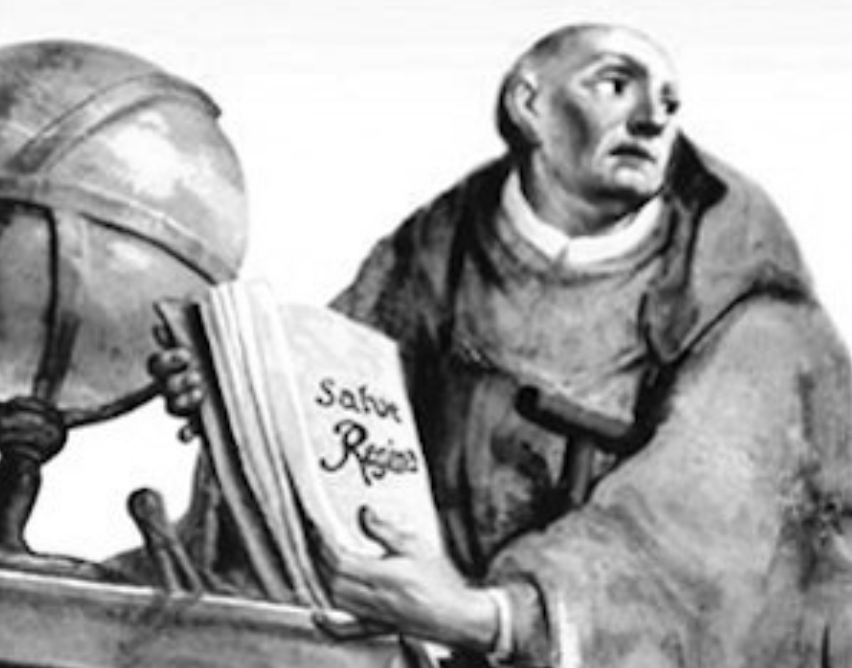
Hermann the Lame was one of the most remarkable men of the Middle Ages — reputed author of the Salve Regina and the Alma Redemptoris Mater, a man of extraordinary intellectual achievement and transparent holiness despite severe disabilities.
We are all familiar with the Salve Regina and the Alma Redemptoris Mater but their reputed author still languishes in quite undeserved obscurity. For Hermann the Lame was one of the most remarkable men of the Middle Ages and his life and achievements are a salutary lesson for us today.
He was born in Altshausen in Swabia, in the south of modern Germany, in 1013 to noble parents, his father being the local Count. But from his birth it was clear that he had serious disabilities; it is not entirely clear what these were but it is thought that he may have had a cleft palate and also cerebral palsy and very likely scoliosis. By the age of seven he could hardly speak and he could not move even a few feet without aid but it was obvious that his mind was sharp and clear. His parents took him to the abbey of Reichenau where his father told the Abbot that although Hermann could not speak "he can see things that I can't".
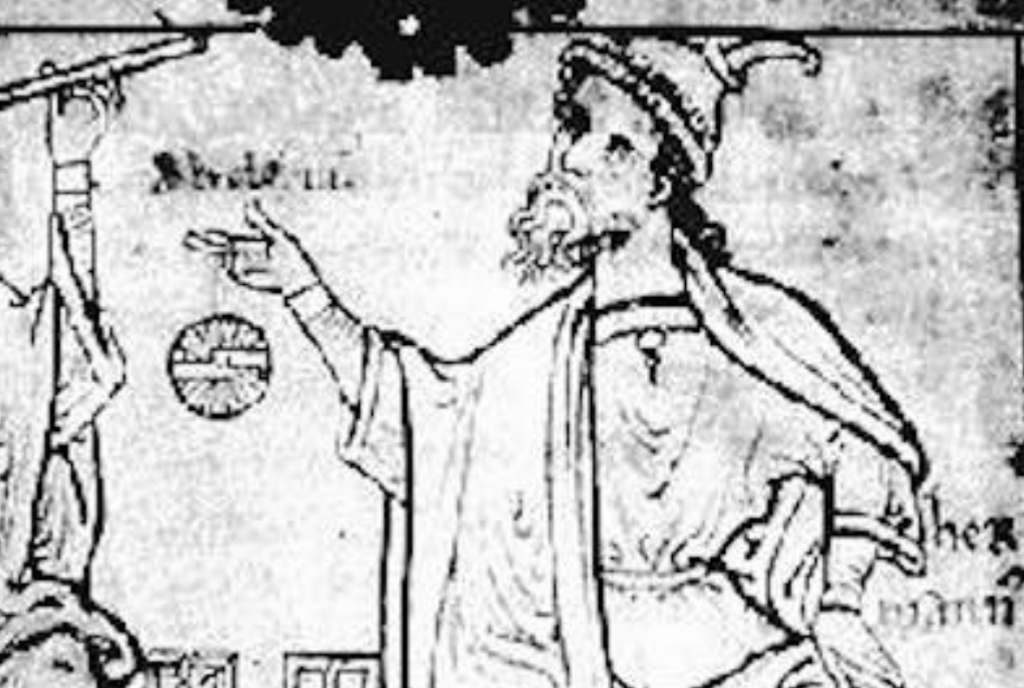
Thus began a remarkable career ending with Hermann, by then Abbot of the monastery, dying in 1054. He never managed to speak clearly nor could he ever move far unaided but he triumphed over his disabilities to lead a life distinguished by great intellectual achievements accompanied by transparent holiness. He was responsible for the introduction or reintroduction into the West from the Islamic world of various astronomical instruments including the astrolabe, and there is a wonderful story of his demonstrating its use to trace the path of the sun to enthralled students. He wrote poetry, a book teaching multiplication and division with the abacus, a chronicle of the world from the birth of Christ and a book on music.
Moreover, through all this his cheerful personality and positive outlook on life came through. In the words of Berthold, the chronicler of the monastery, he was hilarissimus, always laughing, and, in a revealing phrase, Berthold said that he "Tota alacritate festivus", that is, he made haste to be cheerful. Hermann was buried at his family home at Altshausen in Swabia, where relics of him may be seen to this day, but he remains relatively little-known, certainly in English-speaking lands. There is no modern biography of him, the only written account of his life being in a little book by Fr. Martindale entitled The Household of God. Published in 1935, this book also contains lives of two other saints, but Hermann deserves more study as his life has much to teach us today.
Now we have detailed laws about disability, endless policies and procedures, social services, health budgets, personal independence payments and a host of other ways which aim to ensure that those with disabilities are not discriminated against and lead as full and as rich a life as possible. There was none of this in the eleventh century but his parents, fellow-monks and doubtless others saw a person before them, a child of God, and they saw his potential. The question abides, and the answer may be a disturbing one: what would his fate be today?
To end on a positive note, as Hermann would wish, the Alma Redemptoris Mater is perhaps slightly less well known than the Salve Regina. In the month of May, the month of Mary, it is appropriate to be reminded of his great prayer:
Loving mother of the Redeemer,
gate of heaven, star of the sea,
assist your people who have fallen yet strive to rise again.
To the wonderment of nature you bore your Creator,
Yet remained a virgin after as before.
You who received Gabriel's joyful greeting,
have pity on us poor sinners.