Marking the 750th anniversary of the birth of Dante, this spirituality page reflects on knowing God through passages from The Divine Comedy, the hymn Immortal Invisible, and the story of Elijah at Horeb.
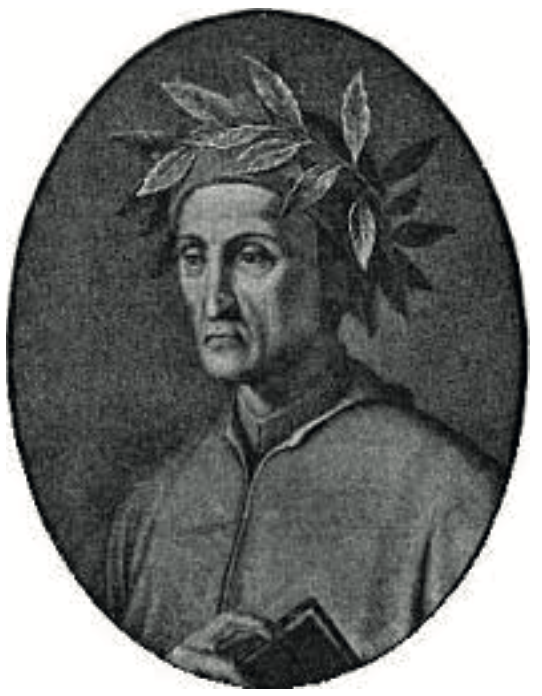
As many readers will know, this year sees the 750th anniversary of the birth of Dante and it seems appropriate to begin with a quotation from The Divine Comedy. Near the very end of the last book, the Paradiso, Dante sees the flashing light that fulfils the final vision of God and remarks:
Eternal Light, You only dwell within Yourself
and only you know you; Self knowing,
Self-known, You love and smile upon Yourself!
(Lines 124-126).
Similarly the nineteenth century hymn writer William Chalmers Smith wrote of the ineffability of God in his well-known hymn:
Immortal, invisible, God only wise,
In light inaccessible hid from our eyes,
However, for the Christian this is not the end as our faith consists in the development of a personal relationship with Our Lord and with this an awareness of His presence. Indeed Chalmers Smith recognised this in his final verse when, returning to Dante's theme of the Godhead hid in light he says;
"O help us to see
'Tis only the splendour of light hideth Thee,"
In 1 Kings 19 we see how Elijah was led to this awareness. As Basil Hume puts it in To be a Pilgrim (St. Paul Publications, 1984 at page 40): "Things were going badly for Elijah. His life was threatened. He was afraid". So he went into the wilderness and lay down under a broom tree saying: "It is enough; now, O Lord, take away my life, for I am no better than my ancestors". He then went off to sleep but was awakened by an angel who said: "Get up and eat". He saw a cake and a jar of water and, strengthened by having eaten the cake and drunk the water, he went for forty days and nights and came to Horeb, the mountain of God.
Then there came a great wind, "so strong that it was splitting mountains and breaking rocks in pieces". Sometimes God can come to us like that, in a dramatic way as he did to St. Paul on the road to Damascus. As Basil Hume says, sometimes he comes in this way to His Church where, as he puts it: "the barque of Peter is buffeted by the winds of change".
However, God more often comes to us in a gentler way as He did to Elijah this time. The wind was followed by an earthquake and then a fire but God was not in these. Finally there came a gentle breeze and silence. God was here.
May we, too, recognise that "still, small voice of calm" when it comes.
Anne and John Duddington