John Duddington explores the question of whether Christians have free speech in contemporary society.
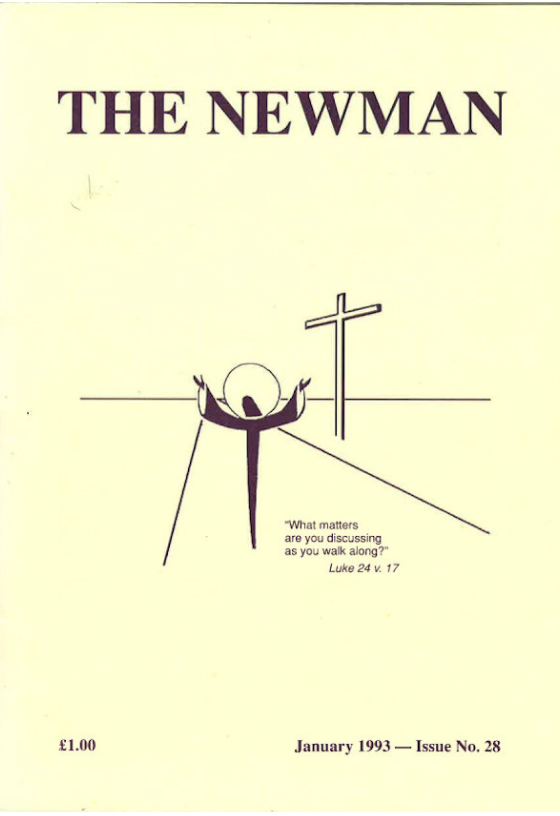
"What matters are you discussing as you walk along?"
Introduction
Readers with long memories may recall that the title of this article was once on the front cover of the Newman journal. This was at the inspiration of Robert Williams and it is included here both in tribute to him at his passing and also because it serves as an introduction to what is a topic of pressing importance.
Those who do not wish to linger over this piece can in effect shortcut it as the straightforward answer to the question posed in the title is "no". No-one has absolutely free speech in a democratic society as there must be restrictions imposed by law to prevent the incitement of violence or hatred. However, there is a strong perception that the right to free speech is now unduly curtailed in the interests of, for example, political correctness. In order to answer this question from the Christian perspective we need, I suggest, to not only look at how free speech is restricted in our society at present but, from the positive angle, to consider how Christians should actually exercise their right to free speech or, to come back to the title, how should they discuss matters as they walk along?
What is meant by free speech?
The right to free speech can be looked at in three ways. First, there is the legal right to free speech which is generally thought of in the negative sense as not saying anything unlawful but which today is buttressed by Article 10 of the European Convention on Human Rights which provides that "everyone has the right to freedom of expression". Then, spreading outwards, there are the restrictions imposed by, for instance, guidelines, codes of conduct at work and elsewhere; and then finally there are the restrictions imposed by the conventions of the world in which we live which can, in time, translate into legal norms.
The first meaning: speech must not be unlawful.
The starting point of course is that speech must not be unlawful. Much of this is uncontroversial: if I incite you to commit murder or to riot then I am myself guilty of a crime. What, though, if I use words in public debate or discussion as a Christian which cause a disturbance amongst those who hear them? Here the line is more difficult to draw.
Take the disturbance which occurred at Ephesus which is recorded in Ac 19:23-41. St. Paul had preached that "gods made by human hands are not gods at all". This threatened the lucrative trade of silversmiths who made silver shrines of the goddess Diana of the Ephesians and thus, under the leadership of one Artemis, they began a disturbance shouting "Great is Diana of the Ephesians!" with the result that the town became in uproar. In the end the matter was settled by the good sense of the town clerk who pointed out that St. Paul and his companions had done nothing illegal and that if indeed there was any justified cause of complaint then it could be dealt with in legal proceedings. Eventually St. Paul left the city and set out for Macedonia.
The question often boils to what the speaker intended. Was it the objective to cause violence or to stir up hatred? If so then it is right that the law should take a hand. Here St. Paul clearly did not. However, the dividing line here may not be easy to draw. Here are three scenarios based on the possible legalisation of polygamy, which, as it happens is not an issue at the moment but may become one in the future:
- a. I, as a Christian, am strongly opposed to polygamy and I write to a newspaper that "polygamy is sinful and wrong". As a result of this, a group of polygamists smash the windows of my house and gather outside shouting offensive slogans about Christians.
- b. Let's turn the situation round slightly. I now say that polygamy is evil and that those who practice it will burn in Hell. Once again, my windows are smashed and offensive slogans are chanted.
- c. Finally let us suppose that I go further and say that not only is polygamy evil and that those who practice it are destined for Hell but that it is the duty of all Christians to save polygamists from their fate by surrounding their houses and chanting slogans warning them of their final destination. Some Christians then go further and then smash the windows of the houses of polygamists.
How do we decide which of these situations constitutes a criminal offence? Traditionally the law has asked two questions:
- a. What type of language was used? Here the yardsticks have been, in a kind of ascending order: irritating, offensive, insulting, abusive or threatening.
- b. What was the intention of the person who uttered these words? Was it simply to express an opinion, albeit in strong language, or was it actually to stir up hatred leading to violence?
Let us go forward from Ephesus in about 50 AD to Bournemouth on Saturday October 13th 2001 and the case of Harry Hammond, who was an Evangelical Christian and had been a preacher for 20 years. He was elderly and mildly autistic. He positioned himself in the town centre and began preaching holding up a sign saying: "Stop Immorality Stop Homosexuality and Stop Lesbianism". It also said, in each of four corners of the sign, "Jesus is Lord". A group of 30 to 40 people gathered around him arguing and shouting, some threw soil at Mr Hammond and a bucket of water was poured over his head. He was arrested by the police and charged under s.5 of the Public Order Act 1986 which made it a criminal offence to use threatening, abusive or insulting words or behaviour… within the hearing or sight of a person likely to be caused harassment, alarm or distress by them.1
The High Court, on appeal from the Magistrates Court, found him guilty and held that it was open to the magistrates to conclude as a matter of fact that the words on the sign were insulting within the meaning of the Act. The words appeared to relate homosexuality and lesbianism to immorality. Although it was accepted that Mr Hammond was, according to his understanding, exercising his right to free expression of his religious views the court held that the magistrates could conclude that his conduct was not reasonable for various reasons including the pressing need to show tolerance to all sections of society and the fact that his conduct was provoking violence and disorder.
This was widely felt to be a most unfortunate decision. One cause for concern was the way in which the word "insulting" had been interpreted to deny Mr Hammond the right to express perfectly lawful views simply because some in his audience found them unacceptable. Moreover, the reference by the High Court to the need to show tolerance, although by itself laudable, could be seen as an extra restriction on freedom on the speech of Christians at a time when their views are increasingly at variance with some sectors of society.
Following this and other cases there was a campaign supported by, among others, the comedian Rowan Atkinson, the human rights campaigner Peter Tatchell and the National Secular Society to remove the word "insulting" from this Act and this took place in 2013. The result is that today Mr. Hammond would not be found guilty under this Act.
A much more robust statement of the law was by Lord Justice Sedley who observed in another case2 that:
Free speech includes not only the inoffensive but the irritating, the contentious, the eccentric, the heretical, the unwelcome and the provocative provided it does not tend to provoke violence. Freedom only to speak inoffensively is not worth having.
He also pointed to what he termed "the critical difference" between where the defendant is responsible for the threat to the peace and where somebody else is.
So, applying these tests to our three situations one might say that in situation (a) I would not have committed any offence as although those who practised polygamy might be irritated by what I say and indeed might be offended by my view that "polygamy is sinful and wrong" I did not have any intention to provoke violence and any crime would have been perpetrated by those who broke my windows.3
The awkward situation is (b). I said that polygamy was evil and that those who practice it will burn in Hell. These words are certainly offensive and indeed insulting but is it unlawful to say them? I have simply given my opinion and I have not incited violence. My view, and I think that of Lord Justice Sedley would be that no crime is committed by saying them as they do not, in his words, tend to provoke violence. Again, any crime would be committed by those who broke my windows.
If we move next to situation (c) the matter is very different as not only have I used much more inflammatory language which could be categorised at the other end of the scale as being threatening or abusive but I have actually incited people to surround the houses of the polygamists and chant slogans. I have not actually incited them to smash the windows of the polygamists but my words certainly led to this and so I suggest that I am likely to be found guilty of an offence together with those who broke the windows of the polygamists.
A sensible compromise
I would argue that at this point the law had reached a sensible compromise which protected the expression of, in our case, Christian principles robustly and even, in the eyes of some, offensively, but drew the line at words which provoked violence. However, a renewed danger to free speech then appeared with what is called "hate crime".
Hate Crime
What indeed is a hate crime? Take this definition from the website of Humberside Police4:
Hate crime is a crime committed against a person because of their gender identity, race, disability, sexual orientation, religion, or any other perceived difference. Hate crimes don't always include physical violence. Offensive language and/or harassment directed towards someone because of who they are, or who they are perceived to be, is also a crime – whether it takes place in person or online. No-one should have to live with the fear, anxiety and consequences of hate.
The focus of this definition is on victim perception: Any criminal offence which is perceived by the victim or any other person, to be motivated by a hostility or prejudice based on a person's race or perceived race; religion or perceived religion; sexual orientation or perceived sexual orientation; disability or perceived disability and any crime motivated by a hostility or prejudice against a person who is transgender or perceived to be transgender. In fact, there is no statutory definition of hate crime and the term has come to be used by the police when referring to a variety of criminal offences and sentencing powers and where the common feature is that the hate is motivated by hatred because the person at whom it is directed possesses one or more of what are known as the "protected characteristics".
There are a number of difficulties for Christians and others with the concept of a hate crime and free speech:
- - Firstly, the name is misleading as does not just cover words or conduct motivated by hatred, which I think we would all agree should be prohibited, but, as the definition used by Humberside Police shows, words which are no more than offensive.
- - Secondly the question is not whether the person who uttered the words intended them to be offensive but what was perceived by the victim. The matter becomes entirely subjective and I know, from conversations with the police who deal in this area, that there grew up a culture of "the victim is to be believed". This is however, less prevalent now.
- - Thirdly hate crime covers inter alia what are known as the "protected characteristics" in the Equality Act 2010 and this includes as we saw above both gender identity and sexual orientation. Given that many Christians, and members of other faiths, hold strong views on both of these matters there is the obvious possibility of words spoken by Christians being considered as a hate crime.
- - Fourthly, and this is an issue relevant to all questions of free speech, there is the increasing use of social media to voice opinions and where for instance tweets are used then by their very nature, they consist of short statements, limited to 280 characters which are not buttressed by arguments and may be sent out without much, if any, thought or consideration. This applies especially with re-tweeting.
Let us return to our scenarios and in particular scenario (b) where I say that polygamy is evil and that those who practice it will burn in Hell. Is this a hate crime? The words are certainly offensive and also nasty but is saying these words actually a crime? We do need to be careful lest the natural dislike felt by many for such language carries us into criminalising it.
Take the view of the Catholic Church on homosexual relationships set out in the Catechism of the Catholic Church at 2357:
Homosexuality…..has taken a great variety of forms through the centuries and in different cultures. Its psychological genesis remains largely unexplained. Basing itself on Sacred Scripture, which presents homosexual acts as acts of grave depravity, tradition has always declared that "homosexual acts are intrinsically disordered." They are contrary to the natural law. They close the sexual act to the gift of life. They do not proceed from a genuine affective and sexual complementarity. Under no circumstances can they be approved.
Suppose that I quote verbatim from this: the categorisation of homosexual acts as ones of "grave depravity" may well cause offence to homosexual persons and might be held to be a crime in line with the guidelines of Humberside Police quoted above. Yet here we have surely reached the realms of fantasy where we are starting to prohibit the expression of any but one point of view on certain matters.
I have the feeling, however, that the tide is starting to turn. This is for four reasons:
- a. First, the need to be clear on what is a hate crime has caught the attention of the Law Commission who are in the process of producing a report which may lead to legislation.
- b. Second, the reaction to the police "Operation Midland" which saw a number of innocent persons, including Sir Edward Heath and Lord Brammall, falsely accused of sexual abuse, has led to the demise of the "always believe the victim" culture.
- c. Third, a recent case involved Humberside Police where police officers were held to have unlawfully interfered with a man called Harry Miller's right to freedom of expression by turning up at his place of work to speak to him about allegedly "transphobic" tweets. What was dangerous to free speech was the statement by an officer who told Mr. Miller that he had not committed a crime, but that his tweeting was being recorded as a "hate incident". Here we are in sinister territory: either a statement is a potential crime, in which it is the business of the police, or it is not, in which case it is nothing to do with them. The judge used strong language pointing out that: "In this country we have never had a Cheka, a Gestapo or a Stasi. We have never lived in an Orwellian society" with the implication that we are in danger of becoming one.5
- d. The Felix Ngole case, considered below.
Restrictions imposed by, for instance, guidelines, codes of conduct at work
Here the threat to free speech can be more insidious as we are not talking about the actions of the police and the courts, where at least there is public scrutiny, but the actions of employers. Unless the employee who feels his or her freedom of speech has been interfered with has the courage to go public then the matter may never come to light.
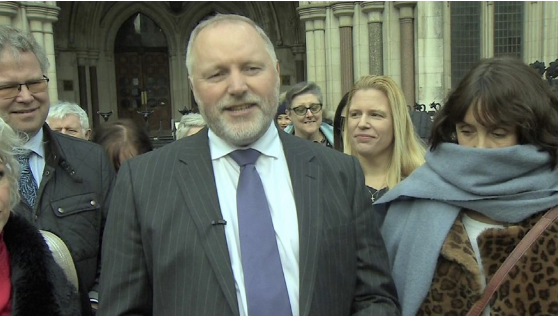
A case where it did was that of Felix Ngole who was a devout Christian for whom, as the judges put it: "the Bible is the authoritative word of God".6 He enrolled as a mature student on the MA Social Work course at Sheffield University, successful completion of which would have led to registration and practice as a qualified social worker. On registration as a student he signed an agreement that he had read the Health and Care Professions Council's (HCPC) student guidance on standards of conduct and ethics and would strive to conform to the HCPC's expectations as set out there. In particular these stated that conduct outside work may, in very serious circumstances, "affect your ability to complete your programme; gain the final qualification; or register with us".
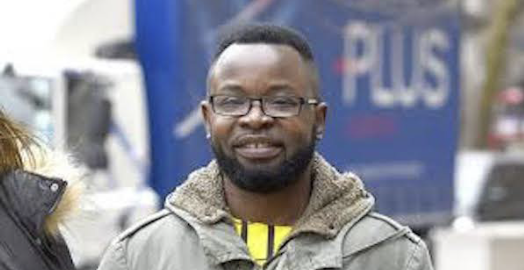
Mr. Ngole, at the start of his second year, posted a series of comments on his Facebook account about a prominent news story on the imprisonment of an American registrar for contempt of a court order resulting from her refusal to issue marriage licences to same-sex couples because of her Christian religious beliefs. Amongst other comments Mr. Ngole said that: "Same sex marriage is a sin whether we accept it or not"; "Homosexuality is a sin, no matter how you want to dress it up"; "Homosexuality is a wicked act and God hates the act"; and "God hates sin and not man".
There was an anonymous complaint to the University as a result of which there was a hearing and Mr. Ngole was removed from his course on fitness to practise grounds. It was this decision that he successfully challenged.
On reading the evidence it is difficult to avoid the conclusion that the University mishandled the procedure from the outset. As the Court of Appeal said, it considered that "any expression of disapproval of same-sex relations (however mildly expressed) on a public social media or other platform which could be traced back to the person making it, was a breach of the professional guidelines". Nor did it attempt to explore a middle ground such the possibility of a warning being issued with Mr. Ngole remaining on the course.
The vital point, and one of great importance for the future, is that the Court of Appeal held that the University wrongly confused the expression of religious views with the notion of discrimination. It said that "The mere expression of views on theological grounds (e.g. that 'homosexuality is a sin') does not necessarily connote that the person expressing such views will discriminate on such grounds". Moreover, the court found that there was positive evidence to suggest that Felix Ngole had never discriminated on such grounds in the past and was not likely to do so in the future because, as he explained, the Bible prohibited him from discriminating against anybody.
However, there is still the need for vigilance. The Scottish Bishops have issued a warning about the Scottish Government's Hate Crime and Public Order (Scotland) Bill, which is currently being scrutinised by Holyrood's Justice Committee. This contains a new offence of possessing inflammatory material and the Bishops have warned that this could even render "material such as the Bible and the Catechism of the Catholic Church… inflammatory". It is noteworthy that the Scottish Newspaper Society, the Law Society of Scotland, and the National Secular Society have expressed similar concerns. All this may seem far-fetched but a moment's reflection makes one realise how aggressive secularists might argue that the reading of parts of the Bible in public was inflammatory.
A personal reflection and conclusion
Many, perhaps most of us, have been the victims of speech which is not only offensive but can be hateful. I certainly have both as one who all my life has suffered from severe deafness (the deaf are always easy targets) and as the parent of a severely disabled son. At times one must challenge this: it is wrong to be cowardly and always walk away. However, at other times that is exactly what one has to do through force of circumstances, remembering to say for a prayer for the abuser.
The law can, and should, be used in extreme cases but what is needed is to lift public consciousness to a level where this abuse just does not occur. The same applies, of course, to all Christians when they speak about current matters.
The quotation at the head of this piece "what matters are you discussing as you walk along" is in fact a mistranslation of the original Greek where the word "matters" is in fact Τίνες οἱ λόγοι – literally, what words? Readers will at once notice the word logoi, or in the singular logos, from the opening of St. John's Gospel: Logos, the word which links to the concept of reason coming from the eternal Word. As Pope Benedict XVI puts it: "God is Logos – meaning, reason and word … Faith in the God who is Logos is at the same time faith in the creative power of reason". It is this creative reason that we must have recourse to in our dialogue with the world: not empty or shouty slogans. And if we do this then there ought to be no need for legal sanctions to be invoked against Christians on account of what we say or, if there are, then we have justice on our side, together with many non-Christians, in arguing that the law is wrong. As St. Paul puts it: "Refute falsehood, correct error, call to obedience − but do all with patience and the intention of teaching". (2 Timothy 4:2). Then we can indeed be sure that "Wisdom is bright and does not grow dim". (Wisdom 6:12).
A.P. Herbert said that a liberty is only as real as the laws which negate or limit it. So Christians – and indeed the whole of society – can never relax their vigilance here. If as Christians we make our case for free speech vigorously but reasonably then, as the reaction to the Harry Hammond case, and others, showed, we will be surprised at how many allies we have.
John Duddington is Editor of Law & Justice, The Christian Law Review, and a member of the Worcester Circle of the Newman Association.
Notes
1 Hammond v DPP [2004] EWHC 69 (Admin). Now, by virtue of the Crime and Courts Act 2013, the word "insulting" has been removed from this section.
2 Redmond-Bate v Director of Public Prosecutions [1999] Crim LR 998.
3 This seems to have been the view of Lord Justice Sedley, see the Redmond-Bate case where the defendants, two women and a man, had been preaching from the steps of Lichfield Cathedral and attracting a hostile crowd and where he said that the police should have controlled the crowd rather than arrest the preachers.
4 https://www.humberside.police.uk/ro/report/ocr/af/how-to-report-a-crime/hate-crime/
5 Miller v College of Policing [2020] EWHC 225 (Admin). This decision has now been upheld by the Court of Appeal: Miller v College of Policing [2021] EWCA Civ 1926.
6 Ngole v University of Sheffield [2019] EWCA Civ 1127.