The Catholic church has a very big secret. It's so powerful, challenging and relevant that if every bishop, priest, deacon, religious and layperson was committed to communicating and implementing this secret, it would turn society upside-down and literally transform the world.
Catholic Social Teaching
By Louise Harrison
Introduction
I'll begin with an extract from The National Catholic Reporter, the American Catholic newspaper: 'The Catholic church has a very big secret. It's so powerful, challenging and relevant that if every bishop, priest, deacon, religious and layperson was committed to communicating and implementing this secret, it would turn society upside-down and literally transform the world. However, revealing its contents and urging the application of its message would cause great controversy. The church would come under fierce attack from both conservatives and liberals for being naïve and acting outside acceptable ecclesial boundaries.
Therefore most Catholics, if they've even heard of it, have opted to tread lightly. From time to time, a passing reference is made to Catholic Social Teaching, CST, but these are token efforts, too weak and infrequent to make much difference for the poor and war-torn of our world. So, what is it about Catholic social teaching that is so threatening to the status quo? The short answer is that its foundational tenets of justice and love demand that wealth and power are not selfishly hoarded by rich and powerful individuals, corporations and nations, but instead, be placed at the service of all people and all nations. But because the rich and powerful want to hold on to power, these teachings are seen as threatening.
So – Our best-kept secret is that the Catholic Church is deeply blessed with more than 100 years' worth of outstanding social justice and peace documents authored by popes, Vatican II, world synods and national conferences of bishops. But, sadly, these documents attract more dust than readers. Out of these documents, the church has developed a set of principles designed to help guide us in applying the liberating message of the Gospel to the social, economic and political problems facing modern humanity.
Encyclicals
What is called modern CST spans almost 130 years of encyclicals, from Leo XIII's Rerum Novarum in 1891 to the present. I'll now give you a short run-down on them. I'll make reference to them throughout.
It all began with Leo XIII's Rerum Novarum in 1891
To commemorate Rerum Novarum, Pius XI wrote Quadragesimo Anno forty years later
Thirty years later, in 1961, John XXIII gave us Mater et Magistra
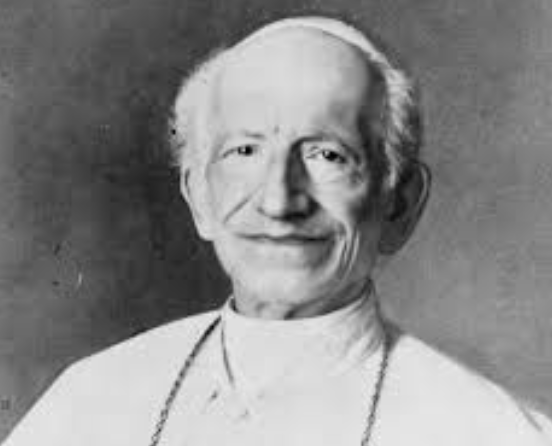
Two years later, in 1963, he wrote Pacem et Terris. In 1965, as part of Vatican II, Gaudium et Spes was written
Paul VI wrote the next two encyclicals, Populorum Progressio in 1967 and, in 1971, Octogesima Adveniens, which commemorated 80 years since Rerum Novarum
John Paul II was next, with Laborem Exercens 1981, Sollicitudo Rei Socialis 1987, Centesimus Annus 1991 (commemorating 100 years since Rerum Novarum) and then Evangelium Vitae in 1995
Benedict XVI, with Caritas in Veritate 2009 and then Evangelii Gaudium in 2013
Finally, Laudato Si' by Pope Francis in 2015.
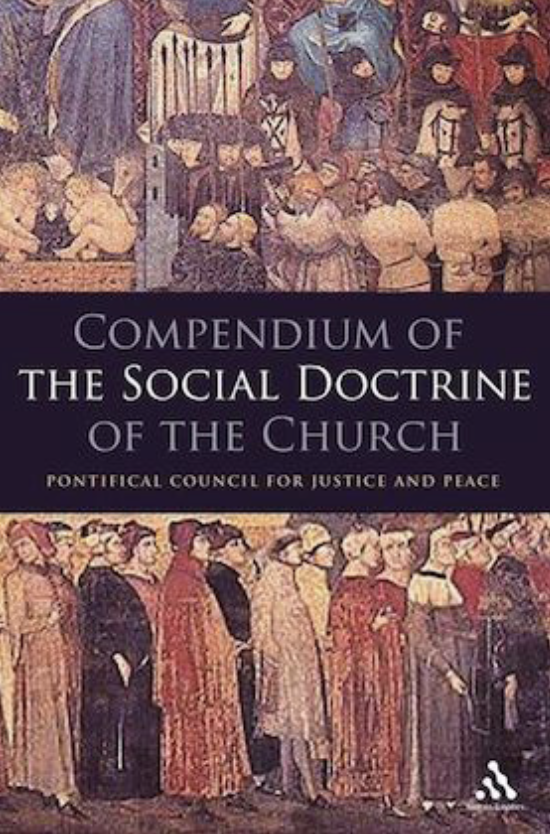
Also, a very handy summary of the encyclicals, the Compendium of Social Justice, was issued by the Vatican in 2004. An updated edition, though, is greatly needed. These encyclicals all expound on certain principles that the Church finds to be a necessary foundation in forming a socially just world. Each pope addressed the most prevalent social dilemmas at the time of their pontificate. The product of much prayer, consultation and reflection, each would take a few years in the making. The pope would state clearly where the Church stood in relation to social issues. Sometimes more or less prominence was given to one or another of the principles, depending both on the issue at hand and on a developing understanding of that pope of what he felt compelled by the Holy Spirit to place emphasis on.
This set of principles serves as a benchmark to test whether we are living well together. In another way, they serve as goals which guide us. The Church believes they are the expression of the whole truth about the human person known by reason and faith.
The main CST principles are:
Dignity of the human person
The common good
The priority of labour over capital
The preferential option for the poor
The universal destination of goods
Subsidiarity
Solidarity
Peace and the care of creation
The Church's social teaching, as you might expect, confirms the truth of the Gospel, when it focuses on each of us loving God and loving our neighbour. Going about our business in our daily lives, within our own private spheres of existence, we're urged to move out of ourselves and serve others. Over and above this, though, CST is quite extraordinary in its in-depth analysis of the very fundamentals that society runs on—it moves into the socio-political realm when it provides a set of principles which, if applied in world economics, would transform the world we live in.
It's therefore helpful to look at the political and social context out of which the encyclicals were written.
The Socio-political context
Capitalism and socialism have dominated political socio-economic thought in the West for the last 200 years. Capitalists believe in the free market while socialists want a new social order based on nationalisation. Neo-liberalism, the present form of free market capitalism, dominates global economics today. It is characterised by free market trade, privatisation, individualism, and the shift away from state welfare provision.
The Church rejected Communism outright. Its alliance with conservative social forces, and hence capitalism, was present during Leo XIII's pontificate at the end of the 19th century and continued until the 1960s, when Vatican II documents called for far-reaching political and human rights reform. Yet even in the 1960s, and still today, the Church doesn't dismiss the free market totally as this is linked to its view that all workers should have the right to acquire private property, something Rerum Novarum had argued for. What it does reject is the baggage, the excesses of capitalism —the focus on materialism, a consumerist culture, greed and power. Certainly, though, there was a shift in emphasis from private property in John XXIII's 1961 Mater et Magistra, towards a welfare state society, although he does warn of excessive intervention by the state.
Much earlier than this, in the 1930s, a pretty amazing fact is that Pius XI challenged the capitalist model and would later go so far as to argue that, in extreme situations involving unjust working conditions, resistance and rebellion could be justified. He spoke of 'the huge disparity between the few exceedingly rich and the unnumbered propertyless'. The Church is beginning to be seen, in the 30s, as having a 'prophetic' or challenging role in socio-political and economic affairs.
As part of Vatican II in the 1960s, Gaudium et Spes was written. This was a crucial document as it stressed the need for the Church to be completely immersed in human affairs as spirituality wasn't something set aside from the rest of life but which saturated all of it. The notions of justice, human dignity and the common good were developed. A clear development of thought can be traced through the 1960s when Paul VI, with Populorum Progressio, discussed the international economic system and called for focus to be put on the profit motive. His 1971 Octogesima Adveniens, influenced by, and written just a few years after, the Medellin Conference of liberation theologians in South America, refers to an option for the poor, although this principle wouldn't become explicit until the 1980s.
The preferential option for the poor is more simply stated as opting for the poor first in decision-making involving society and its institutions, preferring to opt for those who exist on the edges and who cannot therefore fully participate in bringing about the common good. Government is urged to prioritise a 'bias towards the poor' being woven into how institutions which perpetuate poverty in society work.
You can see that a lot was changing through these decades. Father Donal Dorr, a CST scholar, sums up how Catholics reacted to these changes from 1961 onwards. Accustomed to a more conservative version, they 'found it hard to believe that major Church leaders were calling for an option for the poor'. Their reaction, continues Dorr, wasn't even one of formal opposition but of real incomprehension; and a feeling that there must be a mistake somewhere'. There is even a suspicion that left-wing theorists have managed to delude the bishops or even the pope! Many would say that this is still the case today, where Catholics mistakenly view the 'social teaching' of the Church as a left-wing initiative, with no backing from the Vatican. But, in fact, the teaching could be seen as either upholding a form of socialism, or a form of free market economics, so long as the CST principles are the basis of their vision. Benedict, speaking of post-war democratic socialism, an early form of capitalism, declared it close to Catholic social doctrine, contributing to the formation of a social consciousness.
Searching for a model which fits the principles appears to be what Francis has in mind in summoning young economists, change-makers and entrepreneurs from around the globe to a conference in November 2020, at Assisi, to rethink the economic paradigms of our time, to come up with a new one that is inclusive and sustainable. This marks a historic step forward.
Into the post-60s milieu came John Paul II. Driven to restore authority to the Church in the face of communism, capitalism and atheism, he was known as ultra-conservative. Having lived through a communist regime in Poland, he saw it as destroying human freedom. Perhaps this explains why he was more ambivalent in condemning capitalism. He saw socialism serving collectivism, where the dignity of the human person disappears as he or she becomes a part subsumed into the whole i.e. society. He certainly preferred the terms 'business economy', 'market economy' or simply 'free economy' to that of capitalism, as these weren't defined by serving capital as the overriding goal. The terms 'structures of sin' and 'option for the poor' are used. He laments the lack of a justly-ordered international trading system. The increase in refugees was a major concern at this time too, during the severe recession of the mid 80s when gaps between the rich and poor were widening into what has been called 'turbo-capitalism'.
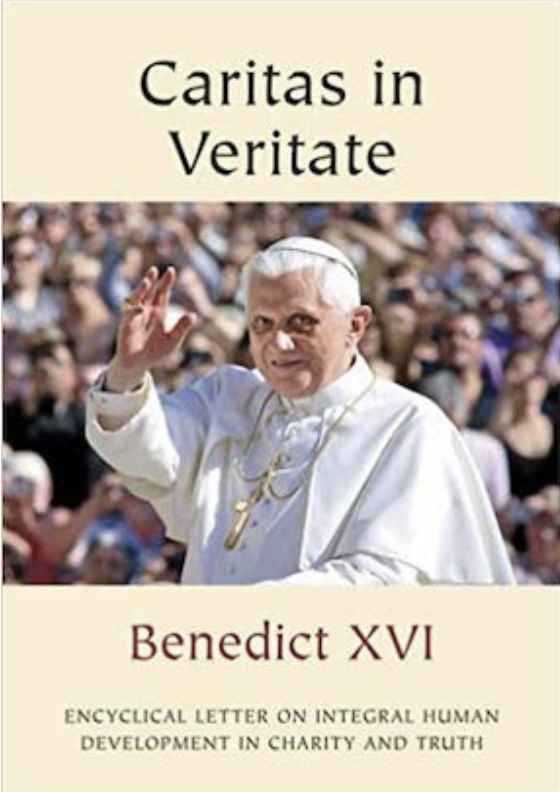
With Caritas in Veritate, 2009, and Evangelii Gaudium, 2013, Benedict addresses global poverty, injustice and the arms race. John XXIII had explored peace in the face of nuclear war and weapons of mass destruction in Mater et Magistra, Gaudium et Spes and Pacem et Terris. John Paul's Centesimus Annus 1991 addresses 'the insanity of the arms race'. Just a few days ago, in Nagasaki, Pope Francis urged world leaders to scrap nuclear weapons. In fact, the Church had been moving away from its previously-held Just War theory, seeing its focus as on war rather than peace; it argues that key criteria, like proportional use of violence, are never met in modern wars.
Benedict spoke during the fallout from the 2008 global banking crisis, which had a disproportionate effect on the poor of the world. He linked new market-focused policies to the economy of exclusion, the downsizing of social security systems and consumerism. This is also where we see the issue of the environment move up the agenda.
Benedict began what Francis would later develop into the groundbreaking Laudato Si, 2015. Hugely important, Laudato Si acknowledges man's incredible progress in science, business and technology but offsets it against how each has contributed to the destruction of the planet. The whole thrust of Laudato Si is about leaving a world fit for purpose i.e. human life for future generations. Man's power over nature's resources has not been accompanied by a 21st Century ethic fit for purpose. The present economic system, focused on maximising profit, to the point where even water is privatised in some places, plunders the earth's resources, pollutes its oceans, and makes species extinct. Francis calls for a newly-ordered system that 'imitates the systems of nature, preserving and limiting non-renewable resources use, and urging moderate consumption and the maximisation of recycling by all of us.
Neither socialism nor capitalism
So where exactly can the Church's position on society be placed politically and economically? John Paul pointed out that what CST offers isn't a political third way between conservatism and liberalism. While it is a critique of western culture, one reaching into the global world, it doesn't endorse a particular economic or governmental structure. It seems the Church cannot fully endorse any known type of politico-economical system. It has always inhabited what's been called a liminal space between socialism and capitalism. It doesn't attach itself to a particular economic model, either free market capitalism or socialism. Yet it doesn't rule out a free market economy that can leave the baggage of capitalistic materialism behind. Alongside this, it favours a type of corporatism and this is where the principle of subsidiarity comes in.
The Church argues for the development of a variety of civic and vocational institutions embedded within the economy that govern the scope and limits of what government does. Government is in ways accountable to these institutions and should perform only those tasks which cannot be performed at a more local level, such as running the criminal justice system. The role of the State is not to control or regulate everything, but one which supports initiatives arising from the different bodies. Communities who know what's best for them can decide what's best for them without undue interference. Universities, vocational colleges, regional banks, schools and unions are examples of these; others could be formed on the common interests of agricultural, labour, military, scientific, or guild associations.
Relevant to this is Paul VI's call for Catholic lay communities to political action, advising that building a just world could be done by people analysing their own realities and coming up with solutions based on the Gospel. Subsidiarity is present here, as it was way back in 1891 when Leo called for something to replace the tradesmen's guilds which had gone out of existence.
A fundamental principle in relation to economics is the universal destination of goods, formulated for the first time in 1991 in John Paul's Centesimus Annus, when, without condemning the free market outright, he condemns its excesses. For the first time the world's goods (including intellectual property) are declared as having a 'universal destination'. God destined the earth for all of us so that all things are shared fairly by all mankind. John Paul still endorses the free economy but only within a tight juridical framework. His yes/no attitude to free market capitalism was based on his seeing the alternative (socialism) as much worse. Yet the Church remained clear in its view that the way the economic system pulls all resources into the ownership of a few staggeringly rich people is ethically wrong.
Today in 2020, that the richest 1% in the world own 45% of the world's wealth is a barely comprehensible fact. And that divide between global billionaires and the bottom half of humanity is steadily growing. An added concern is that in business it becomes hard to determine who controls what, as there are complex ownership structures operating in a global setting. We know that power, politics and money are inextricably linked. Those with great wealth often gather their fortunes on the backs of those around the world working for very low wages and in appalling conditions. The Church repeats over and over that "the more fortunate should renounce some of their rights so as to place their goods more generously at the service of others'.
The message is unequivocal.
What all popes since Leo XIII have done is to highlight the great disparity between rich and poor, staggering wealth at one end, abject poverty at the other. They urge higher taxes on the rich; they call for regulation of the marketplace but without going into the specifics of how this could be done. Their concern is to place the principles at our feet, in order that society utilises them.
Francis makes the Church's position clear: 'Once greed for money presides over the entire socioeconomic system, it ruins society, enslaves men and women, destroys human fraternity, sets people against one another and even puts at risk our common home'. The present market economy is a system that generates exclusion, poverty, and misery. And, he goes on, the view that economic benefits will 'trickle down' the economic ladder to the poor and middle classes is expressing 'a crude and naïve trust in the goodness of those wielding economic power.'
More on the principles
CST arises from both the Old and New Testaments. Deuteronomy and Leviticus have liberation themes running through them. God's command is clear: look after the poor, don't steal or take bribes, or oppress aliens; don't take interest on loans. The three main prophets charged with conveying what God wants are Samuel, Nathan and Amos; Amos is most closely associated with CST today. In the New Testament, the message of Jesus is clearly laid out in Matthew 25, where we're charged to look after the sick, hungry, thirsty, the stranger (refugee), naked and imprisoned for whatever we do to them we do to Christ himself.
Much of John Paul II's 1981 Laborem Exercens would develop the concepts of work and labour. Upholding Leo XIII's 1891 defence of the priority of labour over capital, John Paul claimed that capital cannot be severed from its origin in labour—it is 'the result of work and bears the signs of human labour', and from previous generations. This was in contrast to seeing labour merely as a factor in production. John Paul framed it all within a spirituality of work where 'work' is redefined and broadened to see the worker as a 'maker', in the image of his Creator. Work no longer solely means paid labour --the meaning expands to encompass any meaningful activity which aids the common good. We each participate in the common good in multiple ways – in work, our local community, the arts, family life, and so on.
New concepts of solidarity and 'indirect employer' emerge strongly with John Paul. Solidarity, he said, isn't a feeling of 'vague compassion' for others but a firm and persevering determination to commit oneself to the common good'. Solidarity emerges more as an actual virtue, the quality of a person's character, whereby they have an enduring commitment to seek the common good, and to act in line with the preferential option for the poor. It exists not only between individuals but also within and between social institutions, nations, towns, parishes, as a universal bond. Highly aware that the exploitation of workers continued, John Paul also formed the concept of the 'indirect employer'.
A direct employer is an employer in the usual sense. An indirect employer includes persons and institutions of various types which determine the whole socioeconomic system. This economic factor is what John Paul would pick up and call the indirect employment. Because of their influence on wages and working conditions, indirect employers have to be held responsible for the lack of workers' welfare. This also includes the influence which the policies of rich countries can have on the economies of poorer trading partners and debtor countries. What follows is a contemporary example of an indirect employer in operation:
Following the Guardian's exposure of the role of child labour in the tobacco fields of Malawi, in 2018, early in 2020, in a landmark case against British American Tobacco, lawyers will seek compensation for over 350 Malawi child labourers and their families in the High Court in London. Forced to work in shocking conditions, the lump sum paid is no more than £100-£200 for 10 months' work for a family of five. One of the biggest human rights cases lawyers have ever brought, this could transform the lives of children as young as three.
BAT made profits of £9.3bn in 2018, on sales of £24.5bn. Like other big tobacco companies, it distances itself from the farmers by commissioning a separate company to buy a stipulated amount of tobacco leaf each year. This company then signs contracts with Malawi landowners, who in turn recruit tenant farmer families to work the fields. Lawyers will argue that responsibility for the tenant families rests ultimately with BAT, as the indirect employer who decides the price that it will pay for tobacco leaf. A report in 2011 estimated 1.3 million children under the age of 14 were working in tobacco around the world. In 2017 the International Labour Organisation reported that this number was on the increase. In April 2019, the same group of lawyers – Leigh Day – won a watershed case against a British mining company, which the high court held responsible for the actions of its subsidiary in polluting farmland in Zambia. That case opened the way to hold other companies responsible for harm caused by those who work for them overseas.
Human Dignity
The principle of human dignity runs through all CST principles. Genesis 1 tells us each of us is created in the image and likeness of our Creator. Hence, we're called to treat others with a dignity accorded only to that which has something 'God-imprinted' about it – the human person. The human person is the lynchpin of CST. Each encyclical emphasises the centrality of the person and her/his full integral development. Society falls short of the Catholic vision of what it should be unless the dignity of all its citizens is upheld.
Dignity is also the basis in western society for having human rights. It's why we have rights. Recognising these rights as inviolable, we encode many of them into our legal framework. While the CST notion of dignity upholds rights and responsibilities – of course it does – it goes beyond them when it places the rootedness of that dignity in our Creator. Rights and responsibilities are a necessary but not sufficient condition for the CST notion of a good common to all.
There is one principle which is the ground of all the others—the common good. Does society exist for each one of us, or does each one of us exist for society? Jacques Maritain, the great Thomist philosopher, stated that there is nothing more illusory than to pose the problem of the person and the common good in terms of opposition. In reality, they mutually implicate one another. The human good is irreducibly common as it is found in participation in society. As we participate in the common good, we generate it too. And it is something which increases rather than diminishes when shared. There is also a sense in which the common good is constantly unfolding as each of us contributes.
The human person is a social being, made for community. How we organise our society, through economics and politics, directly affects human dignity. It is often assumed that economic flourishing within a society is a sign that all is well, that 'the common good' is operative. But this reduces what CST has to say on the common good to the claim that economic growth is a sufficient measure of social wellbeing when, in fact, by itself it is not. What CST sees as both necessary and sufficient is that the conditions of social life, that is, peace, organization of state powers and the provision of essential services allow social groups, and their members, ready access to their own fulfilment. Faith in a Creator, whose plan for creation is to further His Kingdom on earth, wherein each of us has a unique purpose, is the basis for the common good.
We can't achieve our full development by ourselves. We need political institutions, which can make available the necessary material, cultural, moral and spiritual goods. The common good is the very basis of political action. When used in the political arena, more often than not it is merely a description of the general direction of policies, rather than a criterion through which policies are discovered. A political use of the phrase which leaves out dignity for all doesn't meet the CST criterion. If taken seriously, CST and common good thinking can be taken up as a robust form of political reasoning and can influence what economic structures we have in our societies. It can inform policy-making without the Church directly entering the political/socio-economic realm, as is Pope Francis' aim in convening the 2020 conference.
Conclusion
Paul VI listed sins against dignity as subhuman living conditions, arbitrary imprisonment, deportation, slavery, prostitution, the selling of women and children; shocking working conditions. This was written in 1965 so we can add to that not only the huge global refugee and environmental crises, but the shocking increase in human trafficking and modern slavery.
We've had the recent sickening tragedy of 39 young Vietnamese people attempting to enter the UK and meeting their demise in a horrific way. Their local priest tells us that they were escaping from the economic situation, environmental issues, poor social security, education, human rights abuses. They know it's dangerous to flee but feel they have to take a gamble for a better life.' Families depend on them to find their way into advanced capitalist countries in the west, to work and be breadwinners. The irony is that the very capitalist systems they flee to are those which create the problem in their own countries. The economic growth in Vietnam over recent years is built on the low-cost labour of millions toiling for overseas companies. China alone brings in $222m in direct investment. And it's the low labour cost that attracts it and other foreign investors.
Closer to home, in the UK we have mental health issues, especially among the young, with resources stretched to the limit. There are huge drug problems, with related knife crime and children involved as county line drug carriers. We have foodbanks, children in care, and many people in deep debt – including students who, at 21, leave university saddled with a minimum £30,000 debt. CST calls us to organise ourselves to protest in whatever ways we can against the way countries and their borders operate, against war, against basic injustices, on both the local and global scene; to get together in our communities, church or local, or do what we can on an individual level with what is close to our hearts.
A recent gathering at a Catholic university of lay leaders from institutions across the US explored how the principles of CST can help advance protection and accountability within a wounded Church, and contribute to the common good. Catholic ministries and institutions can help heal divisions by focusing on the Gospel message to serve the poor and marginalised. They can be the face and voice of the Church.
The Bishops' document
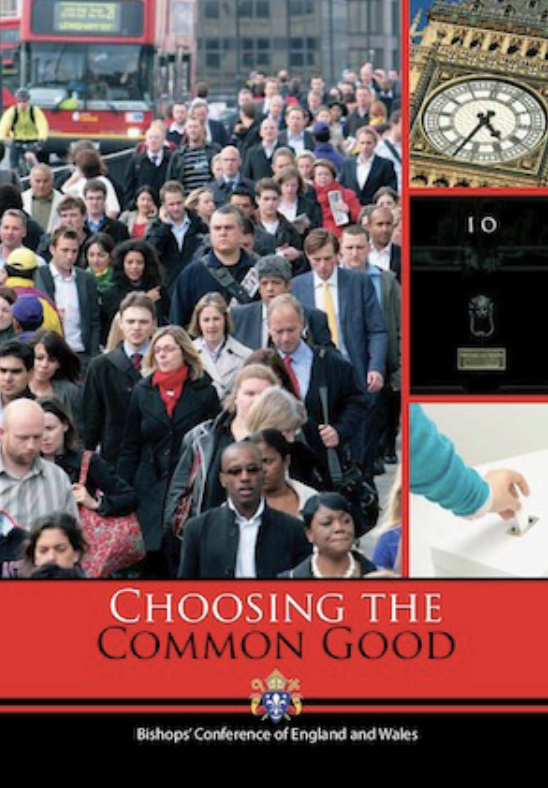
In 1996 the Catholic Bishops of England and Wales issued The Common Good. Their aim: to urge educators to communicate CST more fully to all Catholics. Just as St John Henry Newman's rationale for his mission was that he wanted Catholics 'who know their religion, what they hold and what they do not', the bishops believed that lack of familiarity with CST weakens our capacity to be a Church true to the demands of the Gospel. How far this educating process has actually happened is another matter. Why don't we know about this? Why haven't the bishops updated their 1996 publication?
Most priests do not receive CST instruction during their theological training. Many Catholics are eager to learn more about their faith, but not all parishes feel equipped to do so. We know what the Church teaches on the Sacraments but what does it teach about social affairs? Religion impacts every aspect of our lives – social issues cannot be boxed off from the rest of life. CST cannot be reduced to an archaic box of dusty papal documents, to be brought out from time to time and reflected on. It is, rather, a movement, stirring new life within the 21st century Church.
Synodality is a recently developing tool of Church reform. It is a concept related to subsidiarity, for example, the aim of vesting local churches with more decision-making power. Francis wants to promote a synodal, missionary church which has decentralisation at its core.
A final note: what this talk has not been about is to lament a lack of social justice projects here in the Northeast. It just takes a glance at the Northern Cross each month to see how much is going on in parishes and partnerships. What it HAS been about is to offer an outline of the encyclicals and the developing social context, to open out the ideas and concepts behind CST, and then to briefly examine how those principles relate to the workings of society and government today. Inasmuch, it has hopefully been an awareness-raising exercise about the importance of CST, especially to the lay apostolate.
It would seem that lay Catholics need to evangelize their parishes – and their priests – in social justice terms. This is a central part of what I and the rest of the team here are about: we very much hope that people like you will find ways to disseminate among your fellow parishioners the facts about the Church's social teaching. You might consider starting up a parish group, even join us in our CST meetings which usually take place in St Hilda's Diocesan Centre in Newcastle on a bi-monthly basis. Working together as communities, each doing our bit to add to the common good, is how change is brought about.

Louise Harrison is a member of the CST (Catholic Social Teaching) team in Hexham and Newcastle Diocese; she is the CST representative on Hexham and Newcastle Diocesan Adult Formation team. This article is based on a talk she gave to the Newman's Tyneside Circle in November 2019.