A lecture to the Manchester Newman Circle exploring the connections between Coleridge's Rime of the Ancient Mariner and Pope Francis's encyclical Laudato Si'.
Manchester Newman Lecture – May 15th, 2019
By Malcolm Guite, Fellow and Chaplain of Girton College, Cambridge, author of The Mariner: A Voyage with Samuel Taylor Coleridge*
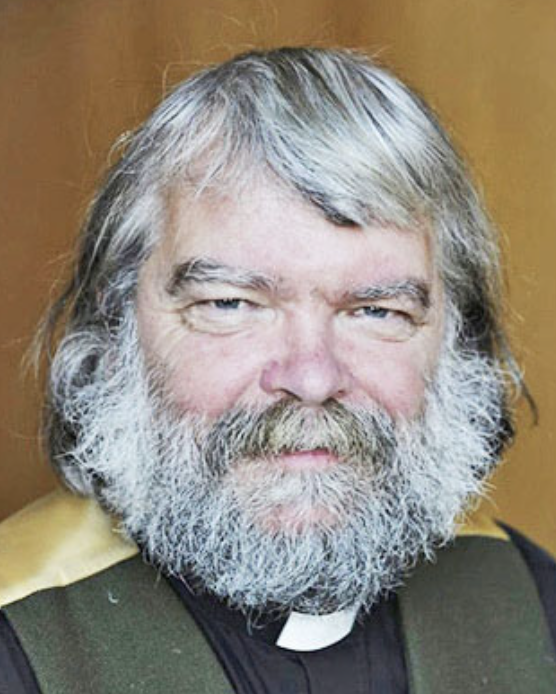
Malcolm Guite, Fellow and Chaplain of Girton College, Cambridge
I'm glad to be talking to the Newman Association. Newman is a very important figure for me and The Idea of University still has a great deal to say to universities today. Before I launch into the connection between Samuel Taylor Coleridge and Laudato Si' I would like to just note how another great writer – C S Lewis – observed that Newman had a particular interest in Coleridge's thought. Lewis said this: "Newman, in that ruinous master (Coleridge) saw one who restored our faculty for awe, who reimagined the soul's depth and height, who pricked with needles of eternal light an England at that time half-numbed to death with Payleigh's, Bentley's, Malthus' wintry breath."
Coleridge was giving England a wake-up call. "You are not seeing the world with that faculty of awe which will allow you to resonate with it." One of the astonishing things about Laudato Si' as an encyclical is its concept of "integral" ecology, as Pope Francis wants to integrate ecological justice with social justice. He doesn't want the environment to be looked after at the expense of the poor. He sees that the same forces in society which devastate and trash beautiful habitats are the same forces that devastate and trash the people who live in them. But the most extraordinary example of integration within Laudato Si' is the integration of science and spirituality, in looking really hard at what the science is telling us about what we are doing to the earth and at the same time not allowing nature to be reduced to a mechanism which we can tweak and fiddle with – but allowing it to become a divine language.
Worlds which had split apart
Coleridge would certainly have approved. He was trying to bring together worlds which had split apart. There is a lovely throwaway line in one of Coleridge's letters in which he said he was off to one of Humphrey Davy's lectures "to increase my stock of metaphors". He saw scientific ideas as the very images with which we can now learn to think. One of the great achievements of the encyclical is that we are not simply stunned or depressed by the science but we have the opportunity to take the science up into poetry and spirituality and make something of it.
Laudato Si' has gained a wide readership, but significantly it is a wide readership beyond the Catholic Church since it offers a clear account of our current ecological crisis and it offers some possible ways forward. Indeed, in the outset Pope Francis directs his words to all of us, not just to Catholics or even to Christians. He says: "In this encyclical I would like to enter into dialogue with all people about our common home." In fact, I would say that his dialogue is not just with his present readers but also with the past that has formed us, for good and ill. He draws on St Francis, on Bonaventure and on St Thomas Aquinas. I would like to reflect on another figure from the past, whom he does not cite at any point, but one whom I think at least in the imagination one could bring fruitfully into conversation with him. That is the poet Samuel Taylor Coleridge.
Coleridge's thinking anticipates and confirms many of the insights in Laudato Si'. Indeed, The Rhyme of the Ancient Mariner could be seen as a parabolic, or embodied, expression of many of the key insights of Laudato Si'. Let me briefly explore some of the parallels. I will try and give you what they call the executive summary. "By my long grey beard, wherefore stops thou me." It's an arresting opening. We are all held spellbound by the mariner's tale and perhaps, like the wedding guest, changed by it. Why am I hearing this story? We are, as it were, the wedding guests. I think Coleridge, very much by the end, wants you to reflect on what it should change in us. He has become a sadder and a wiser man by the end of the tale.
It is an ancient Mariner,
And he stoppeth one of three.
"By thy long grey beard and glittering eye,
Now wherefore stopp'st thou me?
What is the tale that is told? Well, like The Odyssey before it, it has the classic shape of a journey out and back again. It is an unnamed ship, on a journey the purpose of which we are never told, which leaves the familiar and sails south across the line into the southern hemisphere. It comes at last to the great ice floes of the Antarctic. The sailors are lost in fog and surrounded by ice ("the ice was here, the ice was there"). Coleridge had at the time of writing never set foot in a ship but he had read lots of accounts of the Antarctic ice. In his poem the sailors are surrounded by ice and they are befriended by an albatross, a mysterious bird which had been hailed by the men as a Christian soul. It guides the ship through the ice, round Cape Horn and into the unknown Pacific. The ice opens and they get a passage through. And then the bird perches on the mast "for Vespers nine". At the very end of the story it will be the Vesper Bell that calls the mariner.
A terrible change
All is going well, and the albatross guides them through, but then the narrative of the poem is suddenly interrupted as the wedding guest, to whom the tale is being told, notices a terrible change in the Mariner's expression.
"God save thee, ancient Mariner!
From the fiends, that plague thee thus!–
Why look'st thou so?"–With my cross-bow
I shot the ALBATROSS.
The rest of the poem goes on to explore the profound spiritual and material consequences of this seemingly random deed. And as the poem proceeds it takes on the resonance and the spiritual significance of the primal fall of humankind, and the fall of each of us. And the crew make themselves complicit in the deed by taking a purely instrumental view of the bird. It was right, they say, to slay the birds that brought the fog and mist. But then they said it was the albatross that was bringing the wind, so it shouldn't have been killed. But it never occurs to them that the albatross is not a single isolated thing that is there to be disposed of, but there is a link between the high-flying bird up above and the deep polar spirit beneath. So they have offended against an intricate web of which they really have no comprehension.
The albatross had its own life and meaning and eventually they learn, but only through the medium of a dream, that they have disturbed this balance, that they have disturbed the polar spirit. The poem goes on to tell of the death of the other sailors and of the survival of the mariner, alone, in an agony of helpless guilt and isolation, in which he curses himself and every other living thing, and in which he wishes only to die.
And every tongue, through utter drought,
Was withered at the root;
We could not speak, no more than if
We had been choked with soot.
And then we have an extraordinary scene of transformation, in which the Mariner is suddenly able to see the world anew, to see it without sole reference to himself, and in which he finally blesses the "happy, living things" against whose whole web of life he has offended. The rest of the poem tells of his growing spiritual awareness, his penance, the expiation of the curse, his visitation by angels and his final return, purged and transformed in the place where he began. It tells of a meeting with a friend, of the sacrament of confession, of the recovery of faith, and of a new mission to tell his transformative tale specifically to those who need to hear it. "The moment that his face I see, I know the man must hear me, to him my tale I tell". That conversion of heart by the Mariner on those he meets, to whom he tells his tale, is summed up at the end of the poem into famous verses that forge a link between prayer and love – not just love for our own species but for the whole interrelated web of life, of which we are just one small part. "Farewell, farewell, but this I tell to thee, thou wedding guest, he prayeth well who loveth well, both man and bird and beast, he loveth best all things, both great and small, for the dear God who loveth us, he made and loveth all". A phrase here was picked up by Mrs Cecil Alexander in a hymn but only with an emphasis on beautiful things.
The web of life
In the poem, Coleridge has been precisely engaged with the feeling of revulsion that we have when we have turned our back on the web of life. "A thousand thousand slimy things lived on, and so did I," and it's his ability to see those very things that he thought of as repugnant in a new life that changes him. And that's why that line is not trite when it comes at the end of the Mariner. But it's been retrospectively trited by Mrs Alexander in "All Things Bright and Beautiful". God's love extends to all creatures, not just humankind, it is not anthropocentric. That is precisely the link which Pope Francis, following St Francis himself, establishes in Laudato Si'. So, returning to Coleridge's poem, astonishingly every one of those narrative elements that I have just listed can be paralleled in Coleridge's lines.
Like his Mariner, Coleridge endured the agony of loneliness, despair and suicidal thoughts but also, like him, he survived the ordeal and was rewarded with a visionary experience of transfigured beauty in the world and returned from his own voyage to extremity – to Germany and Malta, in fact – with a new sense of purpose. Just as the Mariner met the pilot and the hermit at the moment his ship was sinking, and was rescued by them, so Coleridge was rescued from the shipwreck of opium addiction and despair by Dr James Gillman and he lived with him for the last years of his life, famously at 3, The Grave, Highgate. Basically they invented rehab together.
I turned up one day at 3, The Grave. It happened to be hallowe'en and a dark and stormy night. I thought, before I knocked on the door, that I had better check who lived there. In fact it was Kate Moss, the model, not the novelist. At this point, I'm afraid, courage failed me. I thought, dodgy vicar calls on supermodel, I just didn't want to go there.
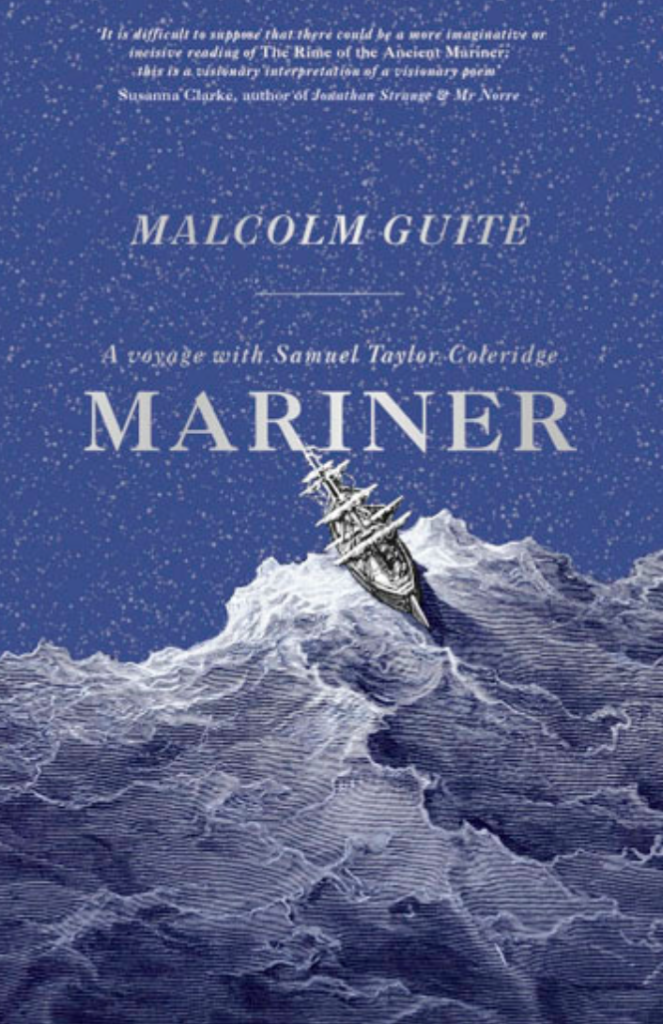
The cover picture of Malcolm Guite's book*
Coleridge lived with Gillman for the last years of his life. In that final phase Coleridge became, like his Mariner, a life-transforming teacher sharing a spiritual vision which linked life, love and prayer with a new humility towards God and Nature. He wrote extraordinary works, a lay sermon, and philosophical lectures, and was working on a kind of general theory of life, and he promised that it was going to include a commentary on the life of the Ancient Mariner, but of course it was among his unwritten works.
Not surprisingly, later in his life, Coleridge came to identify himself with The Mariner. Yet when he wrote the poem he had never even been to sea and none of these adventures had befallen him. So in my book Mariner* I came to investigate how it was that Coleridge's tale could have been so symbolically prophetic not only in what was to come in his life but also of the ecological crisis which we are currently facing and of the way we can solve it.
I found that in one sense Coleridge had answered this question in a remarkable passage in the biography Literaria which he published in 1817. Here is what Coleridge had to say: "They, and only they, can acquire the philosophic imagination, the sacred power of self-intuition, who within themselves can interpret and understand the symbol that the wings of the air-sylph are forming within the skin of the caterpillar. The same instinct that impels the chrysalis of the hornet fly to leave room in its involucrum for antennae yet to come. They know and feel that the potential works in them even as the actual works on them." It's an extraordinary passage. Now, isn't it an interesting analogy for the whole role and imagination of the creative arts in which we human beings come to know things? Mathematicians and scientists will tell you this, that you can imagine something before you have done the maths and the role of the imagination is to carve out a space into which you will grow your antennae, and the antennae are precisely those organs which you will use to discover your knowledge of the world. What Coleridge is proposing is that the imagination is working sympathetically and intuitively with the other means of knowing.
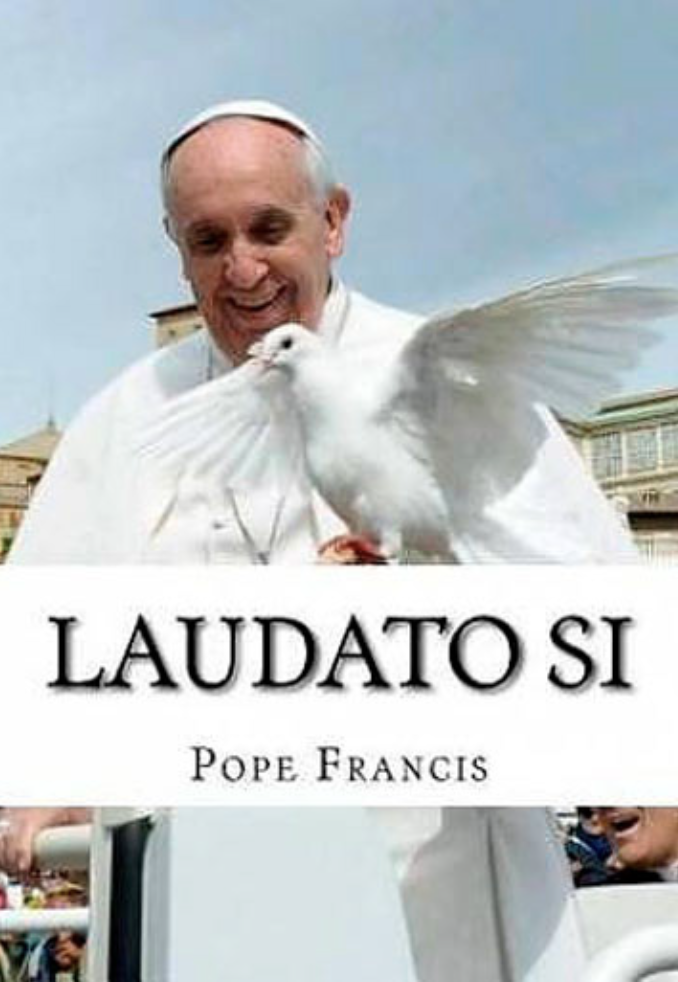
All our thinking depends on our observation of all the diverse things in the world. Just think, for a moment, about thinking about anything without drawing on a metaphor of a tree. You think about putting down roots, you think about branches of learning, about family trees; aimlessly we need to look to a tree to understand the way we think. Now, there's great passage in Laudato Si' where Pope Francis says one of the reasons we need biodiversity is that we must resist commercial pressure to clear the forests or drain the seas in order to catch the one fish or to grow the one crop that happens to be money-making at the moment, whether it is palm oil or cod or whatever, and meantime we destroy we know not how many other things. Pope Francis points out that those might be our future medicines, they might be where the penicillin of the next generation is going to come from. But actually I would say that our very ability to think at all is impaired if we don't have those creatures teaching us how to think.
That whole realm which is our spiritual inheritance, the insights of the saints and the mystics, these things are there with a wisdom which we may not yet have fully grown into. We shouldn't abandon those insights because we haven't yet put our antennae out fully. And one of the things I applaud about Laudato Si' is the way he draws upon people like Bonaventure alongside the latest science.
Coleridge tells the story of a journey which starts with these high hopes and good spirits and leads to a terrifying encounter with human fallibility, with darkness, alienation, loneliness, dread, then repentance and a profound experience of prayer. That was the trajectory of Coleridge's own life, but it also contains and illustrates many elements in the Pope's account of what has become of humanity: how we have been alienated from and are destroying our common home, how we might come to our senses and see things transfigured and beautiful again, and how we might recover.
So let us bring Laudato Si' into the conversation with Coleridge. What Coleridge raises is the question of what is our relationship with the natural world? Is it a sacred web of exchange, of which we are only one small part? Or is it simply an agglomeration of stuff which we can use at will for our own purposes? When the Mariner shoots the albatross and the crew judge the deed solely on the basis of whether the deed brings them good or bad weather they have taken an instrumental rather than a sacral view of nature. The albatross is not considered to have an intrinsic nature, or rights, in itself but is merely an instrument which might assist human beings to their own ends.
In one sense the terrible curse that falls upon the ship and its crew, and the dreadful experience of loneliness and alienation suffered by the Mariner, are a consequence of this instrumental view of nature. But in a deeper sense the instrumental view is itself the curse: there can be no blessing or release until the Mariner experiences a radical conversion of heart and mind, in which he can look out from the ship at the other living things and bless them and love them for themselves, without reference to a private or even purely human agenda. Coleridge later would work on this question philosophically.
Insights of Pope St John Paul II
Quite early on in Laudato Si' the Pope raises this issue. He renews some of the insights of his predecessor Pope St John Paul II who became increasingly concerned about it, and in his first encyclical he warned that human beings frequently seem to see no other meaning in their natural environment than what serves for immediate use and consumption. Subsequently he called for a global ecological conversion and he noted that little had been done to safeguard the moral conditions for an authentic human ecology. He went on: "It is not enough, however, to think of different species merely as potential resources to be exploited, while overlooking the fact that they have value in themselves. Each year sees the disappearance of thousands of plant and animal species which our children will never see. Because of us, thousands of species will no longer give glory to God". That's really powerful.
And so in Section 69 he says: "Each creature is an end in itself, and an expression of God's goodness, not something that is simply there to serve humanity. Each creature possesses its own particular goodness and perfection. Each of the various creatures will, in its own being, reflect in its own way a ray of God's infinite wisdom and goodness. Man must therefore respect the particular goodness of every creature to avoid any disordered use of things. You see how he is bringing faith and a kind of radical mysticism to bear on the very question of biodiversity. That's why I admire the integrated thinking that's going on in this encyclical.
To return to Coleridge's poem, we have seen that the Mariner cannot achieve release until he has experienced a radical conversion of heart and mind in which he can look out from the deck of the ship at the other living things and bless them and love them for themselves. So how does that come about in the poem and how might it come about for us? The transformation – redemption – of the Mariner finally occurs in part four of the poem when at last the Mariner looks out at the other marine creatures, which he despised as "a thousand slimy things", and he sees them in the light of the moon and in the light of God's grace as happy, living things. "I looked upon the rotting sea, and drew my eyes away. I looked upon the rotting deck, and there the dead men lay. I looked to heaven and tried to pray."
Complete Isolation
The core of all this agony and isolation is for the Mariner, as it would be for Coleridge, the inability to pray. Having broken the threads of communication at a horizontal level between himself and his fellow creatures the Mariner now finds that the vertical axis, the thread of connection with the divine in prayer, is also broken. His isolation is complete. Only after seven days of agony for him do we get the first indications of change. The symbol that accompanies these changes is the living moon. Coleridge makes an important reference to the "moving moon" and that the moon is cause of movements in others and the tides and that it also moves us, in the inner space of our hearts. But accompanying the verse is a later gloss, added twenty years after the first edition. "In his loneliness and fixedness he yearneth towards the journeying moon and the stars that still move onward". It acts as a kind of premonition of the redemption which is to come.
At his lowest he is absolutely at zero point, yet just at the point where his own journey seems endless we have this gloss taking him from journeying to homecoming. Words like "belong" and "rest", "natural home", leading to a "silent joy of arrival", they reflect on the joy in heaven for each sinner who repents. The redemption of the Mariner can only come from a recognition of the truth which he had denied when he shot the albatross: the truth that all creatures are God's and not his. It's as though by seeing these creatures in moonlight that he sees them as God sees them.
I pass, like night, from land to land;
I have strange power of speech;
That moment that his face I see,
I know the man that must hear me:
To him my tale I teach.

Samuel Taylor Coleridge
In Laudato Si', the big question raised is how, in the midst of our technological culture, are we to recover that authentic humanity? How are we to recover the vision of beauty and find the creative imagination required to achieve that new synthesis? Again, I think we can look to Coleridge for some of the answers. He wrote that he had been trying to excite a feeling analogous to the supernatural by awakening the mind's attention to the lethargy of custom, and directing it towards the loveliness and the wonders of the world before us, an inexhaustible treasure – but for which we have eyes that see not, ears that hear not and hearts that neither feel nor understand.
The key word is "awakening". And eventually, I think, in these last few months we have been coming towards an awakening in terms of understanding what climate change means and what we need to do in the next ten years if we are not to be the generation that betrayed all its future generations; if we are not to have our children and our grandchildren look at us with bewildered, accusing and desperate eyes: How did you do this to us?
Farewell, farewell! but this I tell
To thee, thou Wedding-Guest!
He prayeth well, who loveth well
Both man and bird and beast.
He prayeth best, who loveth best
All things both great and small;
For the dear God who loveth us,
He made and loveth all.
*Mariner: A Voyage with Samuel Taylor Coleridge, by Malcolm Guite, published by Hodder & Stoughton, £14.99 (paperback)