A brief essay exploring Newman as poet, theologian and churchman, ranging across the Grammar of Assent, the Apologia Pro Vita Sua, and his landmark article on consulting the faithful in matters of doctrine.
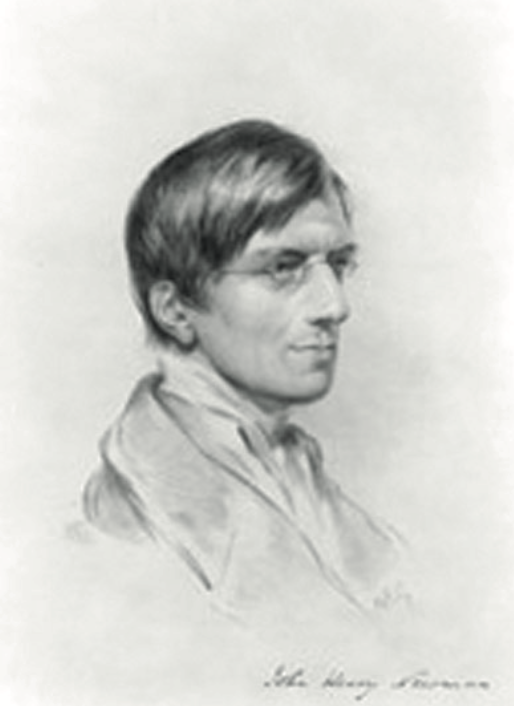
John Henry Newman
The following brief essay makes no claims to any kind of completeness, and in its attention to Cardinal John Henry Newman also reflects my own particular concern with the nature of the relationship between literature and theology. For not only do I regard John Henry Newman as one of the most important religious thinkers and churchmen of the nineteenth century (and I deliberately prefer not to call him more precisely a "theologian"), but I believe that he is that because he is also a poet and man of literature (after all he wrote two novels, one of which, at least, betrays a capacity for an impish sense of humour that we do not often associate with the grave Cardinal). These two things cannot finally be separated. And so I will begin by briefly discussing how Newman understands language itself as a "living power", and from this move on to his own practice as a poet and centrality of this to his whole life. We shall then move to consider briefly his most important work, The Essay in Aid of A Grammar of Assent, of 1870 which finely articulates the origins and nature of religious assent and belief. From there I will move slightly backward in time to his 1864 Apologia Pro Vita Sua in which he traces the passage of his movement from Anglicanism to his conversion to Roman Catholicism in 1845. Finally, I will say something about his 1859 article "On Consulting the Faithful in Matters of Doctrine" and the manner in which Newman might claim to be the presiding genius of the Second Vatican Council some one hundred years later.
A liberty of speculation
In the Apologia Newman cites three English Romantic poets as providing in their language and poetry a "philosophical basis" for what he calls "Church feelings and opinions." They are Robert Southey and William Wordsworth, but above all, Samuel Taylor Coleridge whom Newman described as "a very original thinker, who, while he indulged a liberty of speculation, which no Christian can tolerate, and advocated conclusions that were often heathen rather than Christian, yet after all inspired a higher philosophy into enquiring minds, than they had hitherto been accustomed to accept."1 At the heart of all proper, and above all theological, discourse, it might be said, is the careful and precise understanding of the nature and use of language. For Coleridge and for Newman, language was not analytic but rather what has been called "fiduciary". Words are literally living organisms. In the words of the Newman scholar John Coulson: "In religion, as in poetry, we are required to make a complex act of inference and assent, and we begin by taking on trust expressions which are usually in analogical, metaphorical, or symbolic form, and by acting out the claims they make: understanding religious language is a function of understanding poetic language."2
Let us just take one of those "forms" – the symbolic – as we attempt to describe and understand the nature of what we might call religious language. It was famously described by Coleridge in his 1815 work The Statesman's Manual thus, as he seeks to evade what he calls "a starveling and comfortless religion": "a Symbol… is characterised by a translucence of the Special in the Individual or of the General in the Especial or of the Universal in the General. Above all by the translucence of Eternal through and in the Temporal. It always partakes of the Reality which it renders intelligible; and while it enunciates the whole, abides itself as a living part in that Unity, of which it is the representative."3 In Coleridge it is hard to separate words from "things" – and in the thought and spirituality of Newman and the Oxford Fathers this takes us close to – and indeed almost into the heart of – the sense of the sacramental: words are felt as acts and through them we come to approach the real presence of the sacrament. For both Coleridge and Newman the theology of the Fourth Gospel and the understanding of the Logos as Divine Word made flesh were crucial.
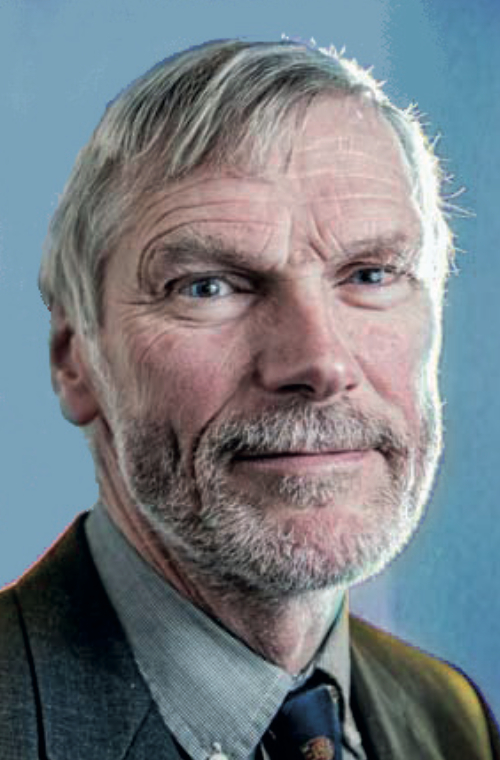
David Jasper
And so what of Newman's poetry? On the Feast of All Saints 1836 a small collection of poems entitled Lyra Apostolica was published – the work of six poets closely connected to the Oxford Movement, by far the greater number being by Newman, 109 out of a total of 179. Other contributors included John Keble, Isaac Williams and Robert Isaac Wilberforce. At its best Newman's poetry blends finely with doctrine in a liturgical moment such as we find in perhaps his best-known poem, taken from the later Dream of Gerontius (1865), familiar today as the hymn "Praise to the holiest in the height." The poems of Lyra Apostolica are a deliberate blending of religion with Romanticism, clearly looking back, for example, to works such as Shelley's "Ode to the West Wind" and Coleridge's "Aeolian Harp". Newman is never purely the theologian or the church historian, at this stage at least, being deeply indebted to the pastoral poetic tradition of George Herbert and John Donne. Like them he is still at this stage an Anglican, but already his Catholic sensibility is expressed in his verse. In the fourteenth poem of Lyra, entitled "The Cross of Christ", Newman uses the same scansion scheme as the better-known "Lead, Kindly Light" (number 25 in the collection) which has the effect of slowing the tempo down in the second and fourth lines of each verse:
Whene'er across this sinful flesh of mine
I draw the Holy Sign,
All good thoughts stir within me, and collect
Their slumbering strength divine.4
The making of the sign of the cross, perceived as a "Romish" practice that would give offence to low church Anglicans, becomes here a slow, devotional action, as does its effect in releasing the "strength divine" and its consequences, felt in the last two lines of the stanza:
Till there springs up that hope of God's elect
My faith shall ne'er be wrecked.
At this stage in his life Newman can still rage against the Roman Catholic Church as (in the title of this poem) "The Cruel Church", placed in a section of the book entitled "Disappointment":
O Mother Church of Rome! Why has thy heart
Beat so unruly towards thy northern child.5
Yet there is a sense here of longing which almost even now (nearly ten years before Newman's conversion) finds a home in the Mother Church even in its cruelty. And in the next poem (No. 174), the Church of Rome becomes the Good Samaritan and the place which resolves and calms the passions – if only the doctrinal and creedal difficulties concerning it could be resolved. Even now, it might be said that poetically and aesthetically, though not yet theologically, Newman is already home. The poem begins with an outburst:
O that thy creed were sound!
For thou dost soothe the heart, Thou Church of Rome,
By thy unwearied watch and varied round
Of service, in thy Saviour's holy home.
I cannot walk the city's sultry streets,
But the wide porch invites to still retreats,
Where passion's thirst is calmed, and care's unthankful gloom.6
Already Newman has found in Rome apostolic consistency ("the unwearied watch") and integration ("varied round of service"), and the necessary Essay on the Development of Christian Doctrine (1845) which was finally to trigger his conversion, is not far away, a theological meditation on an achieved poetic sensibility. The poet precedes the intellectual resolution, the words of the liturgy alive with truths beyond formulation. So Newman writes:
Whene'er I seek the Holy Altar's rail,
And kneel to take the grace there offered me,
It is not time to ask my reason frail,
To try Christ's words, and search how they may be;
Enough, I eat his Flesh and drink his Blood,
More is not told – to ask it is not good.7
From these humble words it is a natural step to Newman's greatest and most creative work (in my view), The Grammar of Assent. What this complex and demanding work addresses with unparalleled sensitivity and intelligence is the nature of the process of how we come to believe and give assent, analysing on the way the function of the conscience in our knowledge of God and the role of what Newman calls the Illative Sense – that is the faculty of judging given facts by processes outside the limits of strict logic. In brief, we believe not through a process of logic but by the accumulation of possibilities until finally it makes better sense to assert belief than express disbelief. Newman's discussion is lengthy, precise and demanding of careful thought, but it is rooted in his history as a preacher in Oxford and the key to The Grammar of Assent is really to be found in his University Sermons, preached in Oxford between 1826 and 1843. Newman is never an abstract theologian, but yet he emerges without compromise from the intellectual and theological debates of the eighteenth century, above all from the work of Bishop Joseph Butler and his Analogy of Religion (1736) – Butler being a devout churchman who addressed the issues of his time with a steadfast refusal to oversimplify or to ignore the complexities of the human situation. Thus, although he is one of the greatest masters of English prose, Newman is never less than demanding on his reader, but in equal measure, and more, rewarding of the effort. He celebrates the power of the human mind, and demands that we, as his readers, use that power to its fullest extent. The failure to do so will have its inevitable consequences. Thus he writes:
It is the mind that reasons, and that controls its own reasonings, not any technical apparatus of words and propositions. This power of judging and concluding, when in its perfection, I call the Illative Sense.8
Thus Newman grants much to his readers – and demands much from them. It is an important principle when we come to refer to his close attention to the role of the laity in matters of doctrine, in which matter he was (and indeed still is) far ahead of his time.
Yet Newman can also be winsome and thoroughly readable, and not only in his fiction and poetry. A formidable controversialist, he was never more thorough than in his rebuttal of Charles Kingsley published as the Apologia Pro Vita Sua (1864). Kingsley, an Anglican priest and at the time Regius Professor of Modern History at Cambridge (an excellent reminder that holding such a distinguished academic chair does not necessarily guarantee academic brilliance) had accused Newman in scathing terms that have become the more celebrated for the response that they provoked. Kingsley wrote in a review of J. A. Froude's anti-Catholic History of England:
"Truth, for its own sake, had never been a virtue with the Roman clergy. Father Newman informs us that it need not, and on the whole ought not to be; that cunning is the weapon which heaven has given to the saints wherewith to withstand the brute male force of the wicked world which marries and is given in marriage. Whether his notion be doctrinally correct or not, it is at least historically so."9
Relentless in debate
The remark was both unjust and unwise on almost every level. It was an old jibe against Roman Catholics and familiar enough to Newman (who had engaged in similar accusations himself in his Anglican days), but now Newman, as a Roman Catholic himself, was relentless in debate. His response was one of the most articulate and readable analyses of the development of a religious position ever penned in English. More than a personal history, the Apologia is an acute account of the nature and place of Christianity in the modern world.
Before we turn, briefly, to the work itself, we need to know that Kingsley, never a man to know when he was beaten, pursued his quarry in another pamphlet entitled What, Then Does Mr. Newman Mean? which he began with a typically categorical statement: "Dr. Newman has made a great mistake."10 Typically angry and intemperate, Kingsley accused Newman of being a Papist even when he was still an Anglican and thus was deceitful as well as being dishonest.
Newman's response in the Apologia was beautifully measured and based upon the principle that he had carefully established in the book An Essay on the Development of Christian Doctrine that had carried him from Anglicanism into the Church of Rome. It was the simple proposition that in order to remain constant we must always be prepared to change, and, as he had insisted in his pamphlet known as The Tamworth Reading Room (1841), "man is not a reasoning animal; he is a seeing, feeling, contemplating, acting animal" responsive to what Pascal had famously described as the reasons of the heart.11
The Apologia carefully traces the developing history of Newman's religious opinions to the point when, in 1845, he had reached a position of certitude – which he describes as a reflex action: "it is to know that one knows". At this point he could do no other than become what, in fact, he already was – a Roman Catholic. It was not an easy decision nor was it without deep personal cost. In a quiet and telling sentence he speaks of his necessary rupture with the one place that, above all others, he loved on earth. "On the morning of the 23rd I left the Observatory. I have never seen Oxford since, excepting its spires, as they are seen from the railway." It was thirty-two years before he was to return to Oxford.
In the early account of his intellectual and spiritual history (between 1839 and 1941) Newman writes of the influence upon him of the Romantic poets, and of the novels of Sir Walter Scott as they "reacted on his readers, stimulating their mental thirst, feeding their hopes, setting before them visions, which, when once seen, are not easily forgotten, and silently indoctrinating them with nobler ideas, which might afterwards be appealed to as first principles."12 Newman was no high-and-dry theologian dependent on dogma or dry logic. His theological thinking begins in the heart and in vision, though once he begins to think, he does so with precise and careful steps. His was a feeling intelligence, rooted in history (he was from the very start an advocate of the deep study of the early Church Fathers) but yet utterly contemporary.
The laity in the Church
It was in this spirit in 1859, while he was Editor of the journal the Rambler, that Newman felt it necessary to address the question of the laity in the Church. The result was the article in the July issue entitled "On Consulting the Faithful in Matters of Doctrine." Typically, Newman begins by stating very precisely what he means by the word "consult". In ordinary English, he suggests, this "includes the idea of enquiring into a matter of fact, as well as asking a judgment."13 Thus, for example, a doctor consults the pulse of his patient, but not in the same sense as the patient consults the doctor in the first instance. And it is as a doctor consults the patient's pulse that the Church consults or "regards" the faith of the laity in matters of doctrine. Newman is not referring to any consultation of the faithful as regards their opinion or advice – rather his concern is with a matter of fact, that is, their belief is sought for "as a testimony to that apostolical tradition, on which alone any doctrine whatsoever can be defined."14
Newman makes no apology for his precise use of vernacular language (as opposed to scholastic Latin) for otherwise, he writes: "I do not see how the bulk of the Catholic people are to be catechised or taught at all."15 But then there is the question of why the laity are to be thus consulted. Newman's answer is quite clear: "because the body of the faithful is one of the witnesses to the fact of the tradition of revealed doctrine, and because their concensus through Christendom is the voice of the Infallible Church."16
Thus such an apostolic channel of tradition should never be treated with disrespect, even while the hierarchy, he maintains, maintain sole responsibility for "discerning, discriminating, defining, promulgating, and enforcing any portion of that tradition." Newman himself, never one to flinch from controversy with bishops when he regarded them as simply wrong, consistently has recourse to the concensus fidelium. When W. B. Ullathorne, the Bishop of Birmingham, remarked that the faith of the laity may, perhaps, be referred to as a "reflection" of the Church's teaching, Newman dryly commented: "Well, I suppose a person may consult his glass, and in that way may know things about himself which he can learn in no other way."17 Famously, Newman suggests that in the fourth century, the great age of Augustine, Ambrose and Athanasius, "the divine tradition committed to the infallible Church was proclaimed and maintained far more by the faithful than by the Episcopate."18 And frequently during the course of the Arian controversy (which he had studied deeply for his early work of 1833, The Arians of the Fourth Century) "the body of the episcopate was unfaithful to its commission, while the body of the laity was faithful to its baptism."
The issue of infallibility
For Newman the Church was an organic body of which each constituent portion had its proper function and none of these can with safety be neglected. Here I pass over the crucial issue, for Newman, of infallibility, except to remark that the difference between the infallibility of the Church and that of the pope was no merely academic question, and the former was a matter of absolute certitude.
In this brief essay there are many things of central importance to an understanding of Newman that I have passed by in silence. Not least, for me, there is his profound and humane (in the best sense of the word) understanding of the nature of a university – a teaching that has been sadly neglected by the universities of our own time, to their tragic loss and cost. But it would not be claiming too much to say that it was John Henry Newman who was, from afar, the presiding genius of the Second Vatican Council. Let us take but one example, in the light of what has already been said. The Decree on the Apostolate of the Laity (Apostolicam Actuositatem) might seem to breathe the spirit of Newman's essay "On Consulting the Faithful in Matters of Doctrine." In many respects this is, indeed, the case. But here, and with the greatest diffidence, I suggest that if Newman had had the opportunity to edit the Decree, the final document would have been theologically tidier, more consistent and linguistically tighter. But I leave it at that!
Newman was never a top-down thinker. He thought deeply from within his subject, from within language itself, and from within himself and his faith. Although he was preoccupied with theology I suggest that he was not finally a theologian in the narrow sense of the word. His thinking could be untidy at times (he was no philosopher either) but his thought and his sense of language were rigorous and tight. Although he was not a great poet, he was certainly one of the greatest of writers of English and his pen could be caustic and cutting as well as witty and urbane – and woe betide anyone who crossed pens with him, as Kingsley found to his cost.
He was certainly not without a sense of humour, even against himself. The portrait, in his semi-autobiographical novel Loss and Gain, of the rather foppish young Oxford student whose mind is set so highly on matters of piety that he fails to appreciate the beckoning charms of the young ladies as he makes his way down Oxford High Street, is clearly a self-portrait wickedly depicted against himself. But, above all, Newman was a churchman – from start to finish. From his early days as an Evangelical, to his long struggle with and within the Via Media of Anglicanism, the necessary but still touching parting of friends on his conversion – the severance from Keble, Pusey and others as the Oxford Movement began to break up19 – that was necessitated by his reception into the Roman Catholic Church in 1845, to his final elevation to Cardinal at the end of his life, Newman was singleminded in his devotion to the Catholic and Apostolic Church of which he was one of the greatest sons whose wise and devout voice we miss today, much to our own cost.
This talk was given to the Glasgow Circle in March, 2015. David Jasper is Professor of Literature and Theology at the University of Glasgow.
- John Henry Newman, Apologia Pro Vita Sua, 1864. Ed. Ian Ker (London: Penguin, 1994), p. 100.
- John Coulson, Newman and the Common Tradition: A Study in the Language of Church and Society (Oxford: Clarendon Press, 1970), p. 4.
- S. T. Coleridge, Lay Sermons. Ed. R. J. White. The Collected Works, Vol. 6. (Princeton: Princeton University Press, 1972), p. 30.
- Lyra Apostolica. Fourth Edition (Derby: Henry Mozley and Sons, 1840), p. 14.
- Ibid. p. 234.
- Ibid. p. 235.
- Ibid. p. 37.
- John Henry Newman, An Essay in Aid of a Grammar of Assent. 1870. Ed. Ian Ker (Oxford: Clarendon Press, 1985), p. 223.
- Charles Kingsley, review of J. A. Froude, History of England, Vols. vii and viii, in Macmillan's Magazine (January, 1864).
- Charles Kingsley, quoted in Apologia Pro Vita Sua, Appendix B, Ed. Ian Ker, p. 375.
- J. H. Newman, "The Tamworth Reading Room," quoted in Elisabeth Jay, Ed. The Evangelical and Oxford Movements (Cambridge: Cambridge University Press, 1983), pp. 152-85.
- Apologia, p. 99.
- J. H. Newman, "On Consulting the Faithful in Matters of Doctrine," quoted in Ian Ker, John Henry Newman: A Biography (Oxford: Oxford University Press, 2009), p. 480.
- Ibid. p. 480.
- Ibid. p. 481.
- Ibid.
- Ibid.
- Ibid. p. 482.
- Movingly described in David Newsome, The Parting of Friends (London: John Murray, 1966).