Reception History investigates the re-use of the scriptures across the centuries. This article explores the reception of Abraham in a genre of early Jewish interpretation known as 'Rewritten Scripture'.
by Susan Docherty, Newman University Birmingham

Introduction: Reception History
Reception History is a burgeoning area of the current academic study of the Bible, and investigates the re-use of the scriptures across the centuries, in art, music and literature, as well as in theological writings and formal commentary. The figure of Abraham has a particularly long and rich "after-life", as his crucial role (Genesis chapters 12-25) as founder of the nation of Israel and covenant partner with God has generated centuries of study and reflection within Judaism, Christianity and Islam. The key to Paul's argument in the Letter to the Romans, for instance, is his understanding that Abraham was declared righteous before he was circumcised (Gen 15.6; Rom 4.1-25), and the narrative of the aborted sacrifice of his son Isaac (Gen 22.1-19) has inspired great artists from Caravaggio to Chagall. This article will explore the reception of Abraham in a genre of early Jewish interpretation known as 'Rewritten Scripture'.
Rewritten Scripture
The "Rewritten Scriptures" are a type of ancient Jewish biblical commentary, although they do not use the familiar format of verse-by-verse explanation. Instead, they literally rewrite large sections of the biblical narratives, embroidering some episodes with additional material, while heavily summarising, or even omitting altogether, others. This enabled their authors to smooth over passages they found problematic and fill in any perceived gaps in the original accounts. Their approach exhibits a similar combination of faithfulness to the original and creative licence as that which characterises the retelling of scripture in films such as The Ten Commandments or The Passion of the Christ.
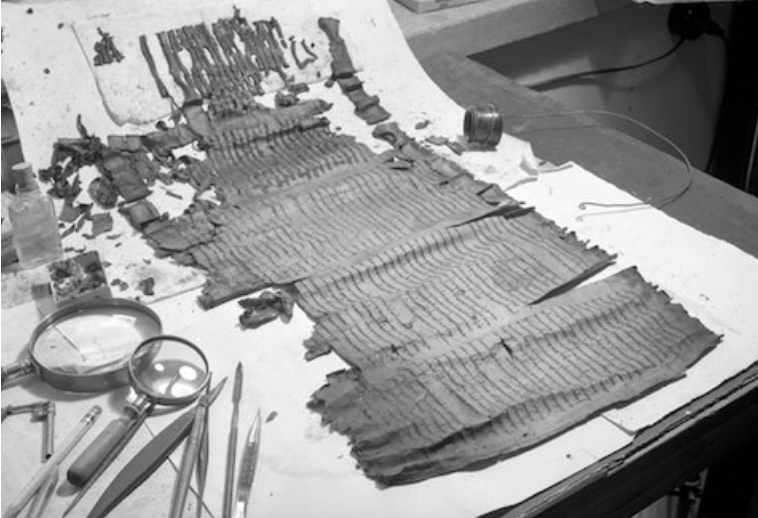
Three surviving examples of this form of interpretation will be considered here. They are all available in English translation (e.g. The Complete Dead Sea Scrolls in English, by Geza Vermes; and The Old Testament Pseudepigrapha Volume 2, edited by James Charlesworth, from which all the quotations here are taken). The first, the Genesis Apocryphon, was lost to us for hundreds of years until a single fragmentary copy was found among the Dead Sea Scrolls. It was written in Aramaic, the language of Jesus and his first followers, probably in the second century BCE. The second example is the Book of Jubilees which is a Hebrew text dating from about the same time. It remained extremely popular among Jews and then among Christians for several centuries, right into mediaeval times, even forming part of the biblical canon of the Ethiopian Orthodox Church to this day. Thirdly, the Biblical Antiquities was originally composed in Hebrew in Palestine towards the end of the first century CE but is now extant only in a Latin translation. It is a particularly important indicator of the way major biblical figures were understood by Jews in New Testament times.
The Scriptural Abraham: Gaps and Problems
Several of the key events in the scriptural life of Abraham raise problems for later readers, both ancient and modern. The most obvious example of such a difficulty is the narrative called by Jews the Aqedah, in which the patriarch is commanded by God to offer his only son Isaac as a human sacrifice (Gen 22.1-12). This episode has always prompted deep theological questions about what kind of God would make this demand, and what kind of father would be as ready as Abraham was to comply with it.
Another problem emerges within the narrative of Abraham's journey to Egypt with his wife Sarah during a time of famine in Canaan (Gen 12.10-16; cf. Gen 20.1-8). As they reach the border, Abraham tells Sarah to pretend to be his sister and basically abandons her to a life in Pharaoh's harem in order to protect himself. When we encounter this text today, we might be struck by Sarah's lack of agency as she is sold into sexual slavery for the benefit of her husband, but this aspect of the story seems to have worried the ancient interpreters less than the implication that Abraham was deceitful and cowardly, telling lies and hiding behind his wife's skirts. These were not qualities considered desirable in a nation's founding ancestor!
The rewritten scriptures also demonstrate a great interest in Abraham's early life. His abrupt appearance on the scene in the Book of Genesis is rather unsatisfactory as no introduction is provided to his character or to the details of his life before his family's move from the city of Ur (Gen 11.31-12.5). In what follows, the solutions offered by the rewritten scriptures to these three problems and gaps will be explored.
I: Abraham's Origins
In Jubilees especially, the scriptural account of the early life of Abraham is embellished, and particular characteristics are ascribed to him in order to illustrate his suitability to receive the covenant promises. Thus he is said to have possessed from an early age a facility for learning and a knowledge of many subjects, including agriculture and carpentry, and even of the Hebrew language, despite growing up in Babylonia (or Chaldea):
… his father taught him writing… and… Abram taught those who were making the implements for oxen, the skilled carpenters. And they made implements above the ground facing the handle of the plough so that they might place seed upon it…. And they sowed and tilled all of the earth just as Abram commanded them… And I [God] opened his mouth and his ears and his lips and I began to speak with him in Hebrew, in the tongue of creation. And he took his father's books – and they were written in Hebrew – and he copied them. And he began studying them thereafter. And I caused him to know everything… (Jubilees 11.16-27).
This claim is partly a type of early propaganda, celebrating the great history of the Jewish people, and the contribution of their ancestors to society and culture.
In a second extensive addition to the scriptural account, Abraham is credited with saving the local population from starvation by turning away flocks of crows sent by the chief of the evil spirits to eat all the seed which they planted before it had taken root:
And Prince Mastema sent crows and birds so that they might eat the seed which was being sown in the earth in order to spoil the earth so that they might rob mankind of their labours. Before they ploughed in the seed, the crows picked it off the surface of the earth… And they ate their seed. And the years began being barren because of the birds… And the seed time arrived for sowing in the land. And they all went out together so that they might guard their seed from before the crows. And Abram went out with those who went out. And the lad was fourteen years old. And a cloud of crows came so that they might eat the seed, and Abram used to run up to them before they settled upon the earth. And he would call out to them before they settled upon the earth to eat seed, and he said, "Don't come down. Return to the place whence you came." And they turned back. And he caused the cloud of crows to turn back seventy times in that day. And none of the crows settled on any of the fields where Abram was, not one. And all who were with him in all of the fields saw him as he was calling out… And his reputation was great in all the land of Chaldea. And all who would sow came to him during that year. And he used to go with them until the seed time passed. And they sowed their land and harvested in that year enough food, and they ate and were satisfied… (Jubilees 11.9-22).
In this narrative, Abraham takes on some of the attributes of Joseph, another ancient Israelite who was able to provide the inhabitants of a foreign land with sufficient food (Gen 37.56-57). It is also reminiscent of the stories about the miracles supposedly worked by Jesus as a boy found in the apocryphal Infancy Gospels of Thomas and James.
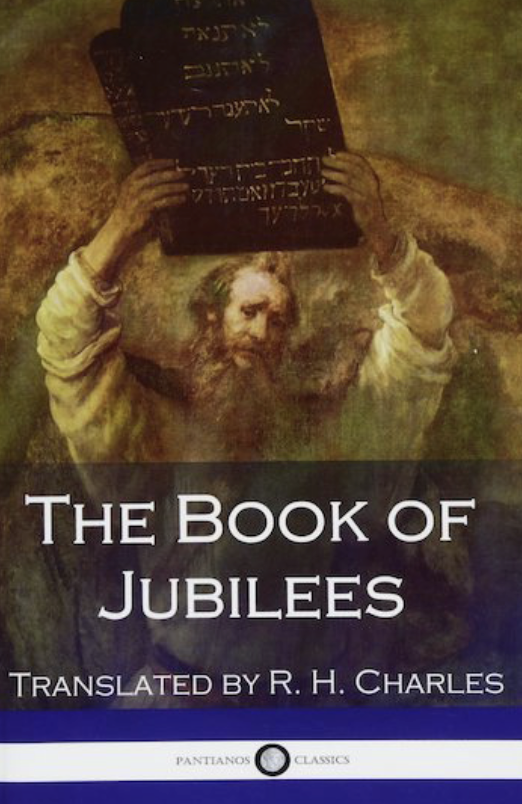
The main theme in the expansive prequel to Abraham's life in Jubilees, however, is his strong rejection of the idolatry practised by his own family and his ancestors (Jubilees 11.16-17). This hostility culminates in his setting fire to his local temple, an event which causes his brother to lose his life when he tries to save the statues it contains from the flames. This incident prompts the break-up of his clan, as his immediate family depart from Chaldea for Haran, a move which is unexplained in scripture (Jubilees 12.12-15). It also provides a way of dealing with the troubling fact that the father of Israel was not a native Israelite and so must have been brought up to worship foreign gods, something strictly forbidden in the scriptures (e.g. Exod 20.1-6; for attempts within other biblical books to deal with this same problem, see Josh 24.2; Jud 5.6-9).
This story is rooted in a verbal similarity between the place name "Ur" and the Hebrew word for "flame", and this same connection between Abraham, idolatry and fire is reflected in the Biblical Antiquities as well. Here, Abraham and eleven others, including his kinsmen Nahor and Lot, are shown refusing to participate in the making of bricks for the construction of the Tower of Babel, even when threatened with death, because they regard it as an idolatrous enterprise. As a consequence, Abraham is thrown into a furnace, but he remains completely unharmed, while thousands of those who gather to watch his killing are themselves burned alive:
The people of the land seized them and brought them to their chiefs and said, "These are the men who have violated our plans and refuse to walk in our ways." The leaders said to them, "Why were you not willing, every one of you, to contribute bricks together with the people of the land?" Those men answered and said, "We are not contributing bricks with you, nor are we joining in your wishes. We know only the Lord, and him we worship. Even if you throw us into the fire with your bricks, we will not assent to you." … They took him and built a furnace and lit it with fire. They threw the bricks into the furnace to be fired. Then the leader Joktan, dismayed, took Abram and threw him with the bricks into the fiery furnace. But God stirred up a great earthquake, and burning fire leaped forth out of the furnace into flames and sparks of flame, and it burned up all those standing around in front of the furnace. All those who were consumed in that day were 83,500. But there was not even the slightest injury to Abram from the burning of the fire…. (Biblical Antiquities 6.4-5, 15-17).
This narrative recalls the bravery and resistance to idolatry of Daniel and his companions (Dan 1.1-3.30; 6.1-28). Abraham's righteousness and trust in God's power to protect and save him are rewarded, and these qualities explain his election as God's covenant partner. They also serve to heighten his function as a role model for a new generation as they face similar dilemmas about how far to accept the idolatrous practices of their gentile neighbours.
II: Journey into Egypt
Abraham's morally questionable behaviour on his arrival in Egypt during a time of famine (Gen 12.10-20; cf. Gen 20.1-18) is glossed over in Jubilees (13.12-13) and ignored completely in the Biblical Antiquities. The author of the Qumran Genesis Apocryphon, however, chooses to justify this incident by inserting a lengthy addition describing a warning dream received by Abraham near the end of the journey:
I, Abram, dreamt a dream on the night of my entry into Egypt. And in my dream I saw a cedar and a palm-tree... Some men arrived intending to cut and uproot the cedar, and to leave the palm-tree by itself. But the palm-tree shouted and said, "Do not hew down the cedar, because both of us are from one root…" And the cedar was saved thanks to the palm-tree, and was not hewn down. I woke up from my slumber during the night and said to Sarai, my wife, "I have had a dream and I am alarmed by this dream." She said to me, "Tell me your dream so that I may know it." And I began to tell her the dream..., [and the interpretation of] this dream... "…they want to kill me and leave you alone. This favour only must you do for me: in every place we reach say about me, 'He is my brother'. And I shall live under your protection and my life shall be spared because of you…" Sarai wept that night because of my words... (Genesis Apocryphon 19.14-20)
The couple are pictured discussing the dream together and both understand it as a divine message that Sarah (the palm tree) must pretend to be the sister of Abraham (the cedar) in order to save his life. This is designed to make clear to the reader that the patriarch's deception was necessary and was approved in advance by both God and his wife. As is frequently the case in the rewritten scriptures, this supplementary material connects different biblical characters and events. Abraham's symbolic dream, for instance, links him to Joseph and Daniel, who are also saved from harm at the hands of foreign rulers by their ability to interpret dreams (Gen 40.9-19; 41.17-36; Dan 2.1-49; 4.4-27).
III: The Sacrifice of Isaac
The author of the Biblical Antiquities displays a particular interest in the near-sacrifice of Isaac, and offers a reason for the divine instruction that Abraham must offer up his son – it is prompted by the jealousy of certain angels:
And all the angels were jealous of him [Abraham], and the worshipping hosts envied him. And since they were jealous of him, God said to him, "Kill the fruit of your body for me, and offer for me as a sacrifice what has been given to you by me." And Abraham did not argue, but set out immediately. And as he was setting out, he said to his son, "Behold now, my son, I am offering you as a holocaust and am delivering you into the hands that gave me to you." But the son said to the father, "… have I not been born into the world to be offered as a sacrifice to him who made me? Now my blessedness will be above that of all men, because there will be nothing like this; and about me future generations will be instructed and through me people will understand that the Lord has made the soul of a man worthy to be a sacrifice." (Biblical Antiquities 32.2-3)
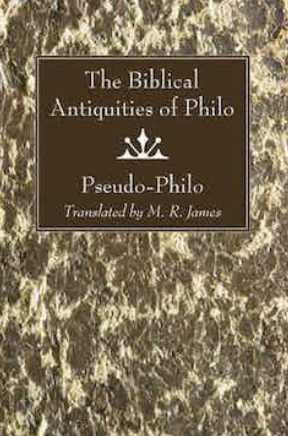
This account disassociates God from any connotations of cruelty or capriciousness. It is an interpretation widespread in Jewish tradition, and it fits with the suggestion in Genesis that this episode was a test of the patriarch (Gen. 22.1; see e.g. Jubilees 17.15-18; Genesis Rabbah 55.4; 56.4; b. Sanh. 89b). This explanation also brings out a parallel between Abraham and Job, another righteous biblical character who was tested at the prompting of Satan. The other important emphasis in the Biblical Antiquities is the claim that Isaac is fully aware of what is about to happen, and gladly and voluntarily accepts his fate.
It is probable that New Testament accounts of Jesus' willing embrace of his death were influenced by these early Jewish readings of the Aqedah narrative.
Conclusions
The figure of Abraham is embellished in these scriptural retellings, so that his righteousness, piety and achievements are foregrounded, and more information is provided about his actions and his innermost thoughts. The approach taken by these early interpreters may hold some lessons for commentators and believers today.
- First, they reveal that it is not only modern readers who are aware of contradictions, gaps or other problems within the scriptures. For these authors, however, such difficulties do not negate the value or ultimate meaning of the sacred texts, but instead prompt a closer engagement with them, and a search for solutions and explanations.
- Second, these commentators did not understand their role as involving merely the slavish repetition of the scriptural words. Rather, they believed that they were empowered to communicate the deeper meaning of the narratives they retold in a way which made sense for their contemporary audiences. They felt able, therefore, to update the original material where necessary in the light of changing theological and social norms. Employing a similar combination of faithfulness to scriptural authority and creative freedom might make it possible for the Bible to speak more effectively to today's pressing issues like climate change, or to those who may feel excluded from it by their gender, for example, or their sexual orientation.
- Third, these writers often draw on other scriptural characters – like Joseph, Daniel and Job – to flesh out their portrayal of Abraham. They understand scripture as something which is best read as a whole: not as a series of isolated and unconnected proof-texts. This is so that each episode can be seen as part of a coherent over-arching narrative about God's relationship with human beings.
- Finally, these texts demonstrate that there is more than one well-informed, scripturally-rooted and sincerely-held view about who Abraham was; diversity within the interpretation and reception of the Bible is quite legitimate, therefore, and has a long and distinguished history.
Professor Susan Docherty is Head of Theology at Newman University, Birmingham